
On Wednesday, October 26, the Crimean Tatar Resource Center presented an analysis of human rights violations in the occupied Crimea for 9 months of 2022. According to the organization, during the reporting period, Russian security forces conducted 25 searches, 108 arrests/detentions and 124 interrogations, interviews and conversations. The total number of arrests for 9 months of this year is 138. Most of the violations by the occupiers fall on representatives of the indigenous Crimean Tatar people. This practice has become systemic in the peninsula.
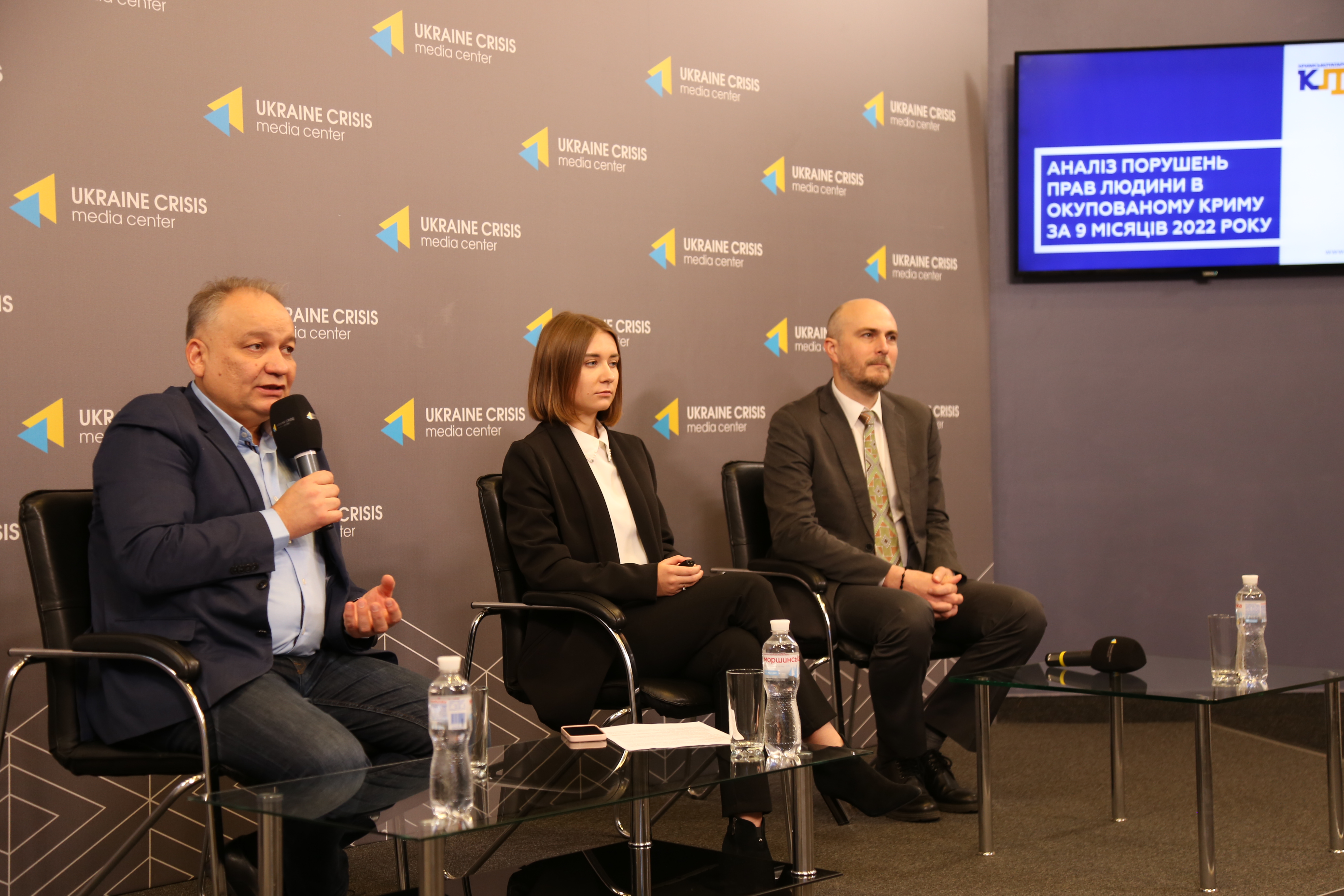
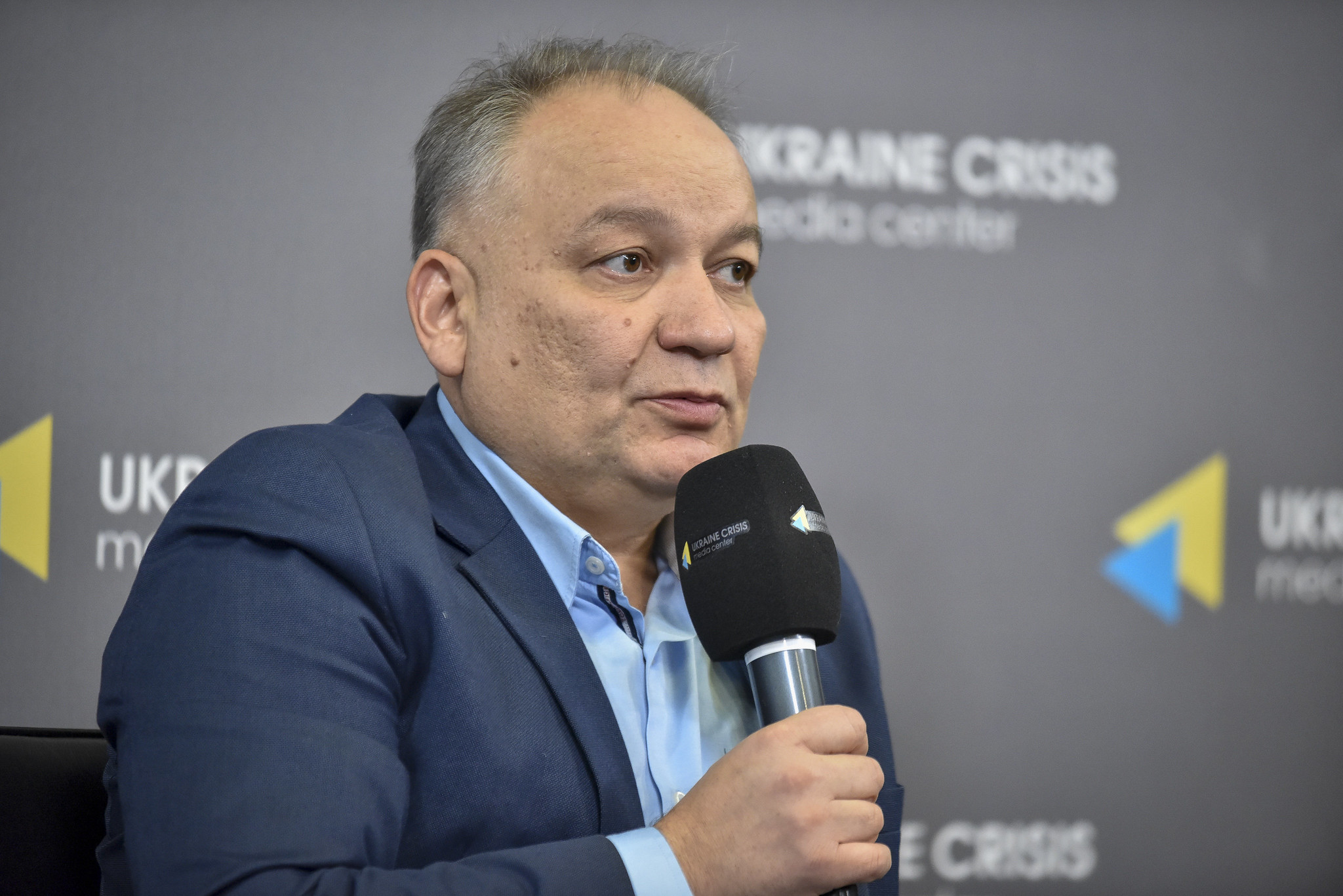
The press conference was attended by the Head of the Board of the Crimean Tatar Resource Center, Head of the Department of Legal Affairs and Foreign Affairs of the Mejlis of the Crimean Tatar People Eskender Bariiev, Communications Manager of the Crimean Tatar Resource Center Tetiana Podvorniak, and Director of the URALIC Center (Estonia) Oliver Loode.
According to the CTRC, over the first 9 months of 2022, Russian security forces conducted at least 25 searches in the occupied Crimea, 20 against Crimean Tatars. For the same period in 2021, 46 searches were recorded, and in 2020 – 40.
“During the searches, the security forces often violate the rights of the victims. In particular, during the penetration into the dwelling, cases of damage to property were recorded, or a search was carried out in the absence of the owner, or forbidden literature was planted”,- said Eskender Bariiev.
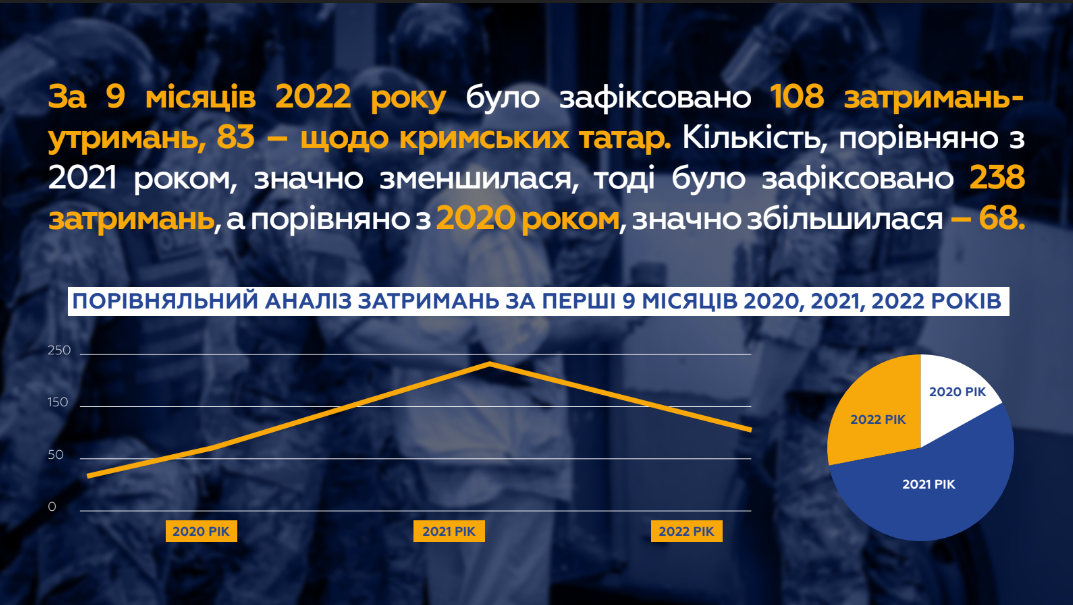
During the reporting period, 108 arrests/detentions were recorded, 83 in relation to the Crimean Tatars. The number decreased significantly compared to 2021, when 238 arrests were recorded, and compared to 2020, it increased significantly – 68.
“Crimeans were detained in the so-called Hizb ut-Tahrir case, in the Noman Çelebicihan Crimean Tatar Volunteer Battalion case, under Art. 20.3.3 of the Code of Administrative Offenses of the Russian Federation (Public actions aimed at discrediting the Armed Forces of the Russian Federation), under Art. 20.3 of the Code of Administrative Offenses of the Russian Federation (Propaganda or public demonstration of Nazi paraphernalia or symbols), under Art. 20.2.2 of the Code of Administrative Offenses of the Russian Federation (Organization of mass simultaneous stay of citizens in public places), according to Art. 275 of the Criminal Code of the Russian Federation (State treason), under Art. 205.2 of the Criminal Code of the Russian Federation (Public calls for terrorist activities), under Art. 205 (Preparation for a terrorist act), under Art. Criminal Code of the Russian Federation Article 282 (Violation of hatred or enmity), under to Art. 222.1 of the Criminal Code of the Russian Federation (Illegal acquisition, transfer, sale, storage, transportation or carrying of explosives or explosive devices), as well as mass detentions”,- said the Head of the Board of the CTRC.
For 9 months of 2022, 124 cases of interrogations, interviews and conversations were recorded, 89 in relation to the Crimean Tatars. For 9 months of 2021, 238 interrogations were recorded, for 2020 – 70.
Tetiana Podvorniak stressed that during the reporting period in the occupied Crimea there were 138 cases of arrests, of which 104 were against representatives of the indigenous Crimean Tatar people. Out of 131 cases: 37 – sentences, 35 – new arrests, 18 – administrative arrests, 48 – extension of detention. For the same period last year, 147 cases of arrest were recorded, and for 2020 – 195.
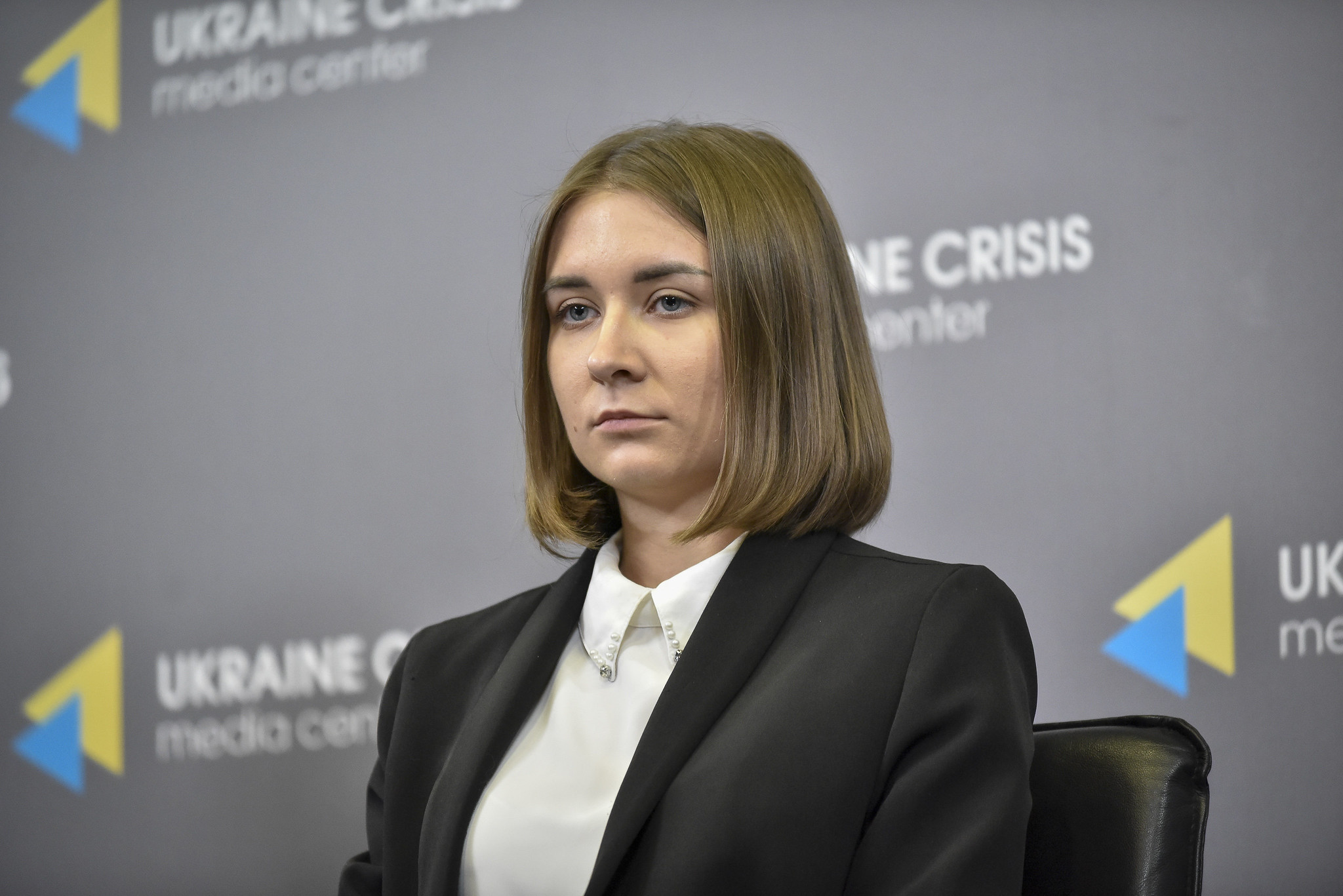
During the reporting period, 263 cases of violation of the right to a fair trial were recorded, 205 – in relation to the Crimean Tatars. For 9 months of 2021, 292 cases of violation of this right were recorded, for 2020 – 332.
The communications manager added that violations of the right to the healthcare access are also systemic, and over 9 months, 25 cases of violation of the right to the healthcare access were recorded, 24 of which were against Crimean Tatars. For the same period last year, 122 such cases were recorded, for 2020 – 112.
According to the organization, for 9 months of 2022, 24 cases of transfer were recorded, all of them in relation to the indigenous Crimean Tatar people. For the same period last year, 36 cases were recorded, for 2020 – 33 cases.
The report of the CTRC, which is available on the website of the organization, also contains information about the violation of religious rights, environmental norms on the peninsula, about inadequate conditions in pre-trial detention centers and prisons, about violation of the rights of political prisoners, about violation of women's rights and illegal military exercises in the occupied Crimea.
In addition, based on the realities of modern times, the CTRC began to record violations of people's rights in the temporarily occupied territories of Zaporizhzhia and Kherson regions.
So, during the period of full-scale war in Ukraine, we recorded at least 279 cases of detention, 84 against representatives of the indigenous Crimean Tatar people, 19 arrests of representatives of the indigenous Crimean Tatar people, at least 26 searches in the homes of representatives of the Crimean Tatar people, as well as 29 cases of murder.
In the report, we drew attention to such cases as: interrogations and torture, illegal appointment of the occupying authorities, violation of the right to peaceful assembly and identified other offenses.
Oliver Loode noted the importance of documenting the crimes of Russia, which the Crimean Tatar Resource Center has been doing for the past 5 years.
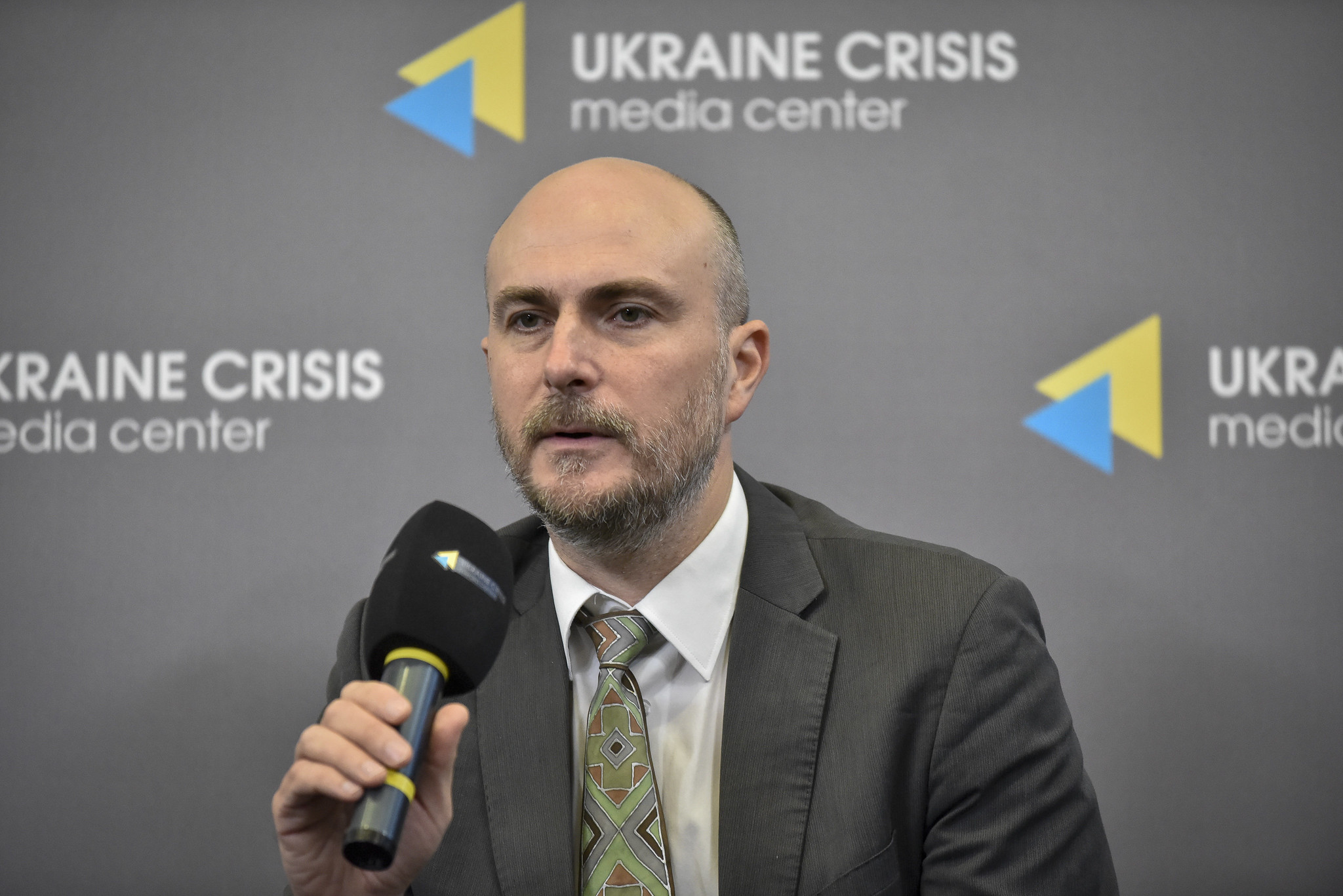
“This is important work. I would like to note the long-term nature of such activities, the consistency and adaptability. The CTRC documents Russia's crimes across the spectrum of human rights in great detail. This is a good example of advocacy on a global level”,- he added.
The expert stressed that it is the occupation that is the root cause of all human rights violations in Crimea. This rhetoric differs from the rhetoric of large human rights organizations, which prefer not to talk about the occupation, but to focus on specific cases. That is, they looked at the symptoms, not the causes, unlike the Crimean Tatar Resource Center.”