

On Friday, August 6, the founding forum of the Crimean Platform expert network began in Kyiv. There are 7 working groups in total, two of which include experts from the Crimean Tatar Resource Center.
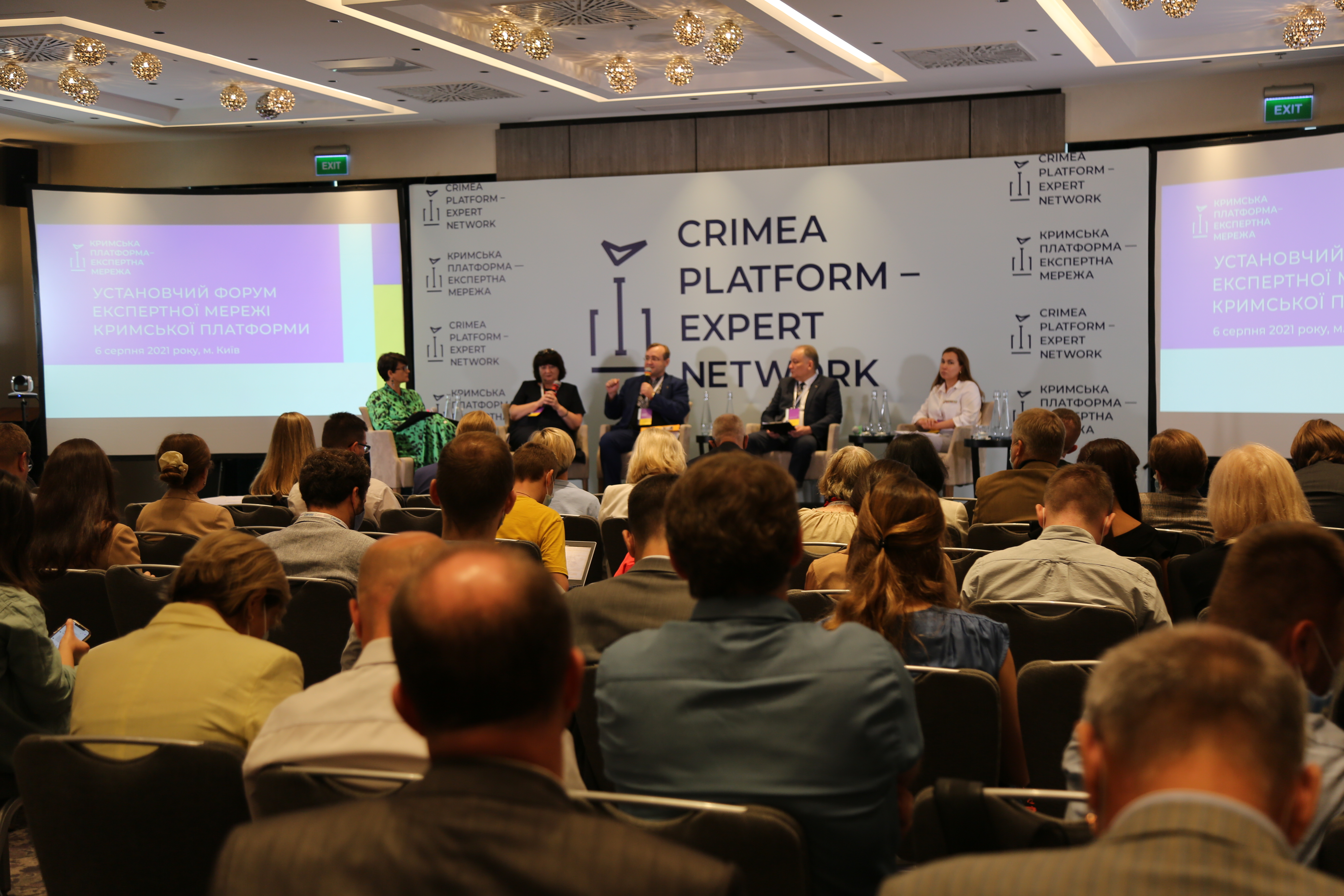
The first group Restoration of the rights of indigenous peoples as a tool for de-occupation of Crimea was presented by the Head of the Board of the Crimean Tatar Resource Center, the Head of the Department of Legal and Foreign Affairs of Mejlis of the Crimean Tatar people Eskender Bariiev and the Head of the Department for the Development of the Crimean Tatar National Media of the Mejlis of the Crimean Tatar people, PhD student of the Taras Shevchenko Kyiv National University Gayana Yüksel.
Members of the Mejlis spoke about the tasks, areas of work of the working group, key challenges and the goal of the activities.
“The main goal of the working group is to to promote the restoration of the rights of Indigenous Peoples of Ukraine including the right to self-determination, territory, land, and resources, preservation and development of their own political, economic, sociocultural systems and institutions; the right for the compliance with the principle of free, prior, and informed consent; development of mechanisms and instruments of prevention of human rights violations and bringing perpetrators to justice; involvement of the international expert network in protection and realization of the rights of Indigenous Peoples of Crimea and its deoccupation. ”- explained Eskender Bariiev.
In addition, the experts put forward proposals and recommendations for the government:
– To Implement the Law of Ukraine “On the Indigenous Peoples of Ukraine”
– To initiate the improvement of regulatory system to assure the status of the Autonomous Republic of Crimea as a national-territorial autonomy of the Crimean Tatar people;
– To strengthen cooperation with international institutions and partner-states of Ukraine to reinforce sanction policy against Russia for human rights violations;
– To develop a draft law “On sanctions” which would be similar to the Magnitsky Act;
– To prepare a mechanism of institutional representation of Mejlis of the Crimean Tatar people in the Ukrainian delegations during interparliamentary cooperation;
– To draw attention to the violation of collective rights of the Crimean Tatar people. The Ministry of Foreign Affairs of Ukraine should initiate a visit to Ukraine by the UN Special Rapporteur on the rights of indigenous people and by the UN Expert Mechanism on the Rights of Indigenous Peoples according to their mandates;
– To establish a UNESCO monitoring mission which would focus on Crimea’s cultural landmarks that remain in danger of destruction;
– To develop an effective information policy of Ukraine regarding deoccupation of Crimea, realization of the rights of Indigenous peoples, and providing access to residents of Crimea to Ukraine's information space;
– To develop a state policy of protection of rights and freedoms of the Ukrainian citizens, who live under occupation and were subjected to repressions, persecutions, and discrimination by the occupying state;
– To develop a strategy of communication with the diasporas of the Indigenous peoples of Ukraine to draw international attention to the protection of the rights of Indigenous peoples of Ukraine and deoccupation of Crimea.
Another group, which was represented by the experts of the Crimean Tatar Resource Center – Economy and Ecology.
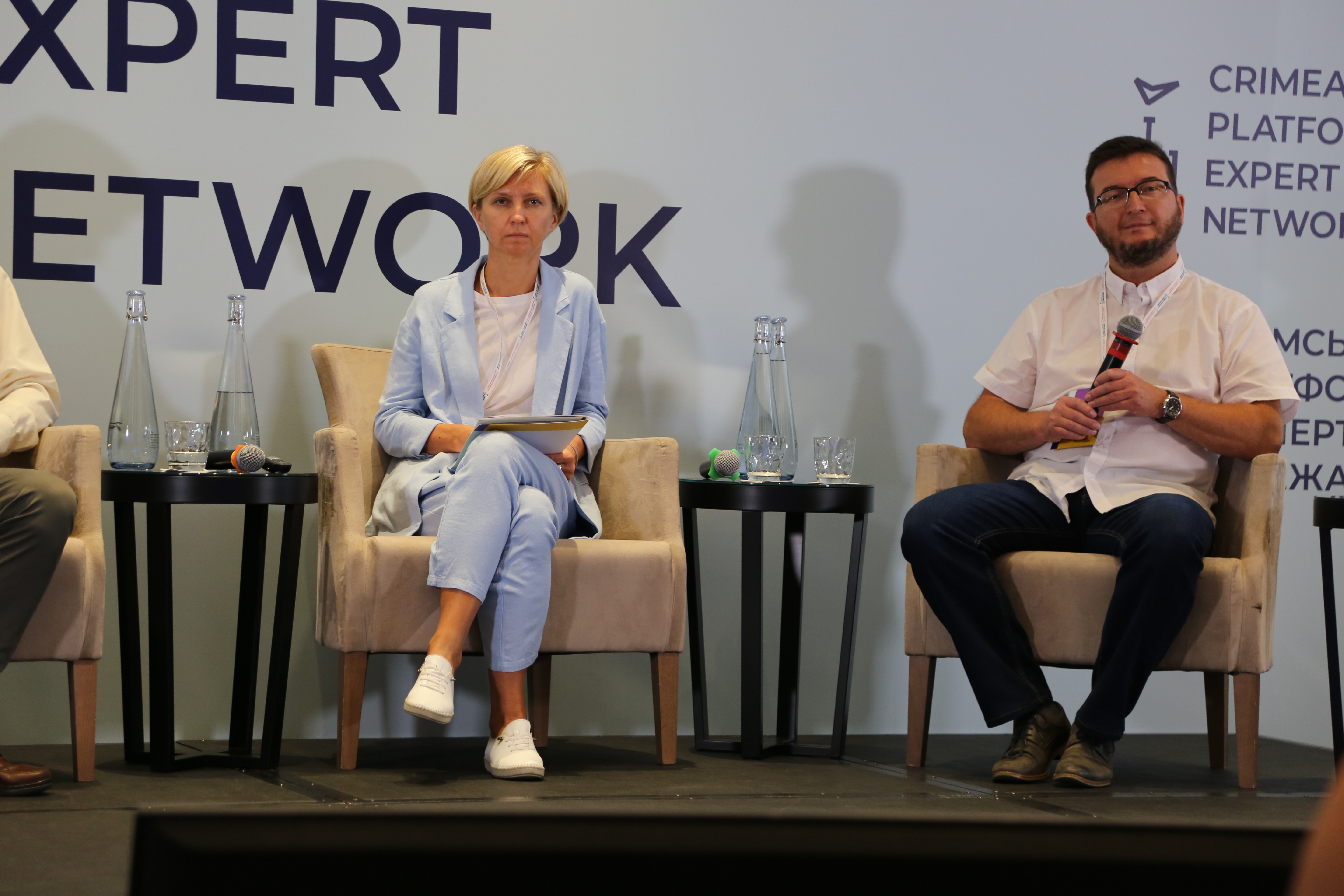
Svitlana Andrushchenko, Operations Director of the Center for Defense Strategies, and Yevhen Khlobystov, CTRC Expert, emphasized the importance of this topic and identified the main problems and challenges.
“Our goal is to identify environmental and ecological-economic problems in the occupied Crimea, which affect the Crimeans and mainland Ukraine, other states of the Black Sea region, substantiation and recommendations to the executive and legislative authorities on responding to changes in the state of ecosystems, environmental hazards, cost measurement of the damage caused”,- explained Khlobystov.
The working group put forward proposals and recommendations for the Government. They advise helping to determine:
• The state of the use of natural resources of shared use and importance, especially in the Black Sea basin
• The state of natural resources, in particular, surface waters and forests in the occupied Crimea, and monitor the situation in order to prevent environmental disasters
• Monitoring of the initiatives of the occupation authorities in the field of the use of shelf resources, underground water horizons, mineral resources, etc. to meet their own needs, in particular, armed and dual-use.