

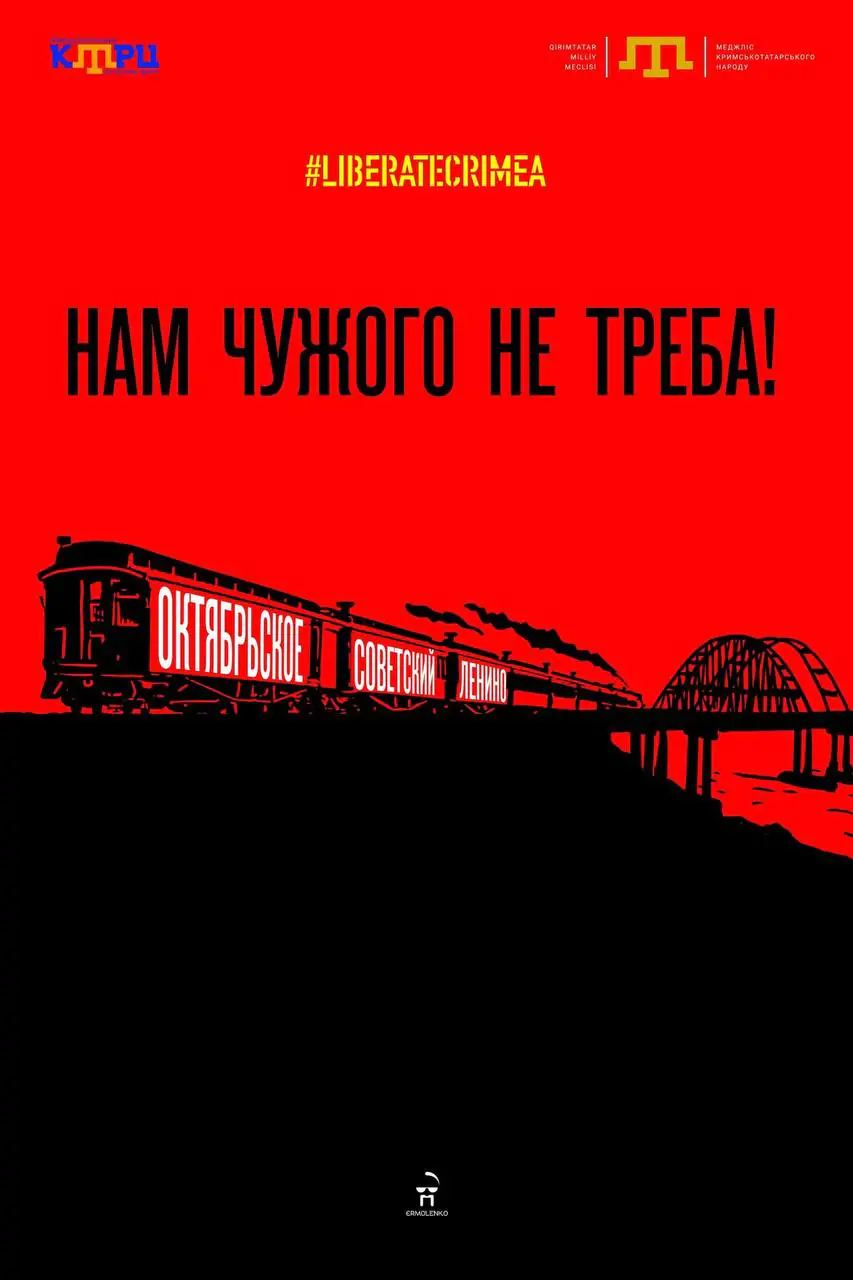
In the last three centuries, Crimea has experienced large-scale Russification and Sovietization, which is clearly reflected in the renaming of various geographical names. Previously, we talked about three waves of destruction of ethnic toponyms, but the most massive, of course, was the wave of renaming in 1944 – early 60s.
Yes, it was then that the Soviet Union renamed 1444 settlements in the Crimea, and there was also an attempt to rename geographical names. This wave of renaming became the most massive and destructive for the Crimean toponymy. It all started with the illegal deportation of the indigenous Crimean Tatar people, and after the crime was committed, the Soviet authorities tried to destroy everything that was connected with the Crimean Tatars.
In addition to the names of settlements, the names of railway stations, sidings, streets and historical and cultural objects were changed.
First of all, the Soviet government, and today the Russian government, did this in order to destroy the culture, language and history of the indigenous peoples of Ukraine – the Crimean Tatars, Karaites and Krymchaks, as well as their connection with their native land. I would like to note that the Russian authorities tried to do this very quickly, and as a result, there are too many settlements in the Crimea with the same names: two Abrykosivka villages, two Aromatne villages, two Berehove villages, three Blyzhnie villages, three Vesele villages , three Volodymyrivka villages , four Ivanivka villages , four Luhove villages. And this is not a complete list.
Moreover, as we can see, these names were invented hastily and, of course, do not carry any historical value. In contrast, historical toponyms in Crimea contain the identity, culture and heritage of the indigenous peoples of Ukraine.
Indeed, how can one compare such names as: Aqmeçit and Simferopol, Aqyar and Sevastopol, İçki and Sovietske, Mañ Kermen and Lokhovka ?
The de-occupation of Crimea will take place very soon, and it is important to work on the complete destruction of the Russian presence on the peninsula.
We don’t need someone else!