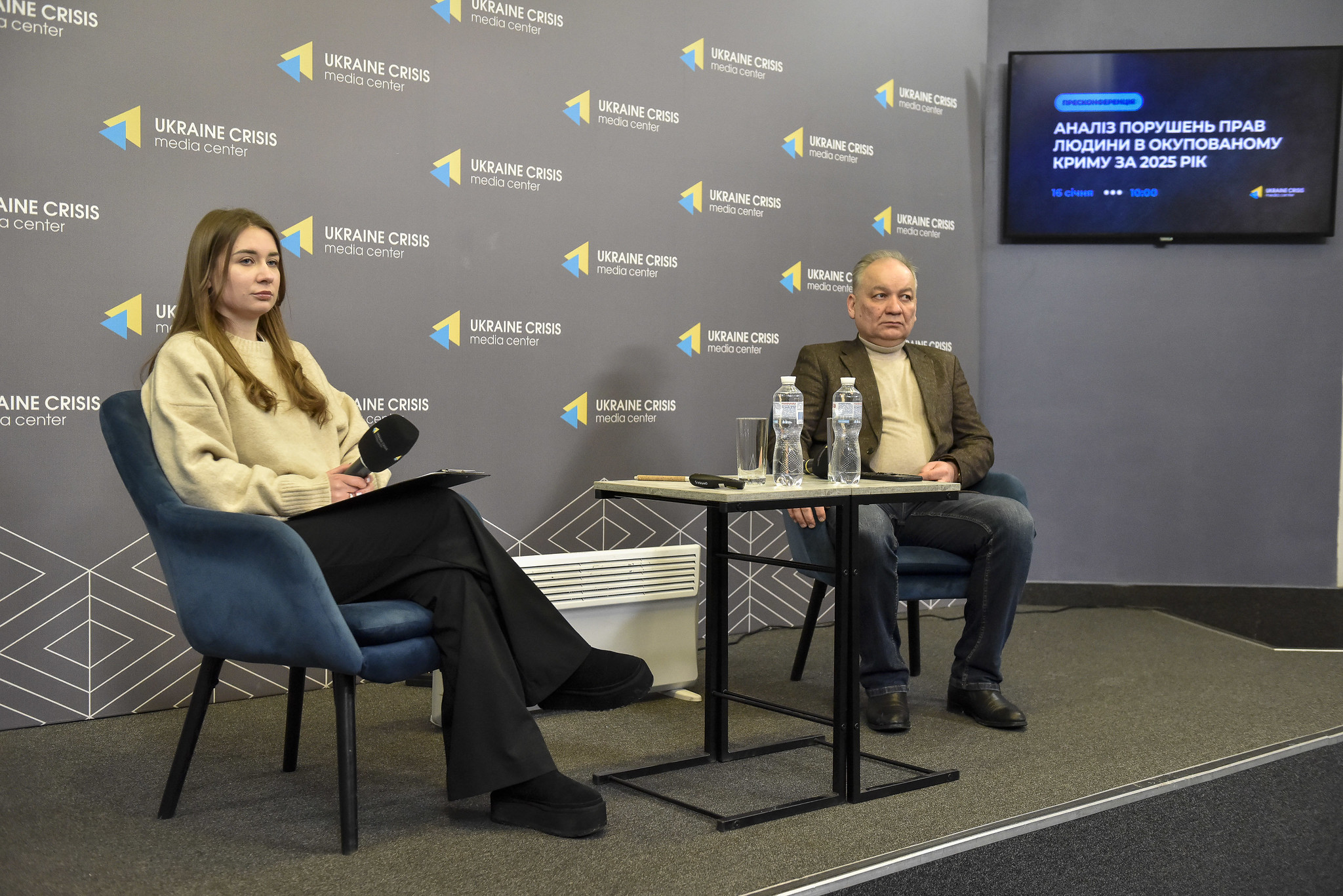


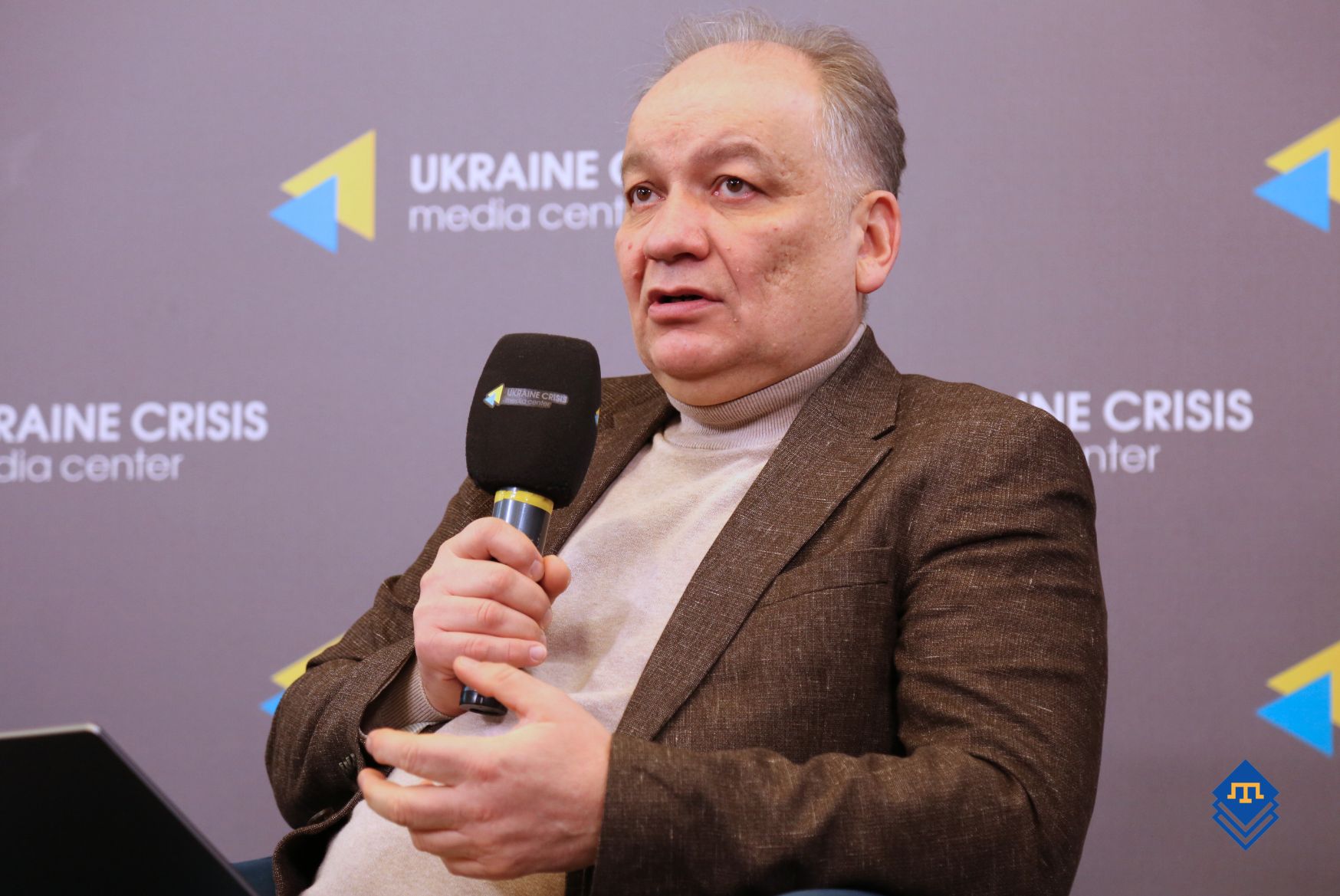
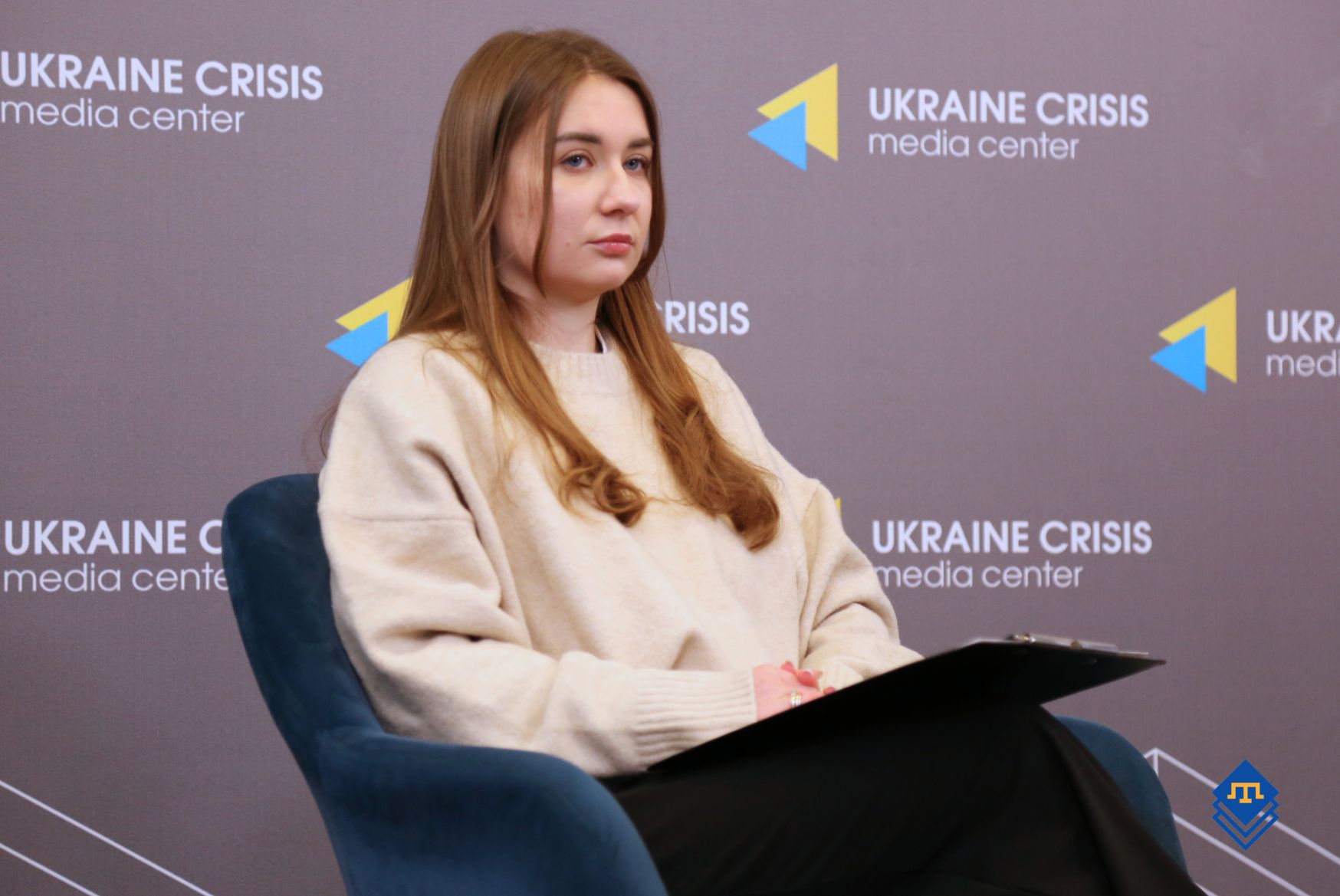
On Friday, January 16, the Crimean Tatar Resource Center at the Ukraine Crisis Media Center presented an analysis of human rights violations in occupied Crimea in 2025. In addition, the CTRC provided an analysis of human rights violations in the occupied territories of Kherson and Zaporizhzhia regions.
The speakers were:
Eskender Bariiev – Head of the Board of the Crimean Tatar Resource Center, member of Mejlis of the Crimean Tatar people;
Tetiana Savchuk – Communications Manager of the Crimean Tatar Resource Center;
Tetiana Zelena – sister of Crimean political prisoner Serhiy Likhomanov (online);
Kostyantyn Davydenko – former Crimean political prisoner (online).
The participants of the press conference emphasized that the Russian Federation continues systematic violations of human rights, committing war crimes and crimes against humanity. Despite the difficult circumstances, it is extremely important to record each such case, as this will allow all those responsible to be brought to justice in the future.
According to the organization, during the reporting period, there were 40 searches, 159 detentions/arrests, and 158 interrogations, interviews, and “conversations.” The total number of arrests in 2025 was 244. Most of the violations by the occupiers were against representatives of the indigenous Crimean Tatar people. This practice has become systematic on the peninsula.
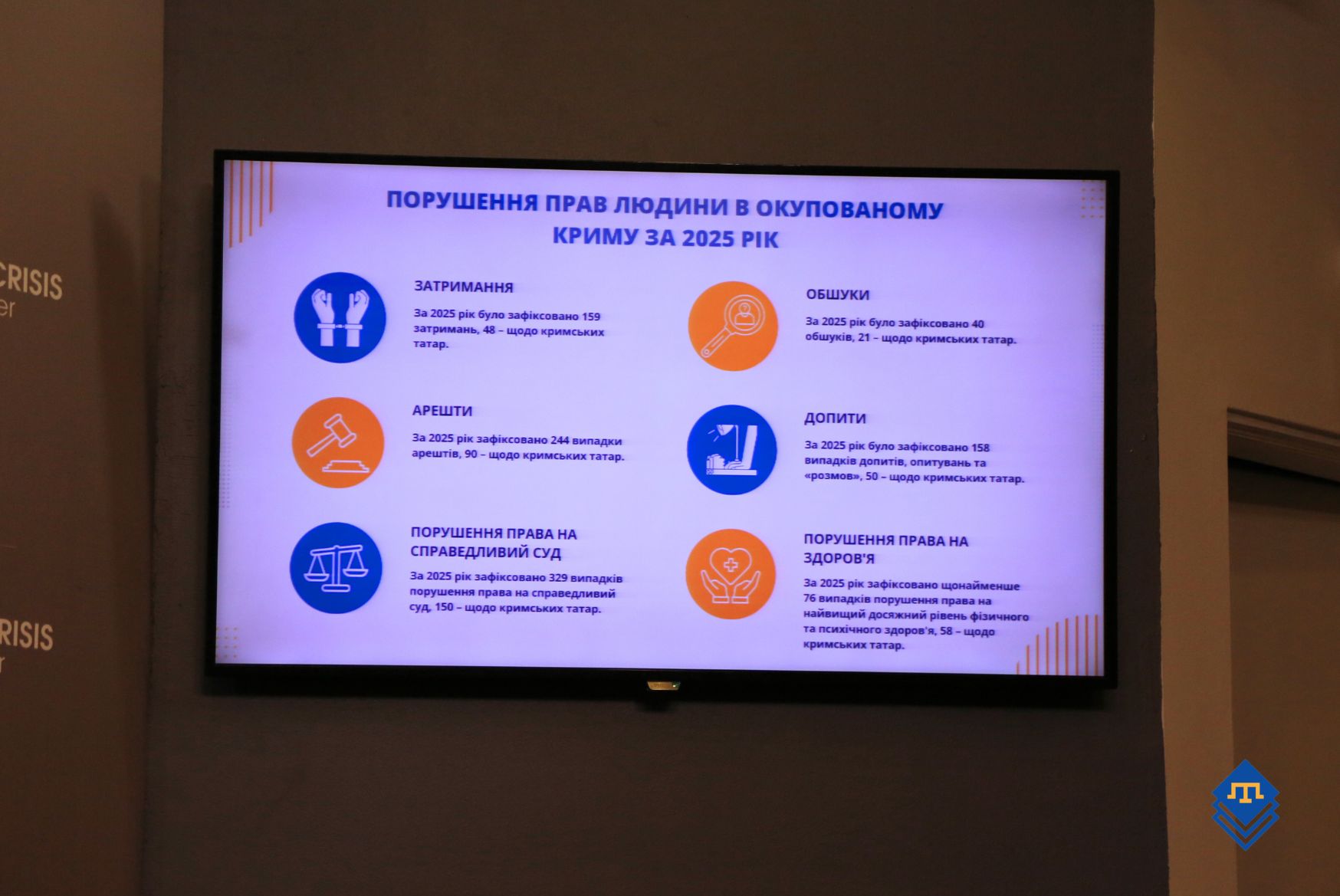
In 2025, there were 40 searches, 21 of which were against the representatives of the indigenous Crimean Tatar people. In 2024, there were 61 cases, 35 of which were against Crimean Tatars and in 2023, there were 65 cases, 46 of which were against Crimean Tatars.
In 2025, there were 159 detentions, 48 of which involved representatives of the indigenous Crimean Tatar people. In 2024, there were 111 cases, 28 of which were in relation to the Crimean Tatars, and in 2023, there were 173 cases, 119 of them in relation to the Crimean Tatars. Crimean residents were detained on suspicion of involvement in the activities of organizations banned in the Russian Federation, such as Hizb ut-Tahrir, Jehovah’s Witnesses and the Noman Chelebidzhihan Battalion, for “discrediting the Russian Armed Forces,” “espionage,” “treason,” “terrorist acts,” etc.,” – noted Eskender Bariiev.
In 2025, there were 245 arrests, 90 of which were in relation to the Crimean Tatars. In 2024, there were 173 arrests, 75 of which were against Crimean Tatars, and in 2023, there were 217 arrests, 142 of which were against Crimean Tatars.
“Of the 245 cases: 101 were new arrests, 92 were convictions, 6 were administrative arrests, 2 repeated arrests and 43 were extensions of detention terms,” -explained Tetiana Savchuk.
In 2025, there were 333 cases of violations of the right to a fair trial, 150 of which in relation to the Crimean Tatars. In 2024, there were 281 cases, 186 of which committed in relation to Crimean Tatars, and in 2023, there were 280 cases, 188 of which were against Crimean Tatars.
Speaking about the right to health, human rights defenders recorded 76 cases of violations of this right, 58 of which were in relation to Crimean Tatars. The speakers paid particular attention to the situations of political prisoners: Tofik Abdulgaziev, who was diagnosed with a malignant brain tumor, Alexander Sizikov and Lenur Khalilov, who were re-arrested by the occupiers, as well as Amet Suleimanov, Iryna Danylovych, Rustem Gugurik and a number of others whose health has significantly deteriorated.
In 2025, there were 245 arrests, 90 of which were in relation to the Crimean Tatars. In 2024, there were 173 arrests, 75 of which were against Crimean Tatars, and in 2023, there were 217 arrests, 142 of which were against Crimean Tatars.
“Of the 245 cases: 101 were new arrests, 92 were convictions, 6 were administrative arrests, 2 repeated arrests and 43 were extensions of detention terms,” -explained Tetiana Savchuk.
In 2025, there were 333 cases of violations of the right to a fair trial, 150 of which in relation to the Crimean Tatars. In 2024, there were 281 cases, 186 of which committed in relation to Crimean Tatars, and in 2023, there were 280 cases, 188 of which were against Crimean Tatars.
Speaking about the right to health, human rights defenders recorded 76 cases of violations of this right, 58 of which were in relation to Crimean Tatars. The speakers paid particular attention to the situations of political prisoners: Tofik Abdulgaziev, who was diagnosed with a malignant brain tumor, Alexander Sizikov and Lenur Khalilov, who were re-arrested by the occupiers, as well as Amet Suleimanov, Iryna Danylovych, Rustem Gugurik and a number of others whose health has significantly deteriorated.
“According to our data, there are currently 10 political prisoners of Crimea who have disabilities. In addition, at least 28 political prisoners are elderly. For all of them, these sentences can be fatal. Unfortunately, there have already been three deaths among Crimean political prisoners due to inadequate conditions of detention, lack of medical care and terrible nutrition,” – noted Tetiana Savchuk.
Human rights defenders paid particular attention to the category of enforced disappearances. According to Eskender Bariiev, at least 12 such cases were recorded during the reporting period, two of which involved Crimean Tatars. He noted that since 2024, there has been a trend of holding people incommunicado, without any contact with the outside world. At the same time, if a person’s whereabouts are established, they are no longer recorded as missing and are transferred to the appropriate category — pretrial detention center or colony — in the clickable charts of the Crimean Tatar Resource Center “Victims of the Occupation of Crimea.”
The CTRC report, which is available on the organization’s website, also contains information about interrogations, inadequate conditions of detention in pretrial detention centers and prisons, violations of the rights of political prisoners, illegal military exercises in occupied Crimea, propaganda, violations of religious rights, violations of the Crimean ecosystem and others.
Eskender Bariiev drew attention to new trends recorded by the Crimean Tatar Resource Center.
He named the first trend as the deprivation of Russian citizenship of political prisoners with the subsequent threat of deportation. According to Bariiev, the CTRC has already recorded specific cases where people have been warned of possible expulsion from occupied Crimea.
A separate trend that has intensified since 2024 is the detention of people in incommunicado status — without any contact with the outside world.
The next trend identified by the Head of the Board of the CTRC is increased propaganda pressure through the education system. According to him, the occupying authorities are stepping up ideological work in schools, putting pressure on children, as well as parents and teachers. At the same time, there is a growing number of prosecutions for any signs of dissent on social media. A separate element of this policy is the restriction or closure of social platforms in order to destroy communication opportunities as much as possible.
Another constant practice is pressure on Crimean residents who refuse to obtain Russian passports. According to Bariiev, such people are being forced to either leave the peninsula or agree to compulsory passportisation and in some cases, they are being prepared for deportation.
In addition, based on the realities of today, the CTRC has begun to record violations of human rights in the temporarily occupied territories of Zaporizhzhia and Kherson regions. As noted by the CTRC communications manager Tetiana Savchuk, in 2025, the CTRC recorded at least 51 cases of detention and 76 arrests. The report also drew attention to such cases as propaganda, military training, deaths, and other violations.
These figures, facts, and examples are only part of the horrific picture of repression that unfolds daily in the occupied territories. However, behind each statistical line are specific human destinies. Therefore, former Crimean political prisoner Kostiantyn Davydenko and the sister of Crimean political prisoner Serhiy Lykhomanov, Tetiana Zelena, joined the press conference.
Konstiantyn Davydenko stressed that documenting the crimes committed by the Russian Federation in the occupied territories is a critically important element in the fight for justice. According to him, recording the facts is necessary not only for bringing the perpetrators to justice in the future, but also for supporting the victims and their families.
He emphasized that restoring justice is impossible without a clear understanding of what exactly happened, who committed these crimes and under what circumstances. According to him, this is the only way to ensure that such repressions will not be repeated in the future.
Davydenko paid special attention to the situation of Crimean political prisoners who are still in captivity. He warned that due to torture, lack of adequate medical care, and inhumane conditions of detention, many of them may simply not outlive their imprisonment if the state and society do not intensify their efforts to protect them.
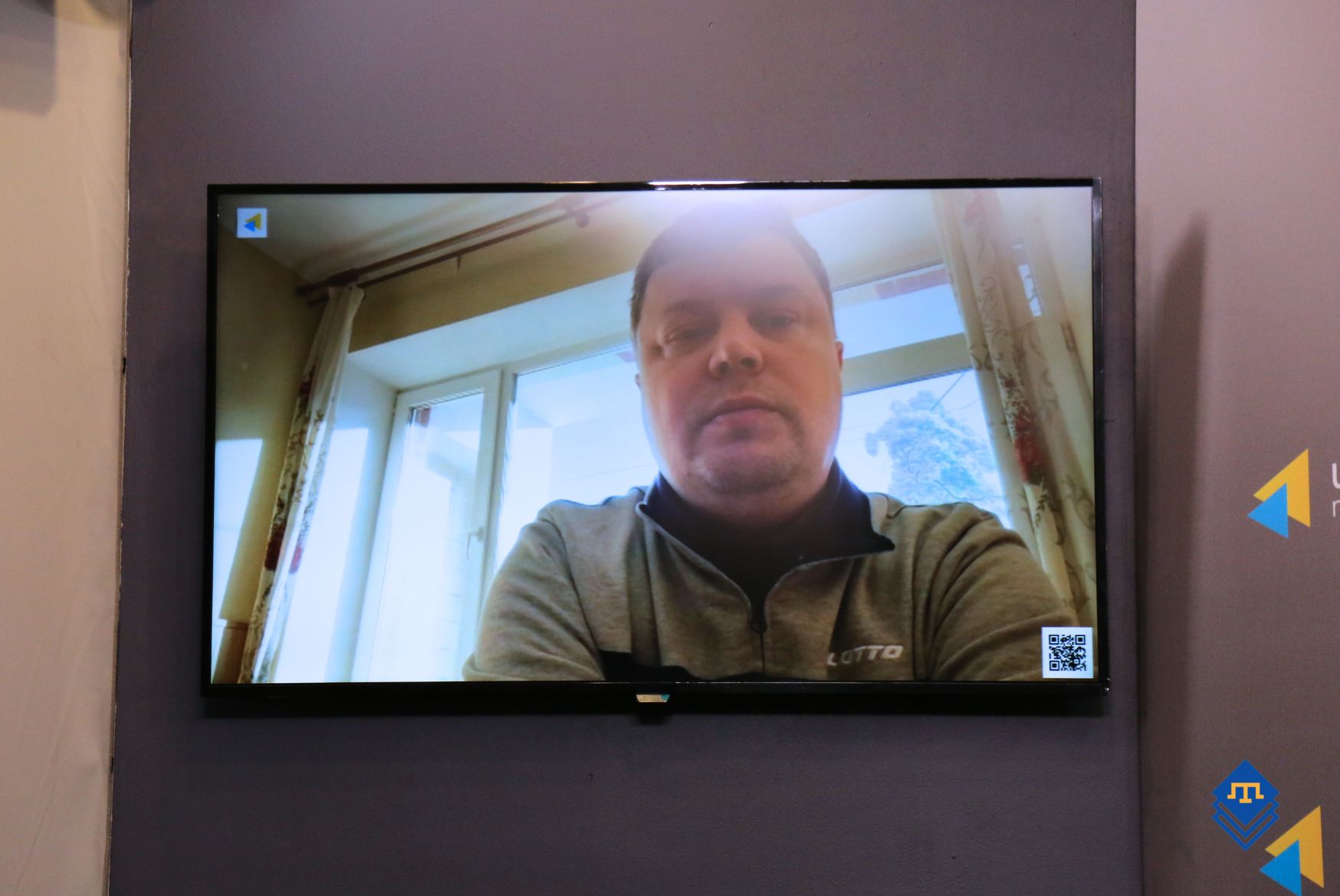
“These are our citizens, these are our people. And we, of course, must fight for them, we, of course, must do something for them,”- Davydenko emphasized.
Tetiana Zelena, the sister of Crimean political prisoner Serhiy Lykhomanov, told the story of her brother’s persecution, which, according to her, is typical for many Ukrainian civilians in occupied Crimea.
She reported that more than 2 years ago, armed men in balaclavas broke into her brother’s house in the morning. The family was isolated in a separate room, and Serhiy Lykomanov himself was taken away to an unknown destination. For two months, the family had no information about his whereabouts. It later became known that he was accused of allegedly preparing a “terrorist act,” while claiming that his confession had been obtained under pressure.
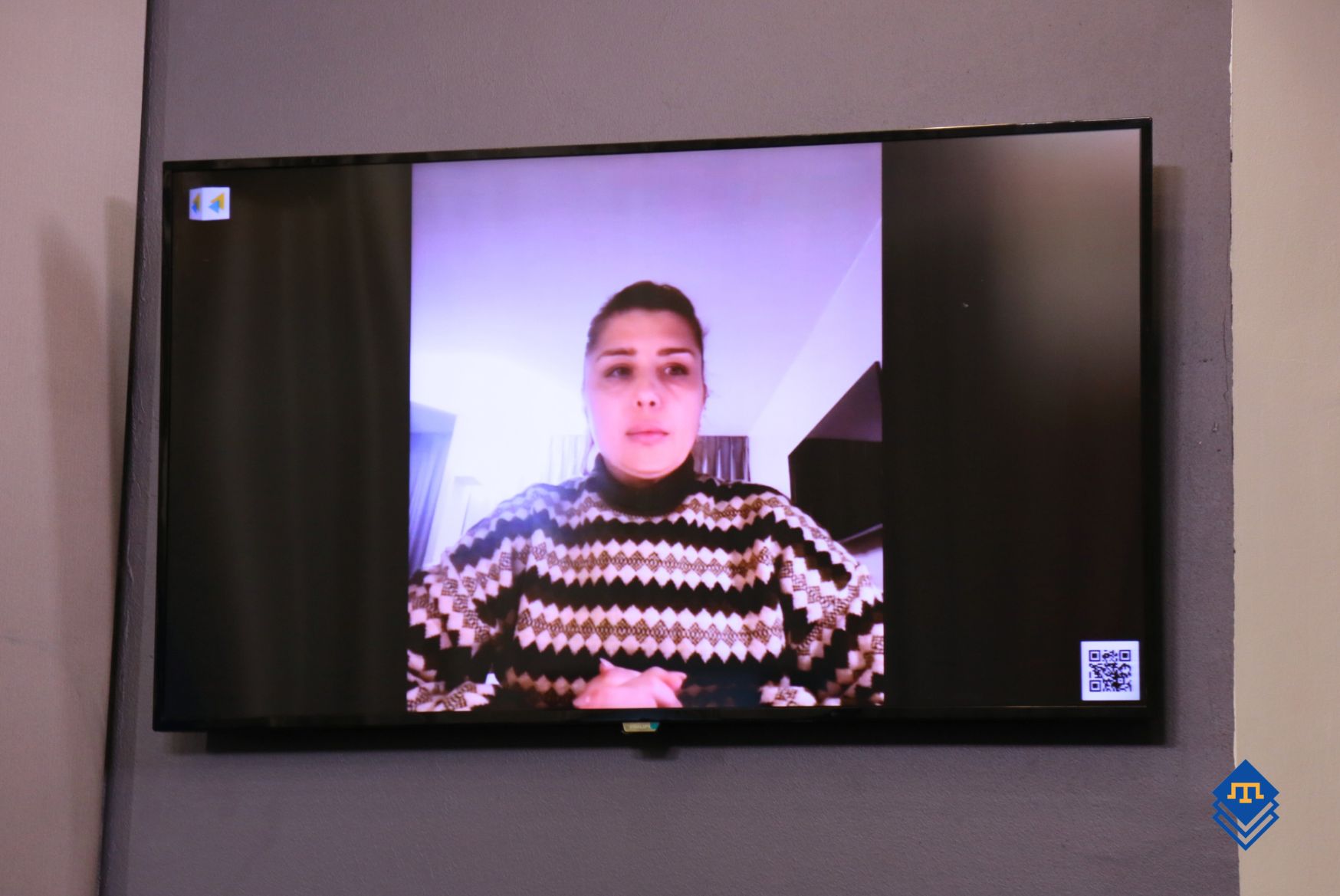
Serhiy Lyhomanov was later sentenced to 5 years in prison, but within a month the verdict was revised and additional charges were brought against him. As a result, the Rostov Military Court sentenced him to 15 years in prison, despite the fact that he is a civilian and a pensioner. He is currently awaiting an appeal, which, according to his family, is purely formal.
In conclusion, Tetiana Zelena called on the Ukrainian authorities and international institutions to increase pressure on Russia to return civilian prisoners. She stressed that this category of people is rarely returned, especially Crimeans and those who have already been convicted.
“These people must be returned, otherwise we risk losing them,” she concluded.
The head of the CTRC, Eskender Bariiev, concluded by outlining three key points that, in his opinion, are important to focus on in 2025.
First, he stressed that Crimean detention centers are currently filled mainly with political prisoners, not criminal offenders.
“Criminals are immediately offered a contract and sent to the SMO zone,” – he explained.
Secondly, Bariiev reminded that, in the context of the occupied territories of Ukraine, it is important to talk not only about people but also about territories. Human rights violations and war crimes are directly related to the fact of occupation, and the full picture will only be visible after the deoccupation of Crimea and other temporarily occupied territories.
The third fundamental point he mentioned was the importance of combining personal stories and statistical data.
“Both stories and figures are important to us. Because the figures prove that these are not single cases, but a systematic, genocidal policy against Ukrainians, Crimean Tatars and all citizens of Ukraine,” – Bariiev emphasized.