

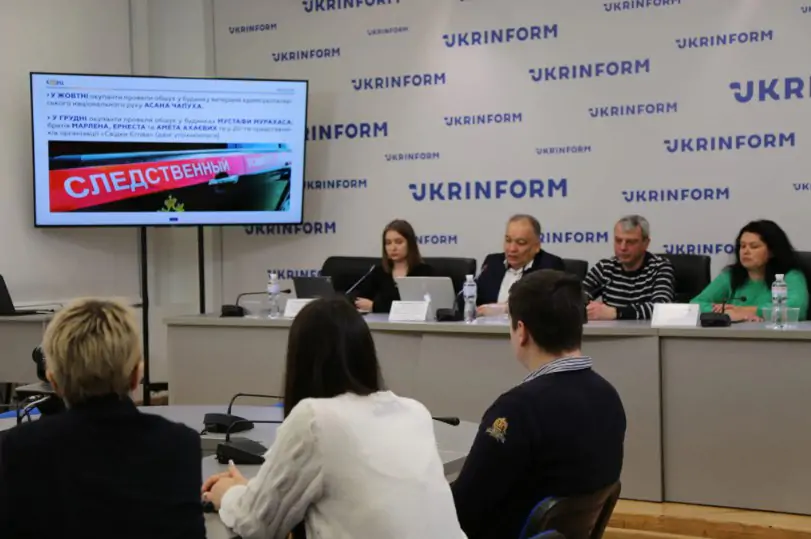
On Tuesday, January 17, the Crimean Tatar Resource Center presented an analysis of human rights violations in the occupied Crimea for 2022. According to the organization, during the reporting period, Russian security forces conducted 50 searches, 121 detentions, and 137 interrogations, interviews and conversations. The total number of arrests for 2022 is 193. Most of the violations by the occupiers fall on representatives of the indigenous Crimean Tatar people. This practice has become systemic in the peninsula.
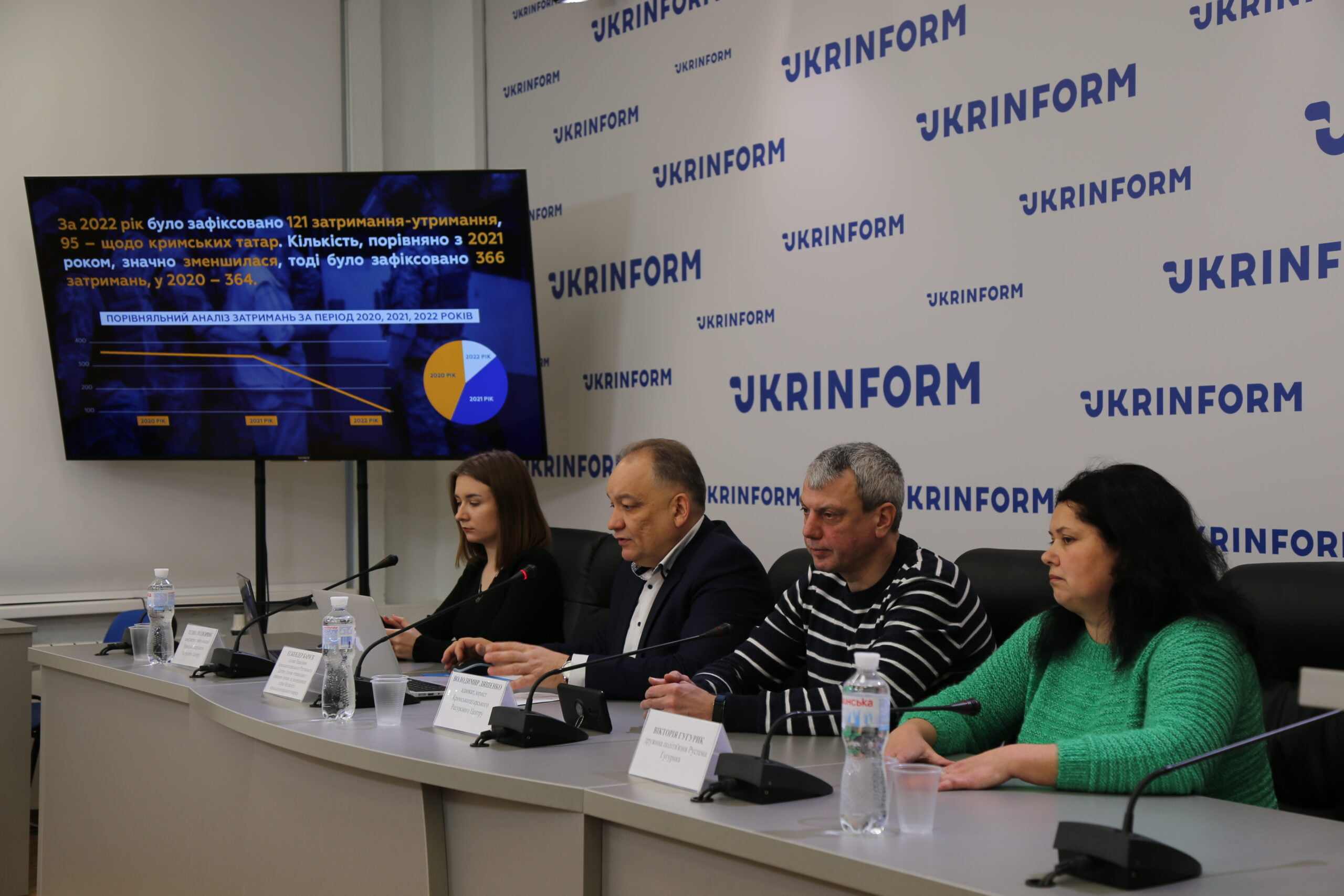
The press conference was attended by the Head of the Board of the Crimean Tatar Resource Center, Chairman of the Department for Legal and Foreign Affairs of Mejlis of the Crimean Tatar People Eskender Bariiev, Communications Manager of the Crimean Tatar Resource Center Tatyana Podvorniak, lawyer of the Crimean Tatar Resource Center Volodymyr Liashenko, wife of a political prisoner Victoriia Huhuryk and lawyer Lilia Hemedzhi.
The report of the CTRC, which is available on the website of the organization, also contains information about violations of religious rights, environmental norms on the peninsula, about inadequate conditions in pre-trial detention centers and prisons, about violations of the rights of political prisoners, about violations of women’s rights and illegal military exercises in the occupied Crimea.
Eskender Bariiev highlighted the following trends for 2022:
- Along with ongoing human rights violations since 2014, since February 24, 2022, massive war crimes by Russian military personnel in the new occupied territories have been recorded;
- Along with the two categories of citizens of Ukraine persecuted and held in places of detention, prisoners of war and political prisoners, a third category appeared – civilian hostages, who are deprived of their liberty without trial or investigation;
- The occupiers continue to misuse their legislation in the occupied territories of Ukraine and detain people in the so-called cases of Hizb ut-Tahrir, Noman Çelebicihan Crimean Tatar Volunteer Battalion, Jehovah’s Witnesses, under the article Public actions aimed at discrediting the use of the Armed Forces of the Russian Federation, etc.;
- If earlier the occupiers provided warnings to activists in Crimea, then in March and April 2022, potential activists were subjected to administrative penalties in the form of fines and arrests from 2 to 15 days;
- The occupiers purposefully create new tools for the persecution of Ukrainian citizens, so during the reporting period, the RF Armed Forces decided to recognize the Noman Çelebicihan Crimean Tatar Volunteer Battalion as a terrorist organization, Article 20.3.3 (Public actions aimed at discrediting the Armed Forces of the Russian Federation) was introduced into the Code of Administrative Offenses of the Russian Federation and in the Criminal Code of the Russian Federation, Article 280.3 Public actions aimed at discrediting the use of the Armed Forces of the Russian Federation, Art. 20.3 of the Code of Administrative Offenses of the Russian Federation (Propaganda or public demonstration of Nazi paraphernalia or symbols);
- In the newly occupied territories of Zaporizhzhia and Kherson regions, Russians are not guided by the law and openly commit war crimes, including forced abductions, illegal entry into housing, torture and murder;
- In the Simferopol pre-trial detention center, special boxes were created and the pre-trial detention center 2 was put into operation, where forcibly abducted citizens of Ukraine are kept in the new occupied territories, and information about these citizens is not available even at the request of lawyers;
- Cases of torture and threats in the pre-trial detention center of the occupied Crimea have become more frequent, and special premises for torture have appeared in the occupied territories;
- For the first time in the entire period of occupation, the occupiers use forced psychiatric treatment. Political prisoner Mamed Dovhopolov was placed in a psychiatric hospital for 5 years;
- The practice of illegal transportation continues, when political prisoners are transported to the territory of Russia in inhumane conditions;
- The occupiers forcibly take children from the new occupied territories to the occupied Crimea, both orphans, children deprived of parental care, and children who have parents;
- The occupiers carried out mass detentions and administrative arrests of lawyers under Art. 20.2.2 of the Code of Administrative Offenses of the Russian Federation Organization of mass simultaneous stay of citizens in public places of simultaneous stay of citizens in public places, as well as they deprived of the status of a lawyer – obstruction of the implementation of advocacy;
- In 2022, in addition to conducting illegal conscription campaigns, partial mobilization was carried out. It was carried out purposefully in places of compact residence of the Crimean Tatars. It led to a new mass wave of departure of the Crimean Tatars from the Crimea;
- Imposing virtual death sentences on older people, some of whom have serious chronic illnesses;
- In the newly occupied territories, school teachers are forced to work according to the Russian program, parents are threatened with deprivation of parental rights if they refuse to take their child to school;
- Active propaganda and militarization continues in educational institutions;
- Compulsory medical examination takes place when children are taken away for treatment;
- There is a forcible evacuation of citizens of Ukraine in the Russian Federation.
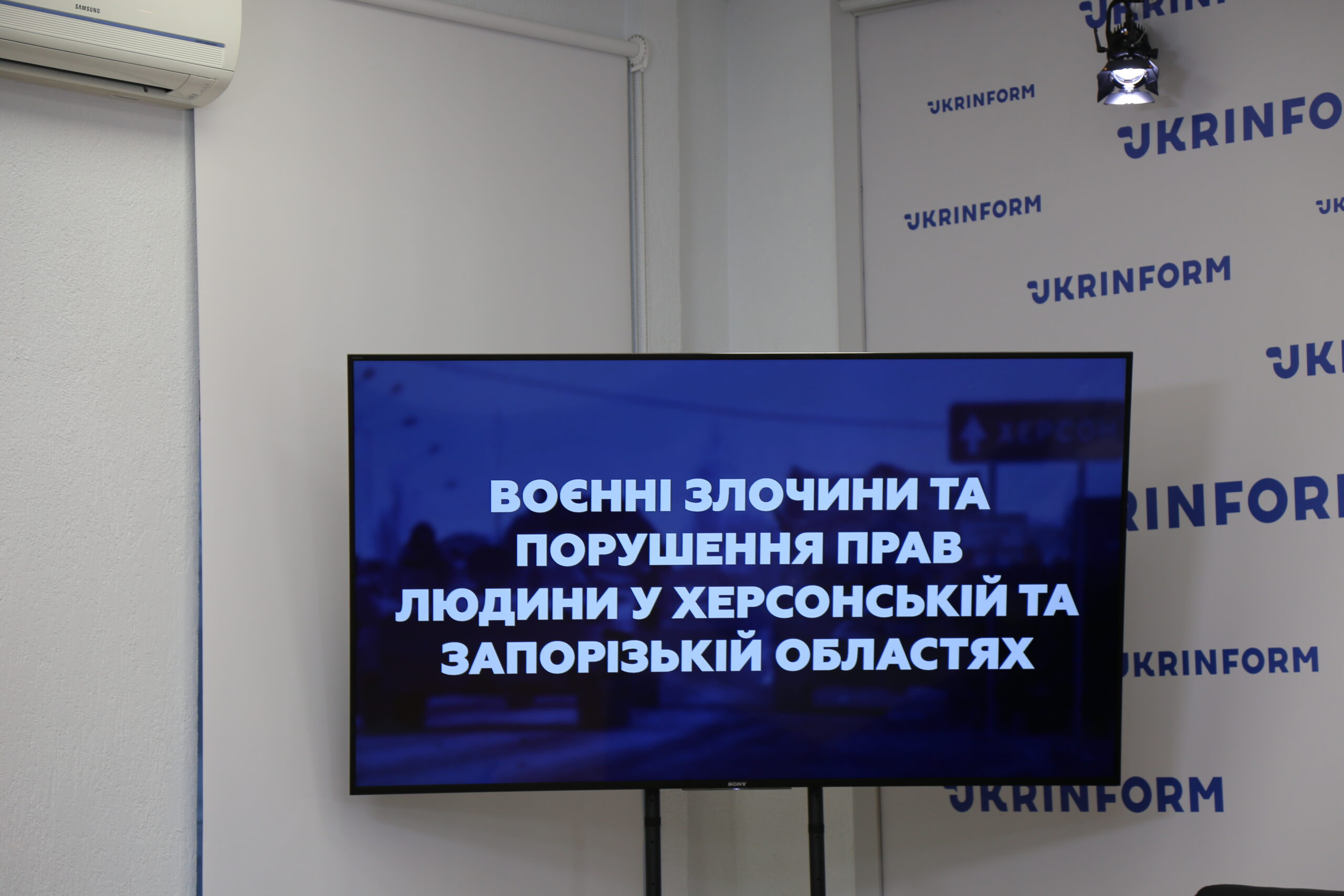
In addition, based on the realities of modern times, the CTRC began to record violations of people’s rights in the temporarily occupied territories of Zaporizhzhia and Kherson regions.
So, as Tetiana Podvorniak, Communications Manager of the CTRC, noted, during the period of a full-scale war in Ukraine, we recorded at least 299 cases of detention, 84 – against representatives of the indigenous Crimean Tatar people, 25 arrests of representatives of the indigenous Crimean Tatar people, at least 57 searches, 28 – in houses of representatives of the Crimean Tatar people, as well as 32 cases of murder.
In the report, we drew attention to such cases as: interrogations and torture, illegal appointment of the occupying authorities, violation of the right to peaceful assembly and identified other offenses.
Volodymyr Liashenko drew attention to such an important issue as the release of political prisoners.
“The situation with the release of political prisoners held by the Russian Federation in the temporarily occupied territories and on the territory of Russia is very disappointing. For obvious reasons, after February 24, 2022, the focus shifted to prisoners of war. Without a doubt, the release of our defenders from captivity is the most important task, but this in no way means that the fate of people who suffered in the temporarily occupied territories for their position of rejection of the occupation should fade into the background”,- he explained.
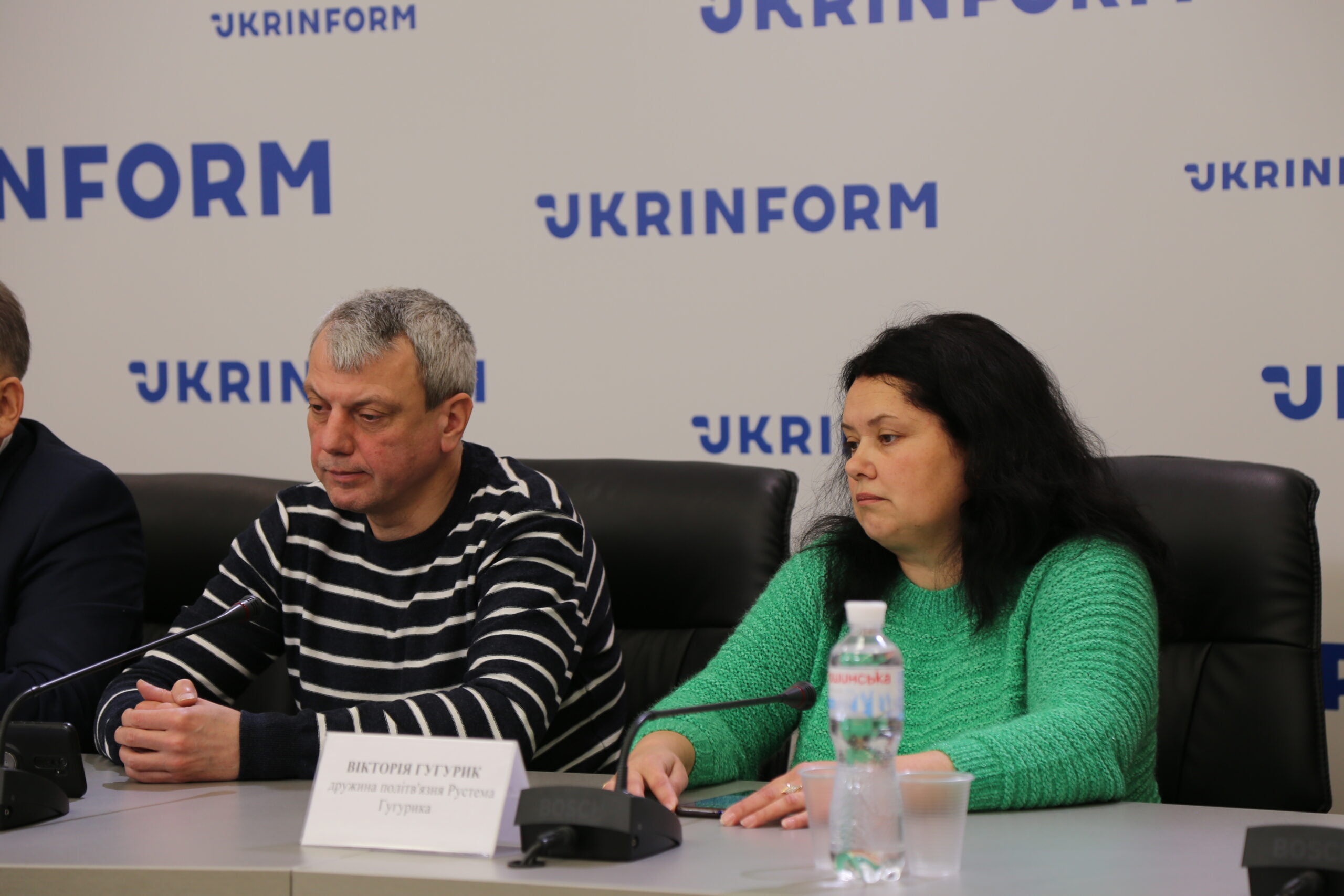
Victoria Huhuryk spoke about the details of the detention and detention of her husband and political prisoner Rustem Huhuryk.
“So far we do not know where Rustem is, what is happening to him. Every day the daughter asks where her dad is, why he was taken away. But we are waiting for justice to prevail. After all, all the accusations are false, he is not involved in the Noman Çelebicihan Crimean Tatar Volunteer Battalion”,- she added.
Lawyer Lilya Hemedzhi, who was previously deprived of her lawyer’s license by the occupiers, spoke about the repressions affecting the defenders of political prisoners.
“The whole situation with the deprivation of a lawyer’s license has unsettled me and my colleagues. We are significantly limited in protecting our principals. For example, in the case of Server Mustafaev, I have to participate not as a lawyer, but as a representative by proxy. This significantly limits my activities”,- she explained.