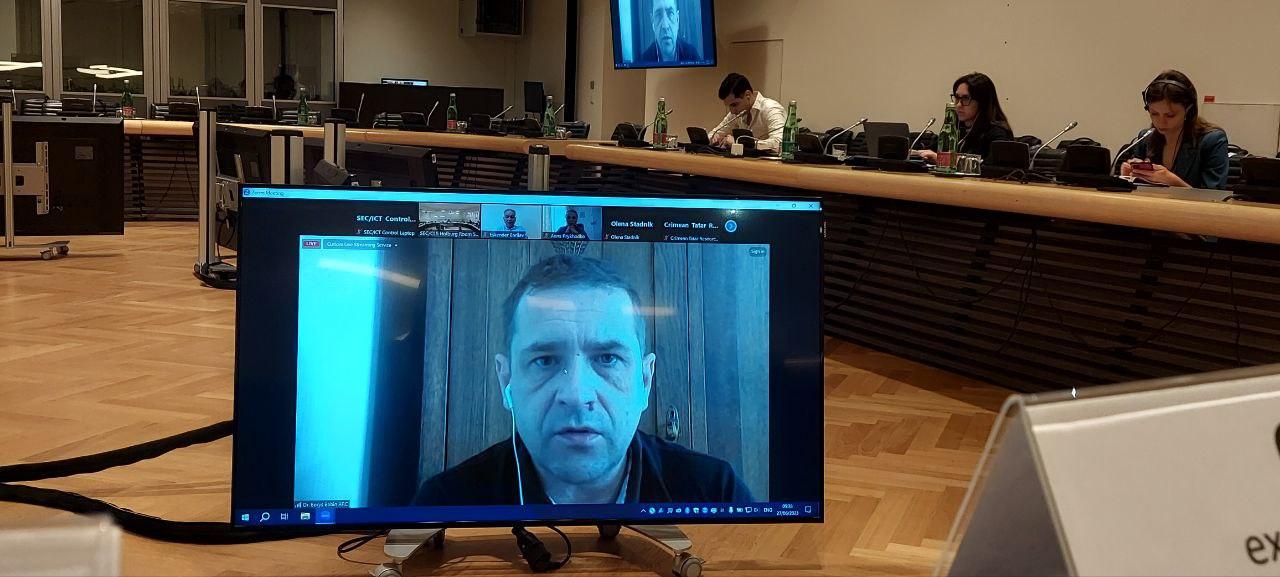

On Tuesday, June 27, in Vienna, the Crimean Tatar Resource Center held a side event on the topic: The Role of Civil Society in Struggle against Discrimination on Russia-Occupied Territories of Ukraine. The event was held within the framework of the OSCE Supplementary Human Dimension Meeting III.
The speakers were:
- Mr. Eskender Bariiev, Head of the Board of the Crimean Tatar Resource Center, Chairman of the Department for Legal and Foreign Affairs of Mejlis of the Crimean Tatar People (via Zoom);
- Dr. Borys Babin, lawyer, professor expert of the Crimean Tatar Resource Center (via Zoom);
- Ms. Liudmyla Korotkykh, lawyer, Crimean Tatar Resource Center, analytic of the Center of Political Analysis and Forecasting “Crimea”;
- Ms. Tsybulko Olesia, expert of Association of Reintegration of Crimea;
- Olena Stadnik, expert of Association of Reintegration of Crimea;
- Ms. Anna Prykhodko, expert of Ukrainian Independent Maritime Trade Union.
During the event, speakers talked about the activities of civil society structures against the policy of discrimination, which had been carried out in Russia-occupied Crimea since 2014 and in Russia-occupied southern Ukraine since 2022. In addition, cases and lawsuits initiated and carried out by the Crimean Tatar Resource Center and partner organizations were highlighted, as well as examples of assistance to victims of discrimination, including representatives of the indigenous Crimean Tatar people.
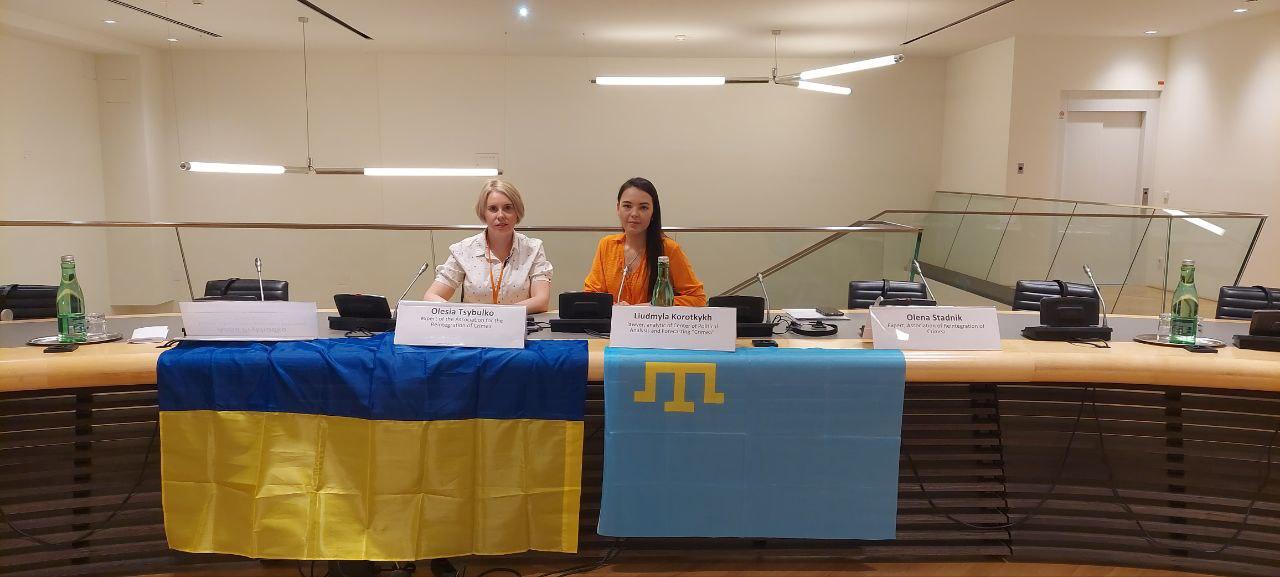
Eskender Bariiev spoke about the ban on the activities of the representative body of the Crimean Tatars – Mejlis of the Crimean Tatar people. It is a violation of fundamental norms of international law, including the International Convention on the Elimination of All Forms of Racial Discrimination, the Council of Europe Convention for the Protection of Human Rights and Fundamental Freedoms, and the UN Declaration on the Rights of Indigenous Peoples.
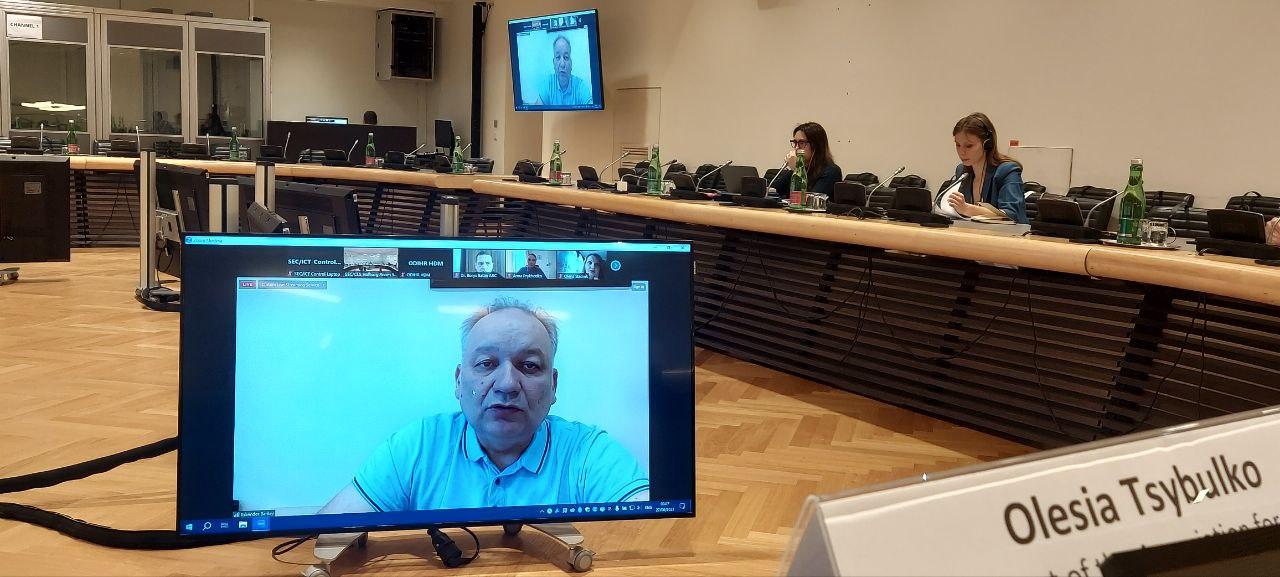
Liudmyla Korotkykh described the instruments of pressure used by the occupation authorities in Crimea. According to her, these are: illegal detentions, arrests, searches, initiation of fabricated administrative and criminal cases, threats, beatings, torture, and forced abductions. All these crimes are systemic. In particular, Ms. Liudmyla gave specific examples of the struggle against Crimean Tatar and Ukrainian activists.
“The de facto Crimean authorities, under the pretext of fighting extremism and terrorism, using all available administrative resources, are pursuing a policy of polarizing society, where ethnicity and religion will become a determining factor, which greatly complicates the preservation of the progress made in the tolerant attitude of different ethnic and religious groups of Crimea to each other,” she emphasized.
Ms. Olesia Tsybulko pointed out the absence of any freedom of speech in the occupied Crimea, as the Russian authorities have isolated the occupied territory not only physically, but also in the information and communication sphere.
Olena Stadnik provided detailed information about the discriminatory approach of the occupation authorities to situations related to property issues.
“The role of civil society in the struggle against discrimination and intolerance cannot be overestimated. For example, the Crimean Tatar Resource Center uses such approaches as civic non-formal education, information campaigns, national and international advocacy, etc. In particular, since 2015, the CTRC has held 8 summer camps and 7 Academies of Public Diplomacy, thus providing non-formal education to more than 350 people. Information campaigns aimed at debunking Russian propaganda and overcoming stereotypes about Crimean Tatars and Crimea in general have spoken to more than 35 million people,” Liudmyla Korotkykh added.
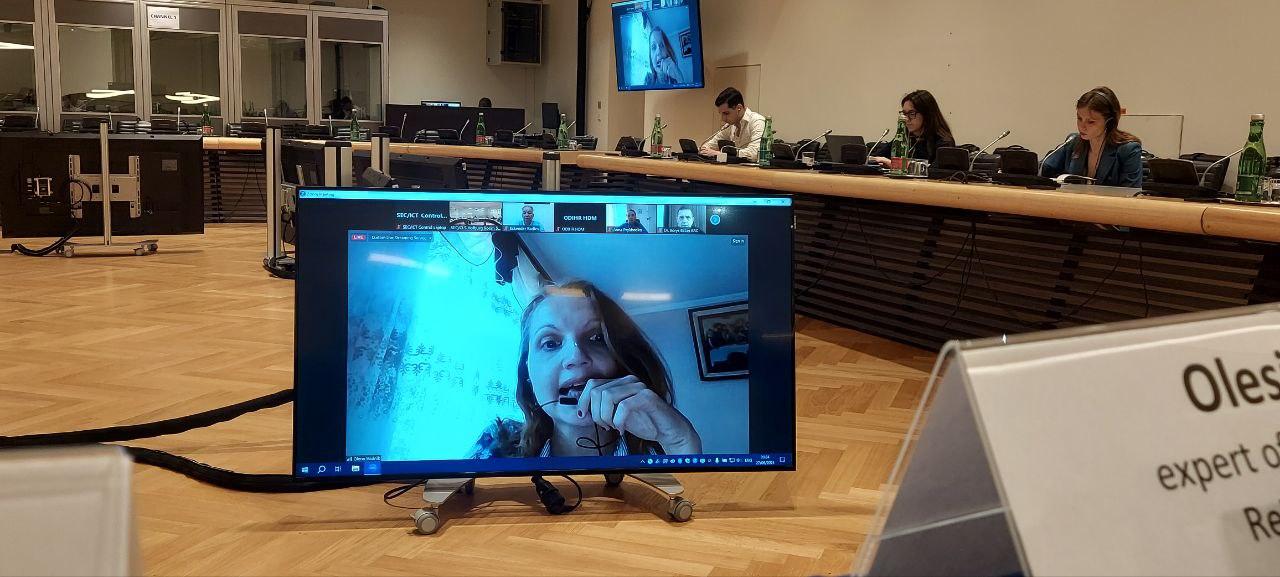
In addition, dozens of applications, complaints, and communications were submitted to universal and special human rights mechanisms. The CTRC’s important contribution is the provision of information to Ukrainian lawyers in the Ukraine v. Russia case at the International Court of Justice to shape the position, as well as providing testimonies to the Office of the Prosecutor of the ICC.
“This activity of civil society organizations is crucial, as we have direct access to victims and witnesses, and our analytical materials are based on reliable information that we can verify personally,” noted Liudmyla.
As Ukraine must think about tomorrow immediately, and civil society and the government of Ukraine must be ready to work on reintegration from the first moments of the liberation of Crimea, Ms. Anna Prykhodko spoke about Ukrainian programs for the deoccupation and reintegration of Crimea.
Special attention was paid to the impact of environmental crime, as ecocide is one of the tools of Russian discriminatory policy and a method of warfare. Experts of the Crimean Tatar Resource Center are working on a legal definition of the actions of Russian troops as committing ecocide in Ukraine, according to Borys Babin.