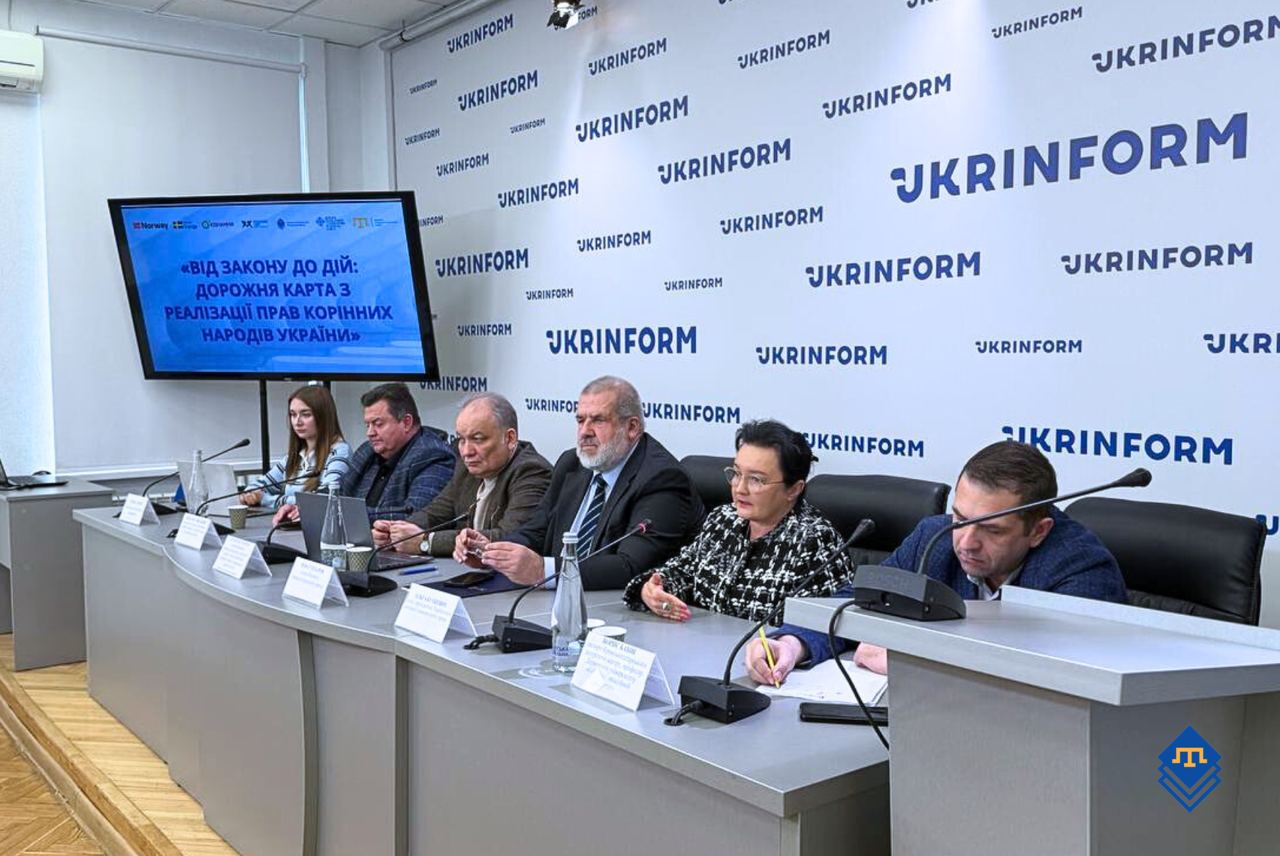


On Thursday, October 23, a press conference entitled “From Law to Action: Roadmap for the Implementation of the Rights of Indigenous Peoples of Ukraine” was held in Kyiv, during which a document containing specific steps for the implementation of the Law of Ukraine “On Indigenous Peoples of Ukraine” was presented.
The event, organized by the State Service of Ukraine for Ethnic Policy and Freedom of Conscience, the Crimean Tatar Resource Center, and the Mejlis of the Crimean Tatar People, brought together representatives of state bodies, experts, scholars, and representatives of the indigenous peoples of Ukraine.
The speakers were:
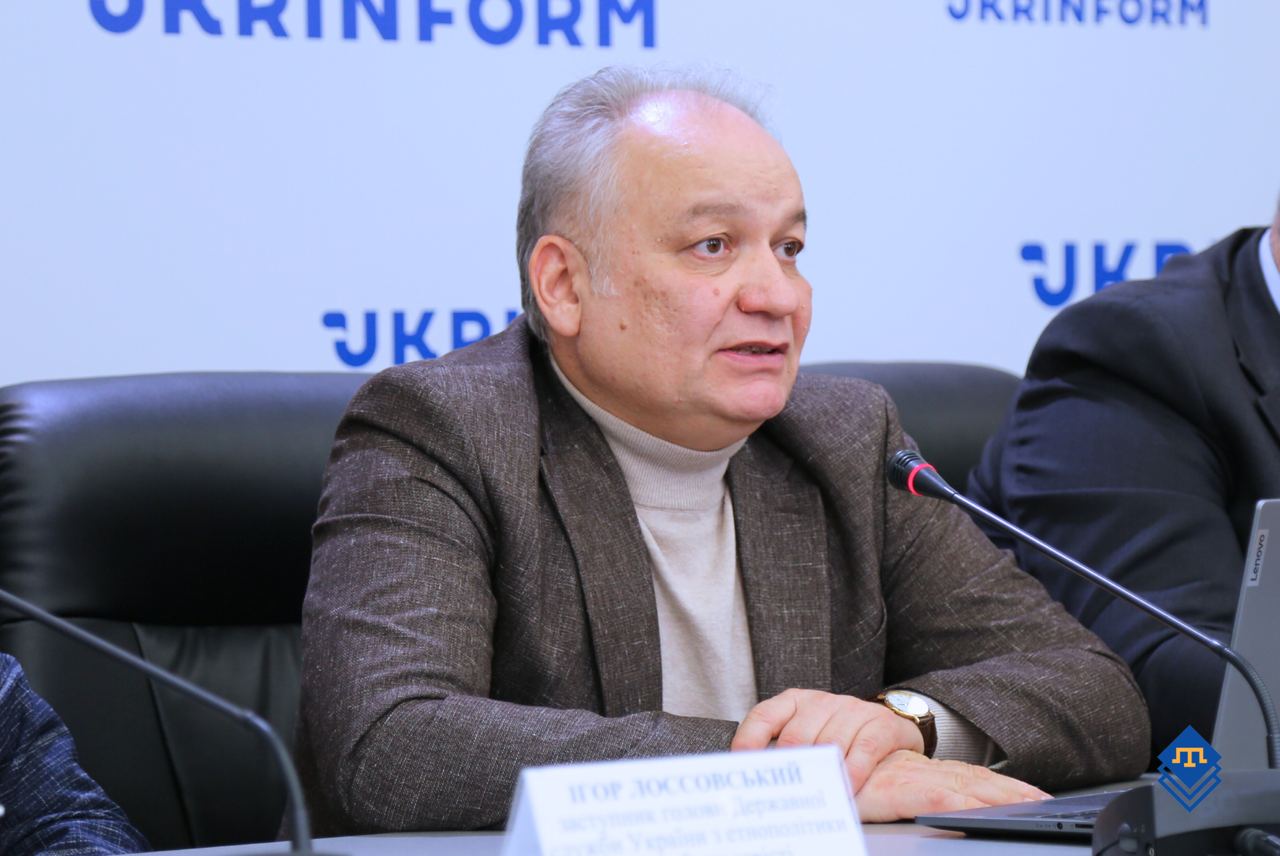
Igor Losovsky, Deputy Chairman of the State Service of Ukraine for Ethnic Policy and Freedom of Conscience;
Eskender Bariiev, Chairman of the Board of the Crimean Tatar Resource Center, member of Mejlis of the Crimean Tatar People;
Refat Chubarov, Chairman of the Mejlis of the Crimean Tatar People;
Olga Butkevych, Doctor of Law, President of the Ukrainian Association of International Law;
Borys Babin, expert at the Crimean Tatar Resource Center, professor at the Kyiv Aviation Institute State University;
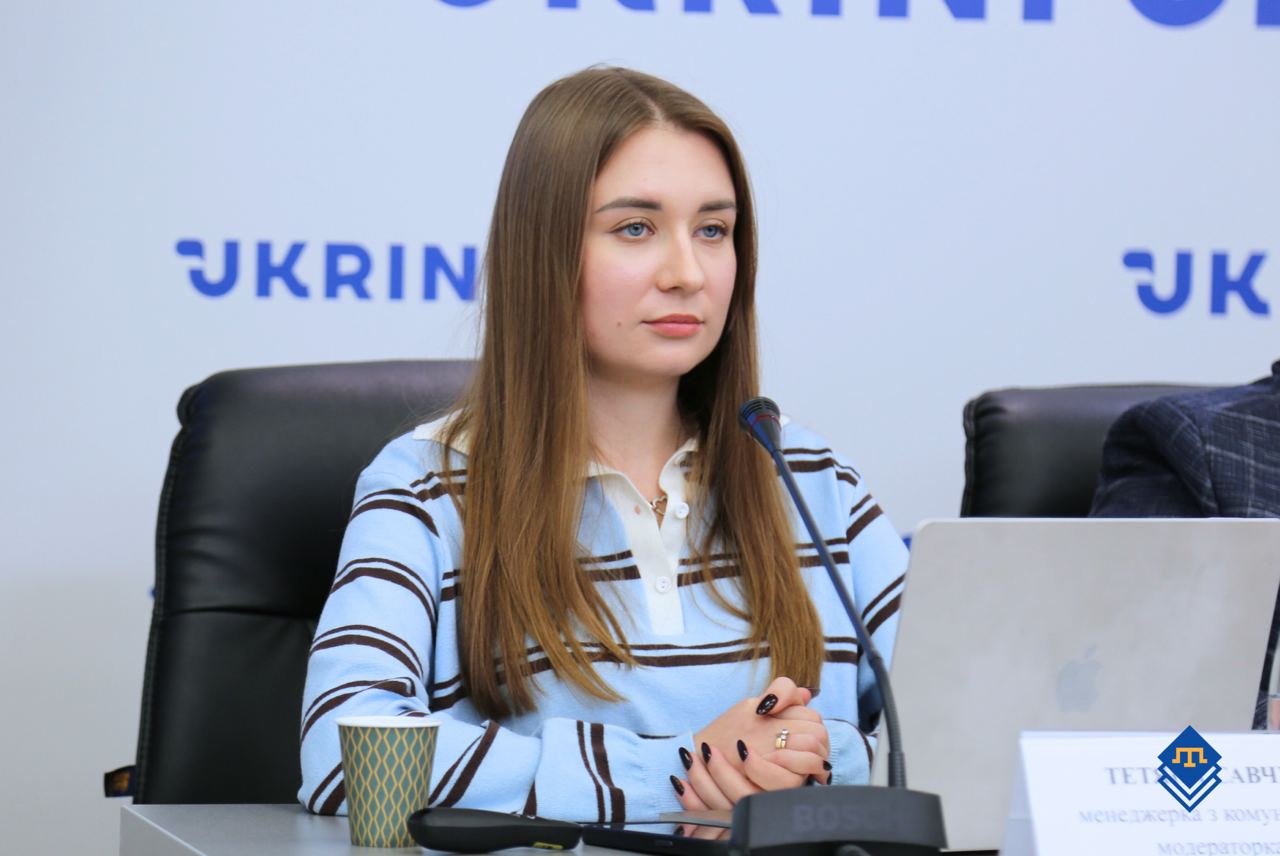
Moderator: Tetiana Savchuk, Communications Manager of the Crimean Tatar Resource Center.
“The Law of Ukraine ‘On Indigenous Peoples of Ukraine’ was adopted in 2021. It was a historic step in recognizing the rights of Crimean Tatars, Karaites, and Krymchaks as indigenous peoples of Ukraine. However, it is important that the law becomes an effective tool, not just a declaration,” said Tetiana Savchuk kicking off the event.
The roadmap for the implementation of the Law of Ukraine “On Indigenous Peoples of Ukraine” was presented by Eskender Bariiev, Chairman of the Board of the Crimean Tatar Resource Center and member of Mejlis of the Crimean Tatar People. He said that this document contains specific steps for the implementation of this law.
“I want to point out that it’s also super important for Ukraine’s image when we show these steps at the international level. If the process of implementing the law is consistent, when all the necessary regulatory and legal acts are developed, and the legal status of Mejlis of the Crimean Tatar People is enshrined, then Ukraine can become an example for other states,” – emphasized Bariiev.
He also noted that the international community is already interested in Ukraine’s experience.
“We are already working within the framework of the UN expert mechanism on indigenous peoples, as well as in the UN permanent forum, so that representatives of Ukraine can demonstrate their own experience in addressing indigenous peoples’ issues,” – he stressed.
According to Eskender Bariiev, it is important that international expert structures see Ukraine’s systematic work, and not just a law that has been adopted but not implemented.
“The existence of such a Roadmap is an indication that we are working systematically. I am grateful to all the members of the Advisory Council who joined in its discussion. We have adopted this document as a basis and will continue to work on its implementation so that we can demonstrate real results as early as June or July 2026,” – concluded the CTRC chairman.
Igor Losovsky, deputy chairman of the State Service of Ukraine for Ethnic Policy and Freedom of Conscience, spoke about the state’s vision for the implementation of the law.
“Our service is the central executive body that deals with issues of national minorities, interethnic and interreligious relations, as well as issues of indigenous peoples. This is one of our main priorities. We were the main authors when the law on indigenous peoples was created, and we developed the first three regulatory acts for its implementation,” – he said.
“We are currently actively preparing for the Congress of Indigenous Peoples of Ukraine, which will take place on December 2 in Kyiv. We already have a concept and preliminary program for the event, which we are developing jointly with the Mejlis and the Crimean Tatar Resource Center. Foreign partners are also planning to join the Congress,” – he said.Refat Chubarov, Chairman of the Mejlis of the Crimean Tatar People, spoke about the importance of adopting subordinate legislation to implement the Law “On Indigenous Peoples of Ukraine.”
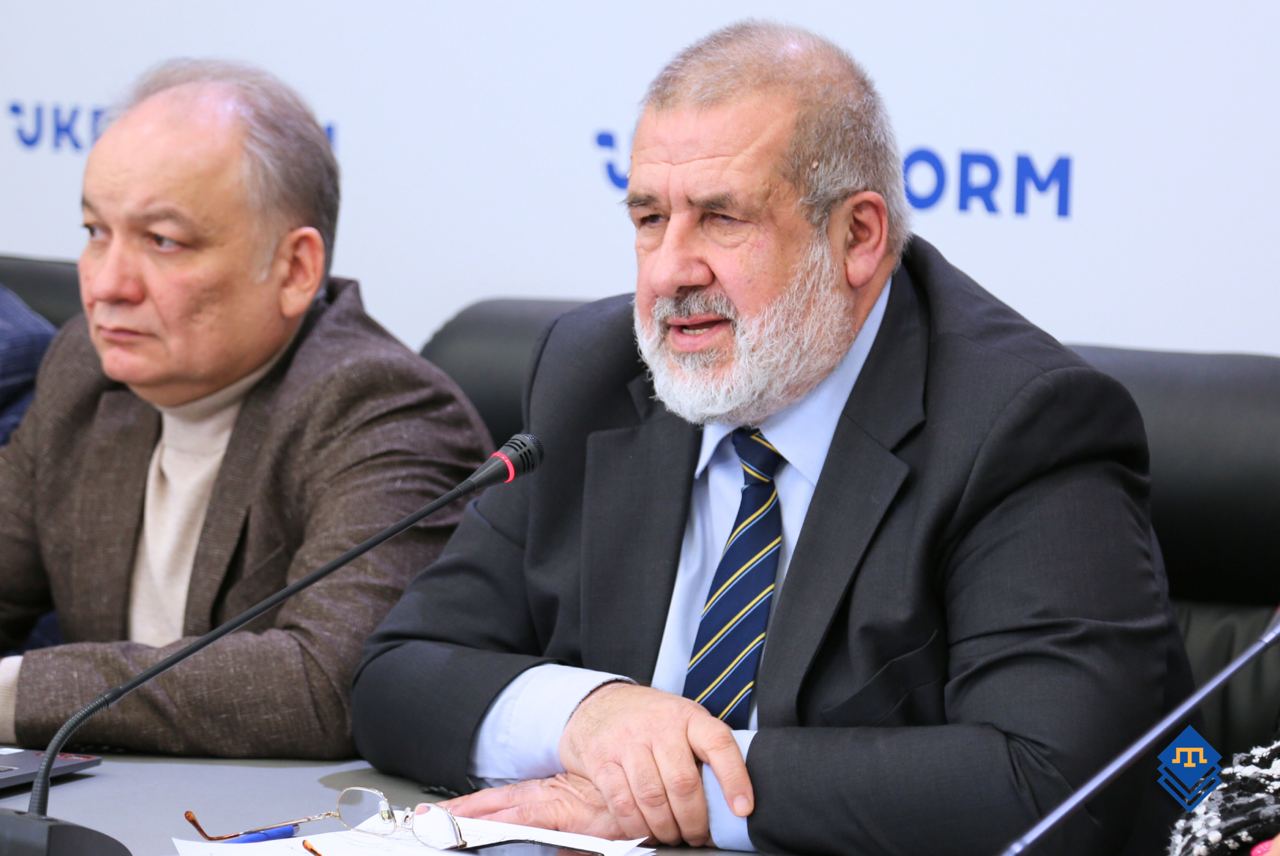
“When certain laws are adopted, their implementation must be strengthened through the adoption of appropriate regulatory and legal acts. This also applies to the Law of Ukraine “On Indigenous Peoples of Ukraine.” For its full implementation, it was necessary to work on many areas — both by amending existing legislation and by adopting new subordinate legislation,” – Chubarov noted.
He emphasized that timely action by the government could significantly speed up this process.
“Delays could have been avoided if the Cabinet of Ministers had taken timely steps within its powers. In particular, we are talking about two important regulatory acts—on the procedure for establishing the legal status of the representative body of the indigenous people and on the procedure for consultations between executive authorities and representative bodies of indigenous peoples. If they had been approved, the Mejlis of the Crimean Tatar people would already be working under a different status, and the implementation of the law would be progressing more quickly,” – he stressed.
Olga Butkevych, President of the Ukrainian Association of International Law and Doctor of Law, identified two key levels of implementation of the Law “On Indigenous Peoples of Ukraine” and the main legal challenges associated with its implementation.
“The implementation of the law is possible on a two-level structure. The first level is those subordinate and governmental regulatory legal acts that can be adopted today and that will give tangible results for representatives of indigenous peoples. These include issues of education, internally displaced persons, coverage of the history of indigenous peoples in school curricula, legalization of the status of representative bodies, in particular the Mejlis, as well as consultations between the authorities and these bodies,” – she noted.
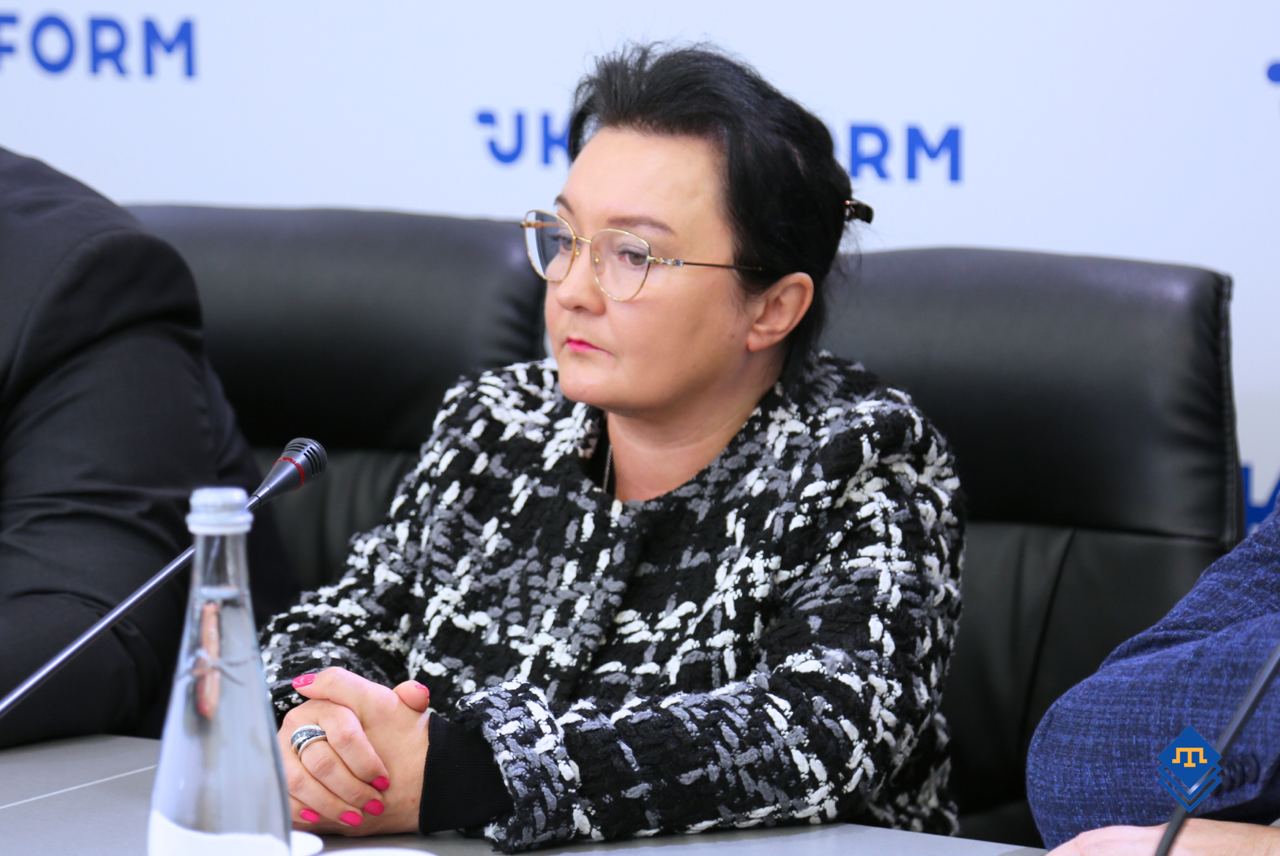
The second level, according to Butkevych, is related to the future post-occupation stage and requires special attention from the state today.
“This is a settlement that will be necessary after de-occupation. We are talking about issues of land and privatization of indigenous peoples’ lands, about preventing the presence in these territories of persons who appeared there after the occupation. It is also a question of responsibility for crimes committed in the occupied territories — illegal detentions, torture, murders, and trials,” the expert emphasized.
She noted that Ukraine has unique experience to offer the world in the context of protecting the rights of indigenous peoples.
“Ukraine has the specialists and experience to become a model in protecting the rights of indigenous peoples and national minorities in occupied territories. Russia’s aggression began precisely with the lands of indigenous peoples, and I am convinced that it must end with their de-occupation and the return of representatives of these peoples to their homes,” – Butkevych concluded.
During the press conference, special attention was paid to the topic of protecting the rights of indigenous peoples of Ukraine in international institutions. In particular, the discussion focused on the ECHR’s decision to initiate communication on cases concerning the ban of Mejlis of the Crimean Tatar people in 2016.
According to Babin, the Court’s decision is an important step, as Ukraine is officially joining the process as a third party to present its position on the representative structures of the Crimean Tatar people.
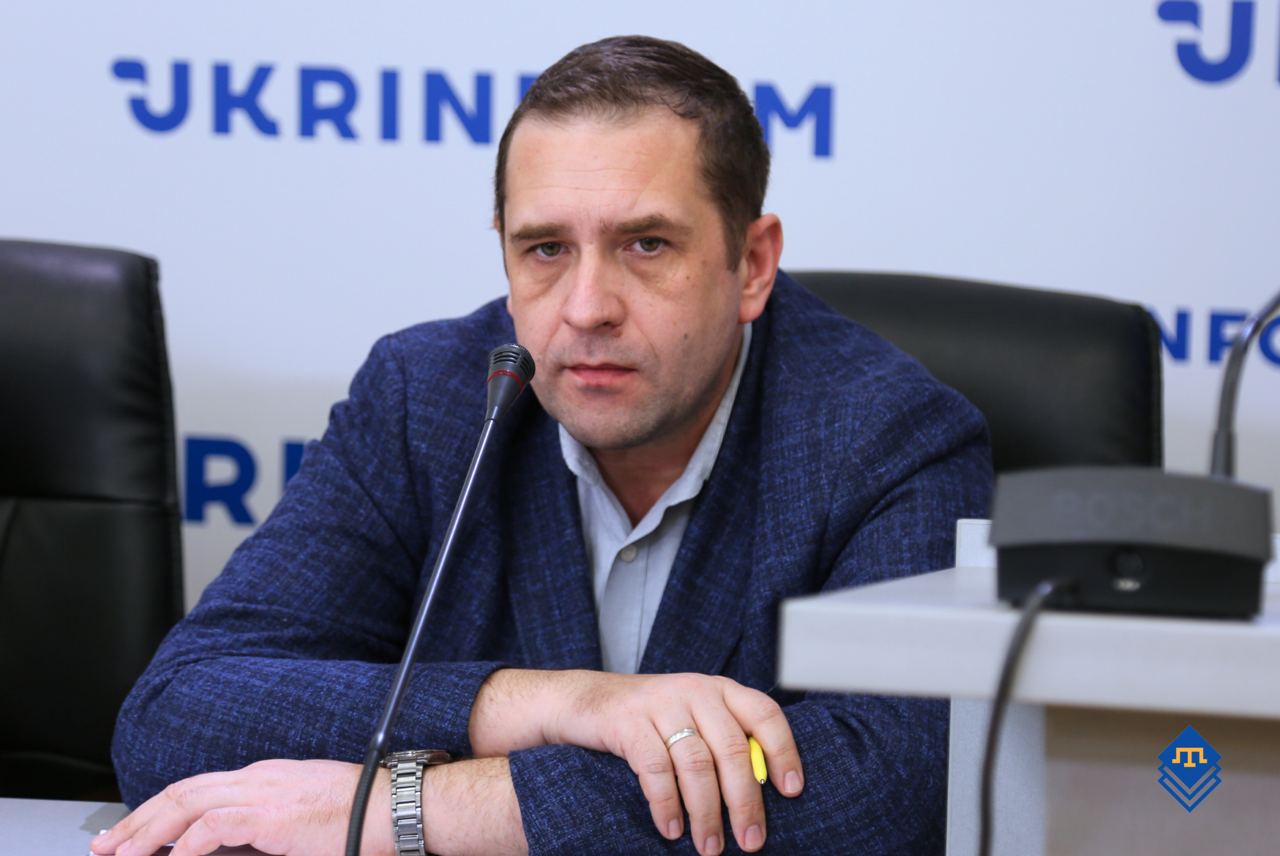
“The European Court has, in essence, initiated a dialogue on this issue. And although, of course, there will be no response from the aggressor, Ukraine now has the opportunity to present its position. This is very important, especially against the backdrop of the unfinished legalization of Mejlis of the Crimean Tatar people and ongoing internal processes,” -he stressed.
Babyn also drew attention to the recommendations of the UN Committee on Economic, Social and Cultural Rights, which called on Ukraine to complete the legalization of the Mejlis — to make it transparent and within a reasonable time frame.
“The international legal landscape that is currently taking shape will undoubtedly influence the institutionalization and implementation of the law. It is good that we are finally moving into the practical sphere: we are not talking about changes to the Constitution or the UN Charter, but about specific administrative decisions by the government — which do not exist, but which should exist,” – the expert noted.
Eskender Bariiev added that back in 2017, after the Mejlis was banned, with the assistance of the CTRC, 17 individual applications were filed with the ECHR by both individuals and legal entities in connection with the ban of Mejlis. The CTRC team did a truly tremendous job.
“When we recall the ECHR, we must remember that in 2016, the Mejlis, as the representative body of the indigenous people, was already under pressure from the occupiers. I would like to recall the appeal of the Mejlis of the Crimean Tatar people of March 15, 2014, to the Verkhovna Rada of Ukraine and the entire Ukrainian people. In it, the Mejlis clearly defined its position—it supported the sovereignty and territorial integrity of Ukraine, thereby becoming the first organization in the world to openly declare this. The occupiers do not forgive such things. That is why they began to persecute the Mejlis, and in 2016 they issued a decision recognizing it as an “extremist organization” and banned its activities,” – he added.