

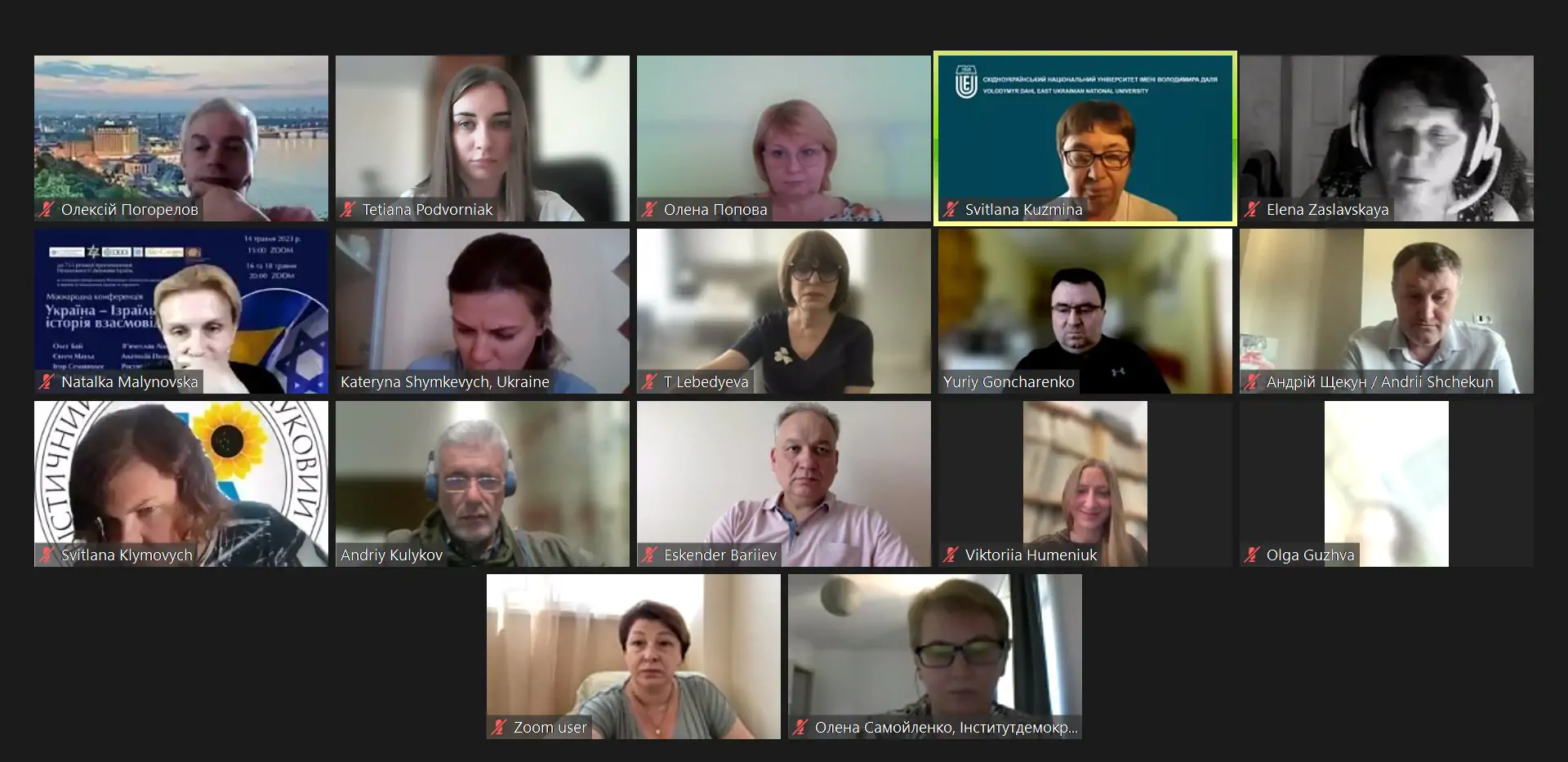
On Wednesday, May 31, a round table on the topic Journalism in the de-occupied territories was held online, organized by Volodymyr Dahl East Ukrainian National University, the Center for Counteracting Disinformation of the National Security and Defense Council of Ukraine, the Crimean Tatar Resource Center, the Platform of Student Journalism and the Commission on Journalistic Ethics.
The event was attended by journalists, scientists, teachers, human rights activists, civil servants, public figures and other interested persons.
Head of the Board of the Crimean Tatar Resource Center, member of Mejlis of the Crimean Tatar Resource Center Eskender Bariiev in his welcoming speech noted that this round table is an indicator of how interested the expert community of journalists in Ukraine is in these issues.
“There are so many registered specialists participating in this round table who want to speak, this is very important for us, because when we talk about de-occupation, reintegration of temporarily occupied territories, we also need to talk about the information policy that will be in the de-occupied territories . We already now need to form this information policy, what role will journalists have. It was at the Future of Crimea strategic forum that we really worked it out, but it was only the beginning”,- he said.
Communications Manager of the CTRC Tetiana Podvorniak took part in the round table as an expert, talking about the importance of restoring ethnic media in the de-occupied Crimea.
“Without indigenous journalism, there can be no effective reintegration process. Therefore, first of all, the state of Ukraine should contribute to the speedy restoration of all ethnic media that worked before the occupation in Crimea and the creation of new one”,- she said.
Tetiana stressed that there are already first steps in this direction, because the first changes have been made to the laws of Ukraine On Media, On State Support for the Media, Guarantees of Professional Activities and Social Protection of Journalists and On Ensuring the Functioning of the Ukrainian Language as the State Language. In accordance with these changes, TV and radio broadcasters that broadcast in the languages of the indigenous peoples of Ukraine, regardless of the territorial category, must provide a total weekly volume of broadcasting in the state language and languages of the indigenous peoples of Ukraine in the amount of at least 75 percent. The possibility of state support for media broadcasting in the languages of the indigenous peoples of Ukraine is also legally fixed.
“However, the issue of creating mechanisms to implement these changes remains open, and the Crimean Tatar Resource Center is also working on this”,- the expert emphasized.
The communications manager offered a number of recommendations:
- First, it is necessary now to develop a procedure for providing support to the media, in which the representative bodies of indigenous peoples directly own at least 51 percent of the authorized capital and / or voting rights of the shares of the media.
- Secondly, it is necessary now to create state and regional programs concerning the rights and legitimate interests of the indigenous peoples of Ukraine, as well as the processes of integration into Ukrainian society.
- Thirdly, already today we should think about the training of professional personnel. To do this, it is necessary to create special faculties at universities.
“In addition, ethnic media is an effective tool for preserving the language and identity of indigenous peoples. So, when, for example, the Crimean Tatar media begin to actively develop, then the youth will need to learn the Crimean Tatar language in order to get a serious position”,- the expert added.