


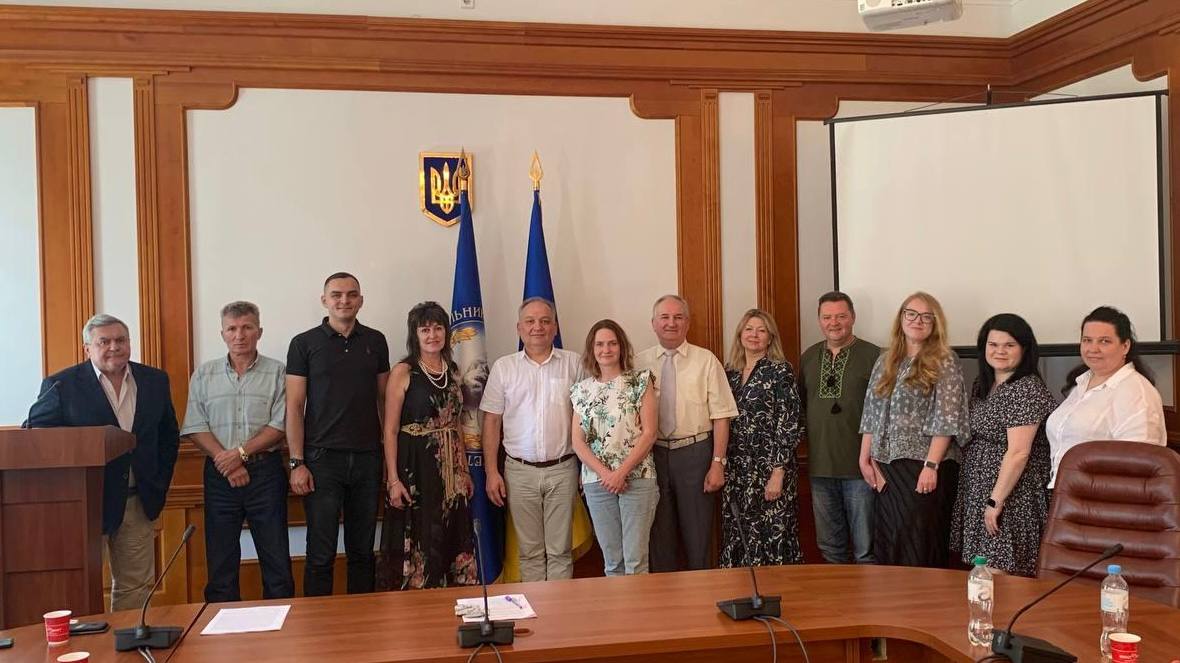
On Friday, 21 June, the Mykhailo Dragomanov Ukrainian State University hosted a scientific and practical conference “Youth and youth policy under martial law”.
Eskender Bariiev, Chairman of the Board of the Crimean Tatar Resource Centre, member of Mejlis of the Crimean Tatar people, joined the event, making a report on “The state of indigenous youth in conditions of the Russian-Ukrainian war”.
First of all, the expert defined the categories of Ukrainian youth: youth in the occupied territories, IDP and refugee youth, youth in the volunteer movement, youth defenders of the motherland, youth in human rights and advocacy activities.
“In fact, as early as 2014, it was necessary to form a state policy on work with young people living in the temporarily occupied territories. We, as public figures, first of all tried to create educational, cultural, sports and other self-organizations. Thanks to this we were able to maintain communication between the youth of the temporarily occupied territories and mainland Ukraine,” – he said.
Eskender Bariiev stressed that self-organization of young people always gives an opportunity to develop both non-violent struggle in the occupied territories and to perform, for example, the tasks of special services of Ukraine.
In addition, the Mejlis member noted the importance of preserving the identity of Ukrainian youth as a mechanism to influence international politics to support Ukraine.
“Indeed, it is very important for us that the young people who left Ukraine eventually still return home and do not assimilate. Therefore, it is very important to maintain this connection with young people abroad, for example, through advocacy, human rights or volunteer work,” he added.
Speaking about the importance of involving young people in the processes of deoccupation and reintegration of temporarily occupied territories, Bariiev said that the CTRC systematically held the Academy of Public Diplomacy of Crimean Tatars, through which they tried to involve young people more in public diplomacy at the international level.
Separately, the expert drew attention to the positive Ukrainianisation of Crimea.
“It should be understood that after the de-occupation of Crimea we will have a very complex situation and the implementation of Ukrainianization in Crimea should be competent and take into account the interests of all population groups. Positive Ukrainization provides for the creation of conditions for mutual understanding and dialogue between different ethnic and cultural groups. And this will help us create an inclusive and harmonious community in Crimea!” – he explained.