

Speech by the Chairman of the Mejlis of the Crimean Tatar People Refat Chubarov at the side event “Threats to sustainable development of IPs in conditions of interstate conflicts on the example of Russia-occupied Crimea”.
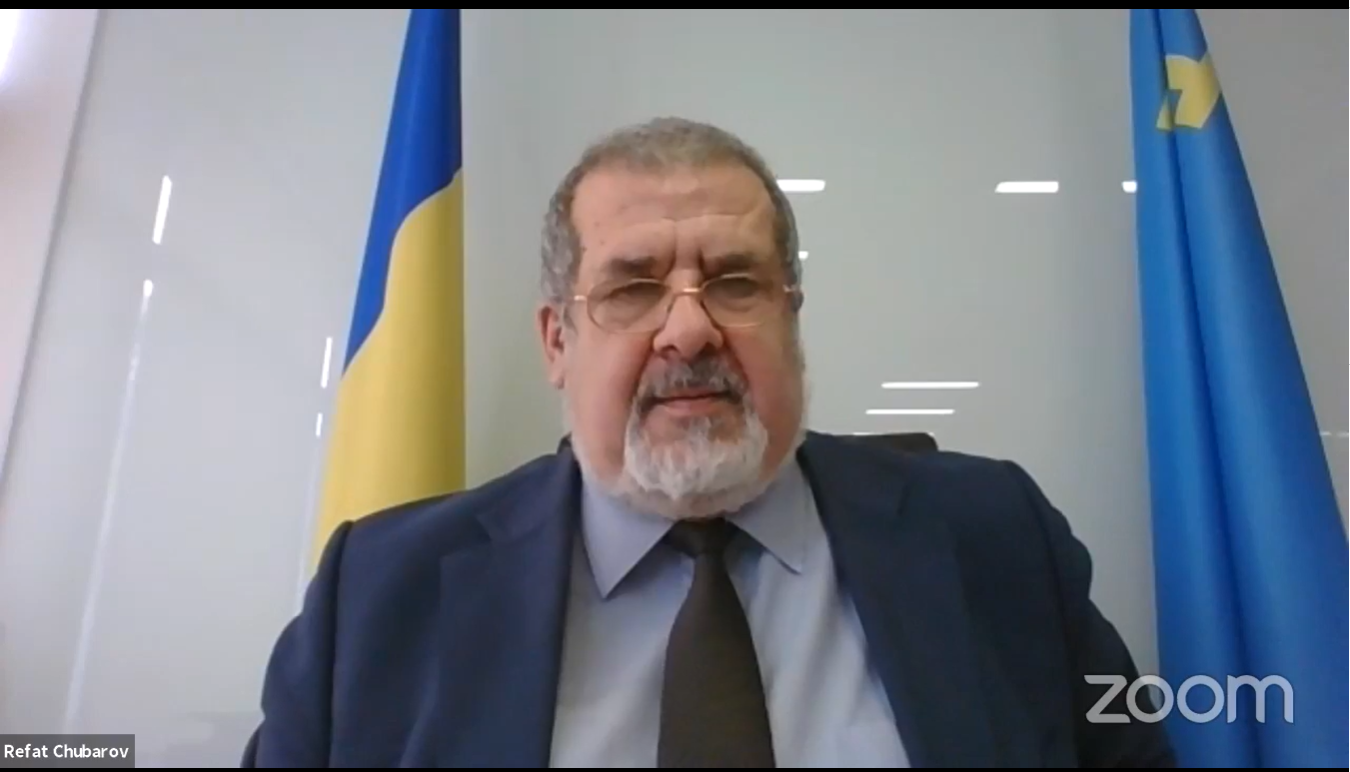
Dear First Deputy Minister of Foreign Affairs of Ukraine Ms. Emine Dzheppar
Dear Ambassador, Permanent Representative of Ukraine to the UN, Mr. Sergiy Kyslytsya.
Dear members of Mejlis of the Crimean Tatar people, dear participants of the online discussion.
Our side event is being held as part of the 20th session of the UN Permanent Forum on Indigenous Issues with a notable agenda: “Peace, justice and strong institutions: the role of indigenous peoples in implementing Sustainable Development Goal 16”.
The indication of the need and importance of UN Member States to collaborate with indigenous peoples, through their own representative institutions, in the development and implementation of national action plans, strategies and other measures to achieve the goals of the United Nations Declaration on the Rights of Indigenous Peoples, runs as a red line in many General Assembly and other UN institutions adopted after September 13, 2007, when the Declaration was adopted.
In the absence of sufficient time, I will draw your attention only to the most recent UN General Assembly Resolution 75/168 of December 16, 2020, The Rights of Indigenous Peoples.
The Resolution reiterates the need for indigenous peoples to participate in, contribute and benefit from the 2030 Agenda for Sustainable Development without discrimination, and encourages Member States to ensure that due account is taken of all the rights of indigenous peoples in the implementation of the 2030 Agenda, including through legislative action at the national level aimed at achieving the goals of the UN Declaration on the Rights of Indigenous Peoples.
The last wish – including by taking legislative measures at the national level aimed at achieving the goals of the UN Declaration on the Rights of Indigenous Peoples – remains particularly relevant for Ukraine.
Achieving Sustainable Development Goal 16 is the starting point for securing many of the rights proclaimed in the United Nations Declaration on the Rights of Indigenous Peoples, including such as access to non-discriminatory and inclusive justice, recognition of indigenous institutions, the principle of free, prior and informed consent, as well as rights to land, territories and resources.
But now is just the time for us to turn to the situation in Crimea temporarily occupied by the Russian Federation since February 2014.
The Russian occupation of Crimea, accompanied by the intensified militarization of the Crimean peninsula, caused catastrophic consequences for the unique territory of the Crimean peninsula and its indigenous peoples – the Crimean Tatars, Karaites and Krymchaks.
The ban by the Russian occupation authorities in April 2016 of the activities of the Mejlis of the Crimean Tatar people, persecution and repression against members of regional and local Mejlises, activists of the Crimean Tatar national movement, independent media and journalists, practicing Muslims, pursues as its goal intimidation and disorientation of the Crimean Tatars in the conditions of constant repressions carried out by the Russian occupants against the indigenous people of Crimea.
For Russia, which committed armed aggression against Ukraine in violation of all fundamental norms of international law, during which its troops occupied Crimea and unleashed hostilities in part of the territory of the Luhansk and Donetsk regions, the violation of international law in terms of the rights of indigenous peoples, including the right to preserve and strengthen special political and legal institutions was nothing more than another demonstration by Moscow of its disregard for international law.
The ban on the activities of the Mejlis of the Crimean Tatar people became part of a special operation carefully designed by Moscow to discredit the Crimean Tatar people at the international level.
I note that today marks 5 years since the ban, when the so-called Supreme Court of the Republic of Crimea recognized the activities of the Mejlis of the Crimean Tatar people as extremist and banned it in the Russian Federation, the same decision was later made by the Supreme Court of the Russian Federation in September 2016.
The decision of the International Court of Justice of April 19, 2017 to lift the ban on the activities of Mejlis of the Crimean Tatar people of the Russian Federation has not been implemented to this day.
Convinced of the impossibility of securing the loyalty of the Crimean Tatars either by positions and promises of political dividends, or by blackmail and repression, Moscow launched a special campaign to form in international public opinion the image of the Crimean Tatar people as a potentially dangerous community tending to radical extremist and terrorist actions.
Accordingly, the entire system of national self-government of the indigenous Crimean Tatar people – from the Mejlis of the Crimean Tatar people to regional and local Mejlises, which include 2,500 members, are presented by the Russian invaders as criminal communities trying to destabilize the situation on the peninsula.
Thus, the Russian Federation, along with committing other international crimes on the territory of Crimea as an occupying power, in particular those aimed at persecution and repression against citizens of Ukraine, changes the demographic and ethnic composition of the population of Crimea, carries out expropriation of property of Ukraine and its citizens, commits violations of the ecology of the peninsula and the adjacent waters of the Black and Azov Seas, destroys and steals the monuments of material culture and history of the Crimean Tatar people and at the same time grossly violates the norms of international law in terms of protecting the rights of indigenous peoples.
Of course, such criminal behavior of the Russian Federation in relation to Crimea and its inhabitants occupied by it should not only be reflected in the resolutions adopted annually by the UN General Assembly, but also should be punished.