

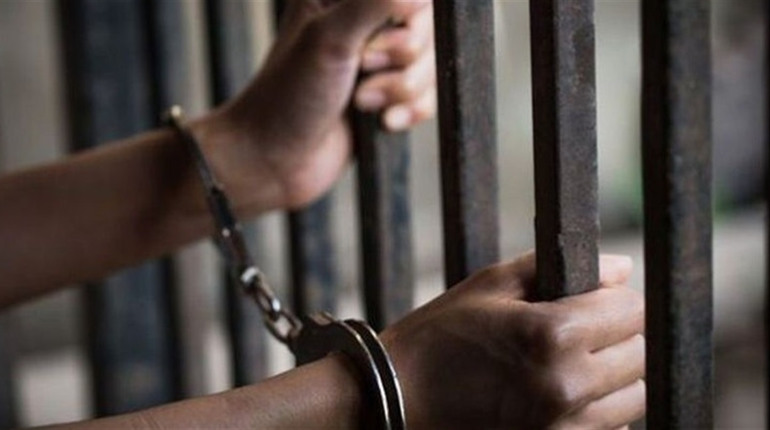
After the occupation of Crimea, the Russian Federation has been actively practising religious persecution on the peninsula. According to the Crimean Tatar Resource Centre, 117 people are being persecuted in the ‘Hizb ut-Tahrir case’, 114 of them are representatives of the indigenous Crimean Tatar people. 82 of them are serving their sentences in Russian prisons and colonies, while 28 are in pre-trial detention centres, 2 are under house arrest, and 5 have been released.
On 14 February 2003, the Supreme Tribunal of the Russian Federation, having considered in a closed court session a civil case on the application of the Prosecutor General of the Russian Federation, recognised 15 Islamic organisations, including Hizb ut-Tahrir, as terrorist and banned their activities on the territory of the Russian Federation. The reasoning part of the decision of the Supreme Court of the Russian Federation does not contain any data on the terrorist activities of Hizb ut-Tahrir in accordance with the definition of terrorism. This decision was taken in violation of the basic principles of a fair trial: publicity and equality of arms.
The charges in these ‘cases’ are based on the testimony of ‘hidden witnesses’ and the conclusions of ‘experts’ actively co-operating with the FSB of the Russian Federation. The only ‘evidence’ is banned Islamic literature found during searches, operational data of the FSB and audio recordings, which allegedly record that the convicts held discussions on religious and political topics. The activists are accused of involvement in the activities of Hizb ut-Tahrir, an organisation banned in the Russian Federation, which has no restrictions on its activities in most countries of the world.
This policy of the Russian Federation is a demonstration of the fight against dissent, as well as religious and political beliefs of people in occupied Crimea.
The Russian Federation is misusing its legislation for political purposes, in particular to suppress the non-violent struggle of Crimean Tatars and their protest against the occupation of Crimea. Moreover, the occupiers are intensifying repression against the defendants of the ‘Hizb ut-Tahrir case’, increasing the sentences to 19 years in prison, assigning the first years of imprisonment, putting political prisoners on vocational registers.
From the point of view of Hizb ut-Tahrir, none of the countries of the Western world, including Russia, meet the criteria for the establishment of a Caliphate. Moreover, the organisation notes its non-adoption of terrorist methods in its activities, and not a single terrorist attack or armed violence has been organised in the 75 years of its existence.
The Crimean Tatar Resource Centre demands the cancelation of all sentences of the Hizb ut-Tahrir defendants and the immediate release of other political prisoners.
The Crimean Tatar Resource Centre calls on the international community to increase pressure on the Russian Federation to stop political persecution in Crimea, and to impose personal sanctions on those responsible for human rights violations on the territory of temporarily occupied Crimea.
During the entire occupation of the peninsula, 18 waves of detentions of Crimean Tatars involved in the so-called ‘Hizb ut-Tahrir case’ were carried out:
- Sevastopol ‘Hizb ut-Tahrir case’ – 2015
- Yalta ‘Hizb ut-Tahrir case’ – 2016
- Bakhchisaray ‘Hizb ut-Tahrir case’ – 2016
- Simferopol ‘Hizb ut-Tahrir case’ – 2016
- Second Bakhchisaray ‘Hizb ut-Tahrir case’ – 2017
- Krasnogvardeisk ‘Hizb ut-Tahrir case’ – 2019
- Second Simferopol ‘Hizb ut-Tahrir case’ – 2019
- Belogirsk ‘Hizb ut-Tahrir case’ – 2019
- Alushta ‘Hizb ut-Tahrir case’ – 2019
- Third Bakhchisaray ‘Hizb ut-Tahrir case’ – 2020
- Fourth Bakhchisaray ‘Hizb ut-Tahrir case’ – 2020
- ‘Hizb ut-Tahrir case’ dated of 17 February 2021
- Second Sevastopol ‘Hizb ut-Tahrir case’ – 2021
- Third Sevastopol ‘Hizb ut-Tahrir case’ – 2022
- Dzhankoy ‘Hizb ut-Tahrir case’ – 2022
- Second Dzhankoy ‘Hizb ut-Tahrir case’ – 2023
- Fifth Bakhchisaray ‘Hizb ut-Tahrir case’ – 2023
- Sixth Bakhchisaray ‘Hizb ut-Tahrir case’ – 2024
In colonies/prisons:
- Ruslan Zeitullaev
- Enver Bekirov
- Muslim Aliev
- Emir-Usein Kuku
- Vadim Siruk
- Enver Mamutov
- Zevri Abseitov
- Remzi Memetov
- Rustem Abiltarov
- Teymur Abdullaev
- Rustem Ismailov
- Uzeir Abdullaev
- Aider Saledinov
- Emil Dzhemadenov
- Marlen Asanov
- Memet Belyalov
- Timur Ibragimov
- Seyran Saliiev
- Server Mustafayev
- Server Zakiryaev
- Edem Smailov
- Rustem Emiruseinov
- Arsen Abkhairov
- Eskender Abdulganiev
- Tofik Abdulgaziev
- Izzet Abdullaev
- Vladlen Abdulkadyrov
- Medzhit Abdurakhmanov
- Bilyal Adilov
- Farhod Bazarov
- Akim Bekirov
- Remzi Bekirov
- Riza Izetov
- Seitveli Seitabdiev
- Shaban Umerov
- Asan Yanikov
- Raim Aivazov
- Enver Omerov
- Riza Omerov
- Aider Dzhepparov
- Eldar Kantimirov
- Ruslan Nagaev
- Eskender Suleymanov
- Ruslan Mesutov
- Lenur Khalilov
- Seytumer Seytumerov
- Amet Suleymanov
- Rustem Seitmemetov
- Osman Seitumerov
- Vadim Bektemirov
- Zekirya Muratov
- Emil Ziyadinov
- Timur Yalkabov
- Raif Fevziev
- Alim Karimov
- Seyran Murtaza
- Erfan Osmanov
- Servet Gaziev
- Dzhemil Gafarov
- Ernes Ametov
- Marlen Mustafayev
- Enver Ametov
- Osman Arifmemetov
- Yashar Muedinov
- Ruslan Suleymanov
- Rustem Sheikhaliev
- Yashar Shikhametov
- Azamat Eiupov
- Ismet Ibragimov
- Ernest Ibragimov
- Oleg Fedorov
- Ansar Osmanov
- Dzebbar Bekirov
- Zavur Abdullaev
- Rustem Murasov
- Rustem Tairov
- Oleksandr Sizikov
- Alim Sufyanov
- Seyran Khairetdinov
- Ernest Seitosmanov
- Murat Mustafayev
- Ametkhan Abdulvapov
IN THE PRE-TRIAL DETENTION CENTRE:
- Rustem Seitkhalilov
- Lenur Seidametov
- Timur Yalkabov
- Enver Krosh
- Vilen Temerianov
- Edem Bekirov
- Rinat Aliev
- Ekrem Krosh
- Aider Asanov
- Refat Seidametov
- Osman Abdurazakov
- Leman Zekiryaev
- Khalil Mambetov
- Amethan Umerov
- Seidamet Mustafayev
- Ruslan Asanov
- Abdulmedzhit Seitumerov
- Eldar Yakubov
- Remzi Nimetulaev
- Rustem Osmanov
- Aziz Azizov
- Memet Lumanov
- Mustafa Abduramanov
- Vait Mustafaev
- Ali Mamutov
- Arsen Kashka
- Enver Khalilaev
- Nariman Ametov.
Under house arrest:
- Seityaga Abbozov
- Remzi Kurtnezirov
Released, but have restrictions:
- Rustem Vaitov
- Nuri Primov
- Ferat Sayfulaev
- Refat Alimov
- Arsen Dzhepparov
Justified and then re-arrested:
- Ernes Ametov
We would like to remind that Hizb ut-Tahrir – the Liberation Party – declares itself as an international Islamic political party whose goal is to restore the Islamic way of life by creating a worldwide Islamic theocratic state (Caliphate). The organisation was established in the early 1950s in the Middle East, and currently its activities are carried out on the territory of at least 58 countries, including Ukraine.