
On Friday the 9th of August at the Ukrainian Crisis Media Center the Crimean Tatar Resource Center and the Estonian Institute of Human Rights held a round table dedicated to the realization of the rights of indigenous peoples in Ukraine and around the world with its problems and prospects. Participants stated the need to adopt the Law on Indigenous Peoples of Ukraine, a national action plan of the protection of the rights of indigenous peoples and once more emphasized on the importance of ratifying ILO C169 and amending Section X of the Constitution of Ukraine.
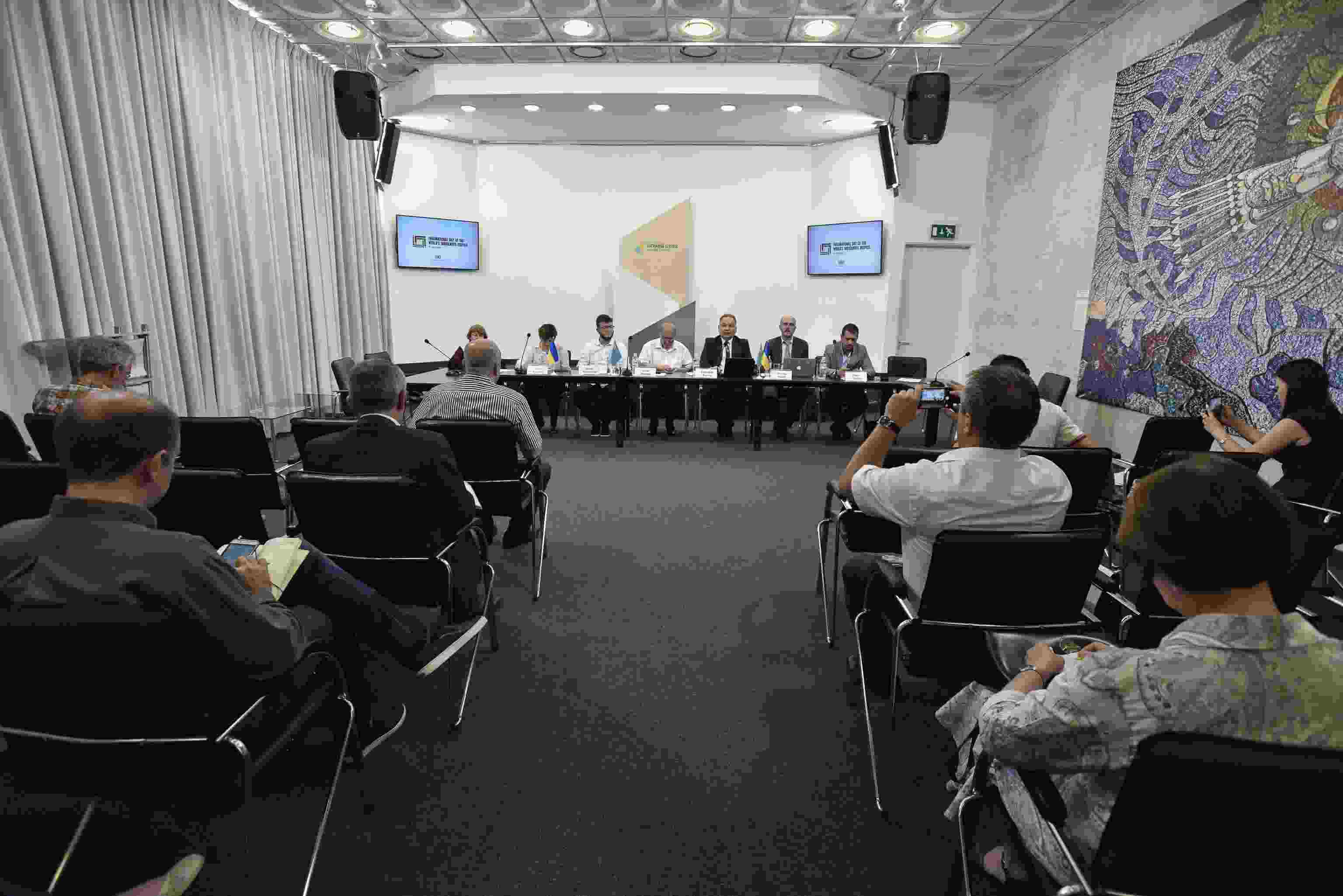
The event was attended by Ukrainian and foreign experts. They following issues were discussed:
1. International and national standards for the implementation of the rights of indigenous peoples;
2. Core necessities for the implementation of the rights of indigenous peoples in Ukraine;
3. International cooperation in the implementation of the rights of indigenous peoples in Ukraine.
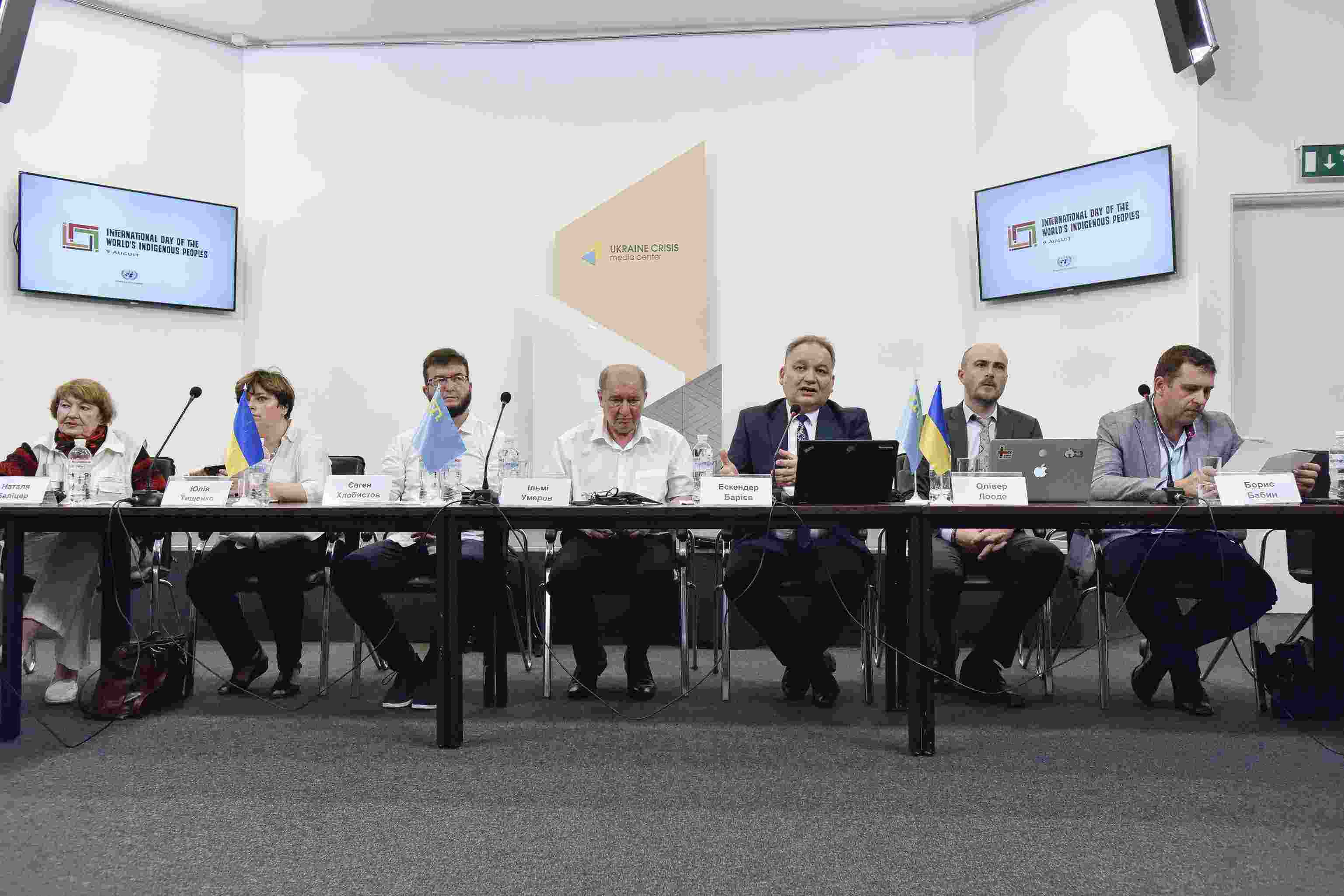
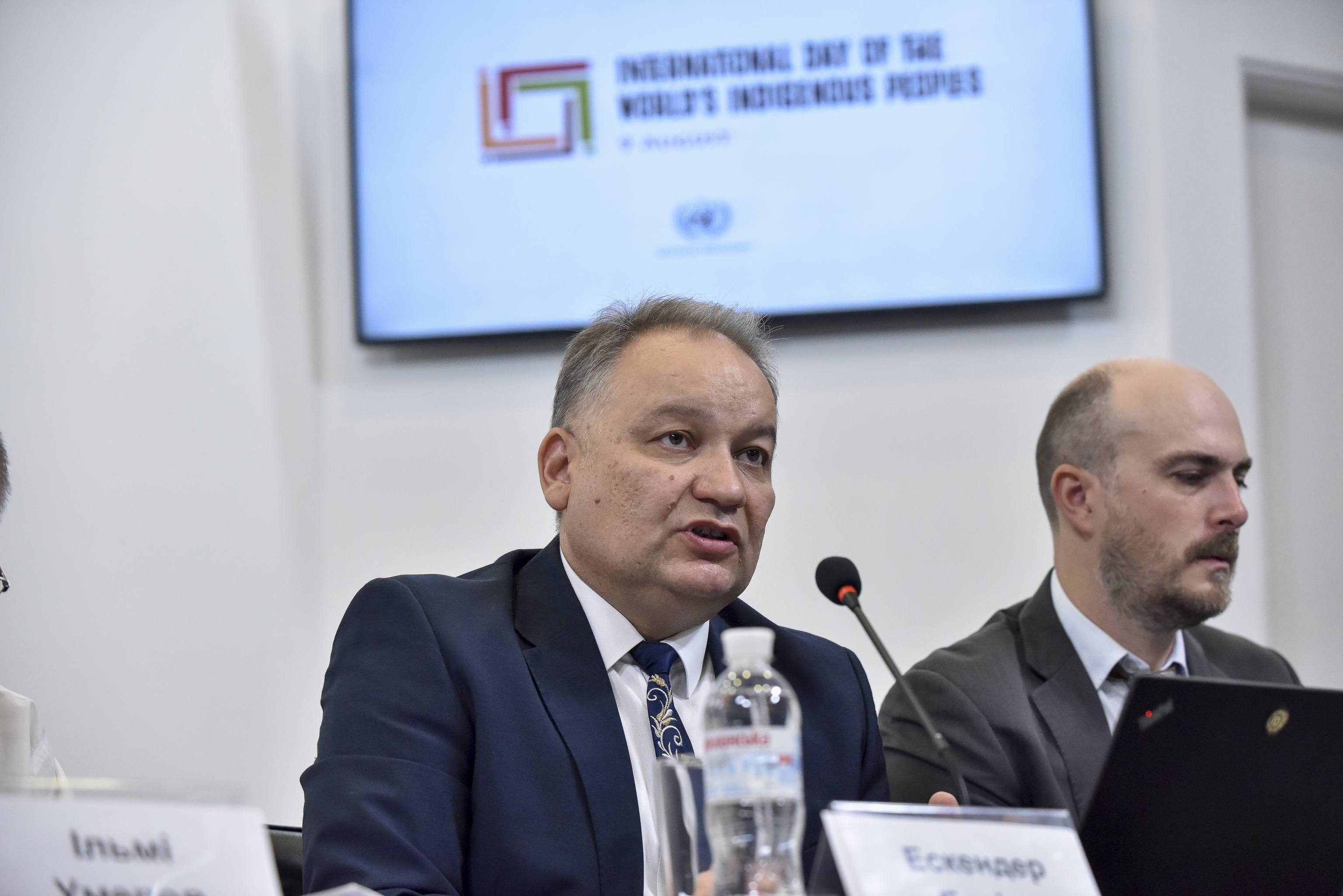
The Head of the Board of the Crimean Tatar Resource Center, a member of Mejlis of the Crimean Tatar people, Eskender Bariiev, while opening the event, informed the audience about the history and significance of the International Day of the World's Indigenous Peoples.
“Currently, the total number of indigenous peoples on our planet is about 370 million people who live in more than 90 countries and represent numerous diverse languages and cultures. Indigenous peoples make up only 5% of the world's population while at the very same time accounting for the 15% of the world's poorest people. Today they continue to face many problems, and their rights are often violated”, – Bariiev said.
Ilmi Umerov, Deputy Chairman of Mejlis of the Crimean Tatar people, noted that if Crimea had been given the status of Crimean Tatar autonomy 25 years ago, no annexation or occupation by the Russian Federation would have occurred
“Everyone is talking about problems with the rights of indigenous peoples, but problems can only possibly arise in a state that does not ensure the realization of these rights. For example, if Crimea had been given the status of the Crimean Tatar autonomy 15-20 years ago, I’m sure that no annexation or occupation by the Russian Federation would have occurred”, – Ilmi Umerov emphasized.

Oliver Loode, an expert of the Estonian Institute of Human Rights, a member of the UN Permanent Forum on Indigenous Issues (2014-2016), noted in his speech that Ukraine had enough occasions and opportunities to form some basic legislative, political and regulatory prerequisites that would ensure a high degree of trust among its indigenous peoples, in particular, the Crimean Tatars. Loode also noted that:
– In Ukraine there is still no law on indigenous peoples;
– At the official level, Ukraine was inconsistent in the use of the term “indigenous peoples” in relation to the Crimean Tatars. In various documents, the Crimean Tatars continue to be called an ethnic minority, a community;
– Ukraine is expected to strengthen its presence and influence in at least one of the three UN mechanisms dedicated to the indigenous peoples: UNPFII, EMRIP and SRRIP.
However, according to Loode, there are some obvious positive tendencies:
1) Ukraine continues to recognize the Crimean Tatars as the indigenous peoples of Ukraine and actually often defines them as such;
2) Diplomatic missions of Ukraine in New York, Geneva, Vienna, etc. work as a team with representatives of indigenous peoples and conduct an international advocacy campaign;
3) The diplomatic missions of Ukraine at the UN have become more actively involved in the work of the mechanisms of the indigenous peoples of the UN, that namely are UNPFII, EMRIP and SRRIP.
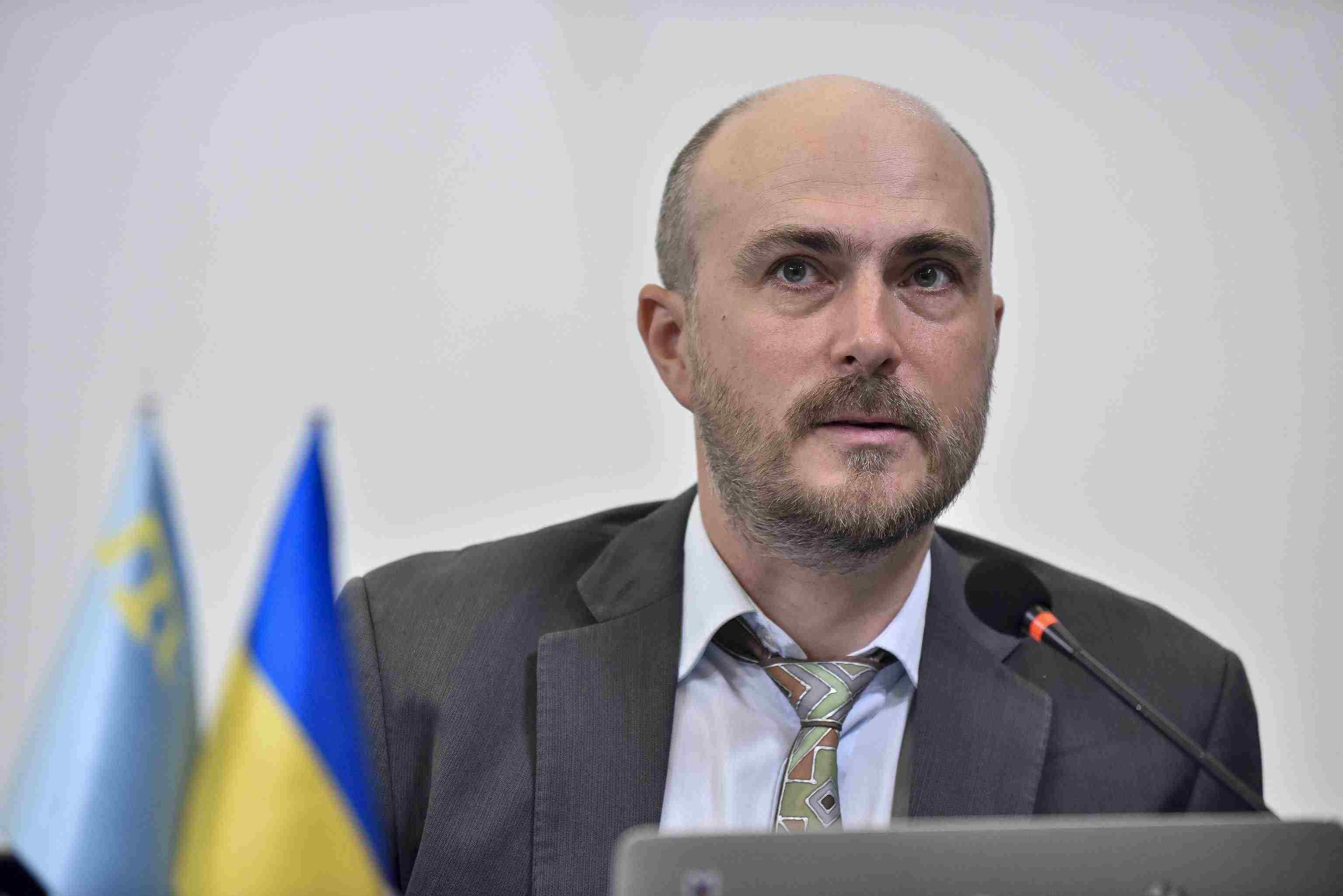
Ievgen Khlobystov, Professor, doctor of economic sciences, expert of the Crimean Tatar Resource Center, claimed that a strategic vision of the future of Crimea is very important. According to him, the strategy of de-occupation of Crimea is an urgent need for today, and the political status of Crimean indigenous peoples is the basis for a harmonious return of the peninsula.
“We need a separate humanitarian policy of Ukraine in Crimea, especially taking into account its indigenous peoples, their adaptation and inclusion to Ukrainian society and increasing opportunities for their professional growth and competitiveness in the labor market”, – Khlobystov emphasized.
According to Khlobystov, Ukraine should be prepared for the return of Crimea, and, therefore, should offer a scenario for a harmonious future of the peninsula, including the consequent granting of a special political status of Crimea as an integral part of Ukraine.

The Head of the Board of the Crimean Tatar Resource Center, a member of Mejlis of the Crimean Tatar people Eskender Bariiev recalled that, despite the fact that Ukraine joined the UN Declaration on the Rights of Indigenous Peoples in 2014, and the Crimean Tatar people were recognized as indigenous people, this very issue is still to be settled in the legal and regulatory field of Ukraine.
According to Bariiev, to resolve this issue it is necessary to:
1. Adopt the Law on Indigenous Peoples of Ukraine, taking into account the standards of the UN Declaration on the Rights of Indigenous Peoples;
2. Adopt the National Action Plan for the Protection of the Rights of Indigenous Peoples of Ukraine, as an integral part of the adaptation of the UN System-wide Action Plan for Indigenous Peoples;
3. Amend the Section X of the Constitution of Ukraine;
4. Ratify ILO C169.
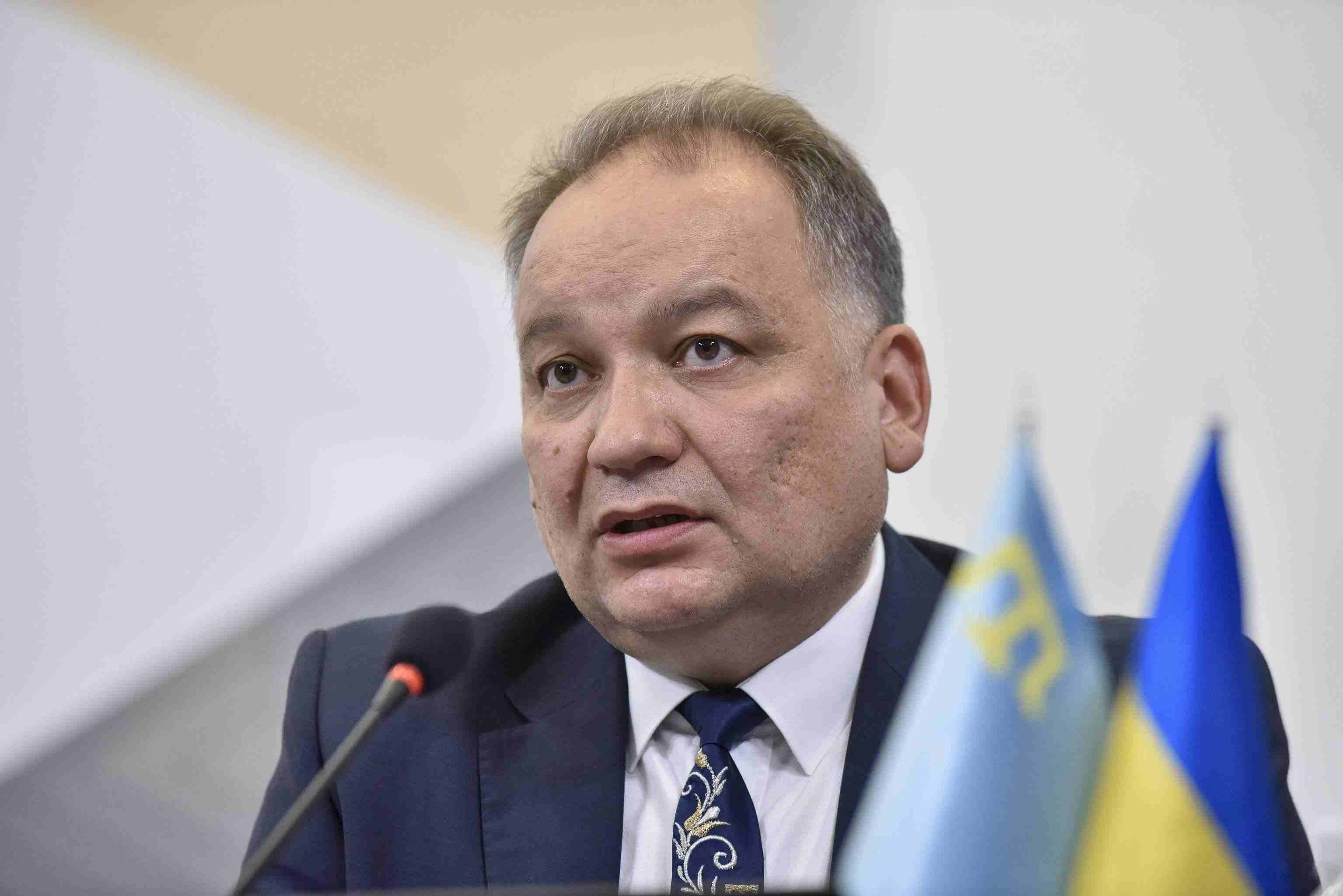
The Head of the Board of the CTRC noted that he considers the following events desirable and useful on the International Day of the World's Indigenous Peoples:
1) A statement by the President of Ukraine dedicated to the statewide protection of the rights of the indigenous peoples of Ukraine (Crimean Tatars) as well as the need for the aggressor state to comply with relevant UN standards in Crimea;
2) A decree of the President of Ukraine on the annual commemoration in Ukraine of the 9th of August – the International Day of the World's Indigenous Peoples;
3) An order of the President of Ukraine addressed to the respectful authorities to conduct annual cultural and educational events dedicated to the history and culture of indigenous peoples of Ukraine, including issuing of postage stamps, coins, etc.;
4) An instruction of the President of Ukraine to the Ministry of Foreign Affairs of Ukraine regarding the coverage through diplomatic channels of Ukraine’s position on the issues of UN Indigenous Peoples Day, the UN Declaration on the Rights of Indigenous Peoples and the problems of indigenous peoples of Ukraine in context of the Russian aggression.
Their respectful opinions regarding the matter were also shared by Borys Babin, Professor, doctor of legal sciences, expert of the Crimean Tatar Resource Center, Yuliia Tyshchenko, Head of the Ukrainian Independent Center for Political Studies and Nataliya, expert of the Pylyp Orlyk Institute for Democracy.
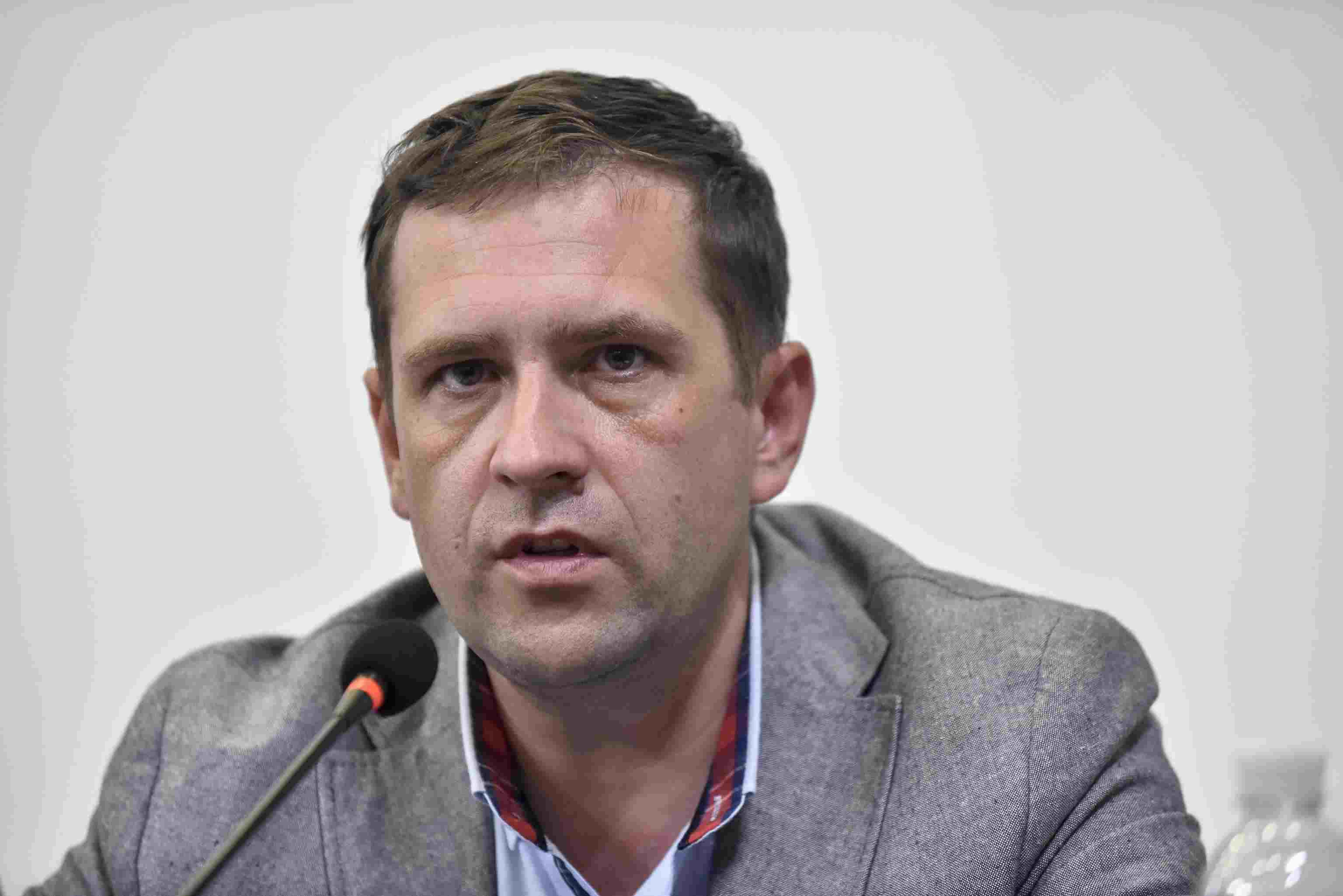


The event also included the following international experts and representatives of indigenous peoples via Skype:
– Helena Nyberg, Representative of the European Alliance for the Self-Determination of Indigenous Peoples from Zurich;
– Lee Swepston, Independent Consultant, Human Rights at Work, Indigenous Rights, Former Senior Adviser on Human Rights, International Labour Office from Geneva;
– Tai Pellicier, Boriken Taino (a native Taino from Puerto Rico), a secretary of the United Confederation of Taino People and co-founder of the Caribbean Organization of Indian Development from USA via Skype;
– Pavel Sulandziga, indigenous peoples’ rights activist from Russia, representative of the native Udege people from USA;
– Viacheslav Lombroso, representative of the Krymchak people;
– Representatives of the Crimean Tatars, Karaites and Urums (Turkic-speaking Greeks) from Melitopol.
In their speeches, they emphasized the need to adopt a law on indigenous peoples of Ukraine and the importance of enforcing the rights of indigenous peoples of the world, while also assuring their consequent support of the Crimean Tatar people.
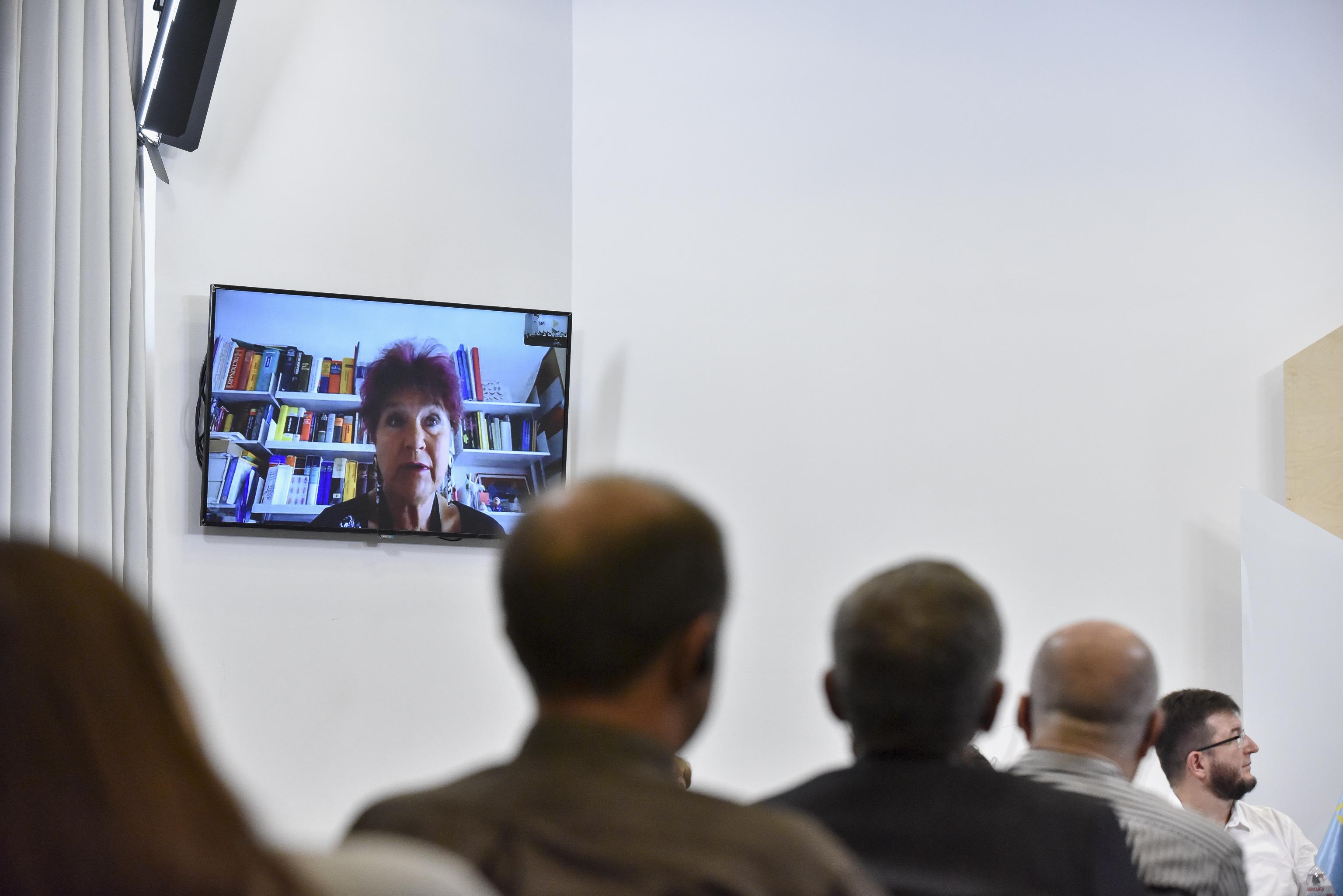
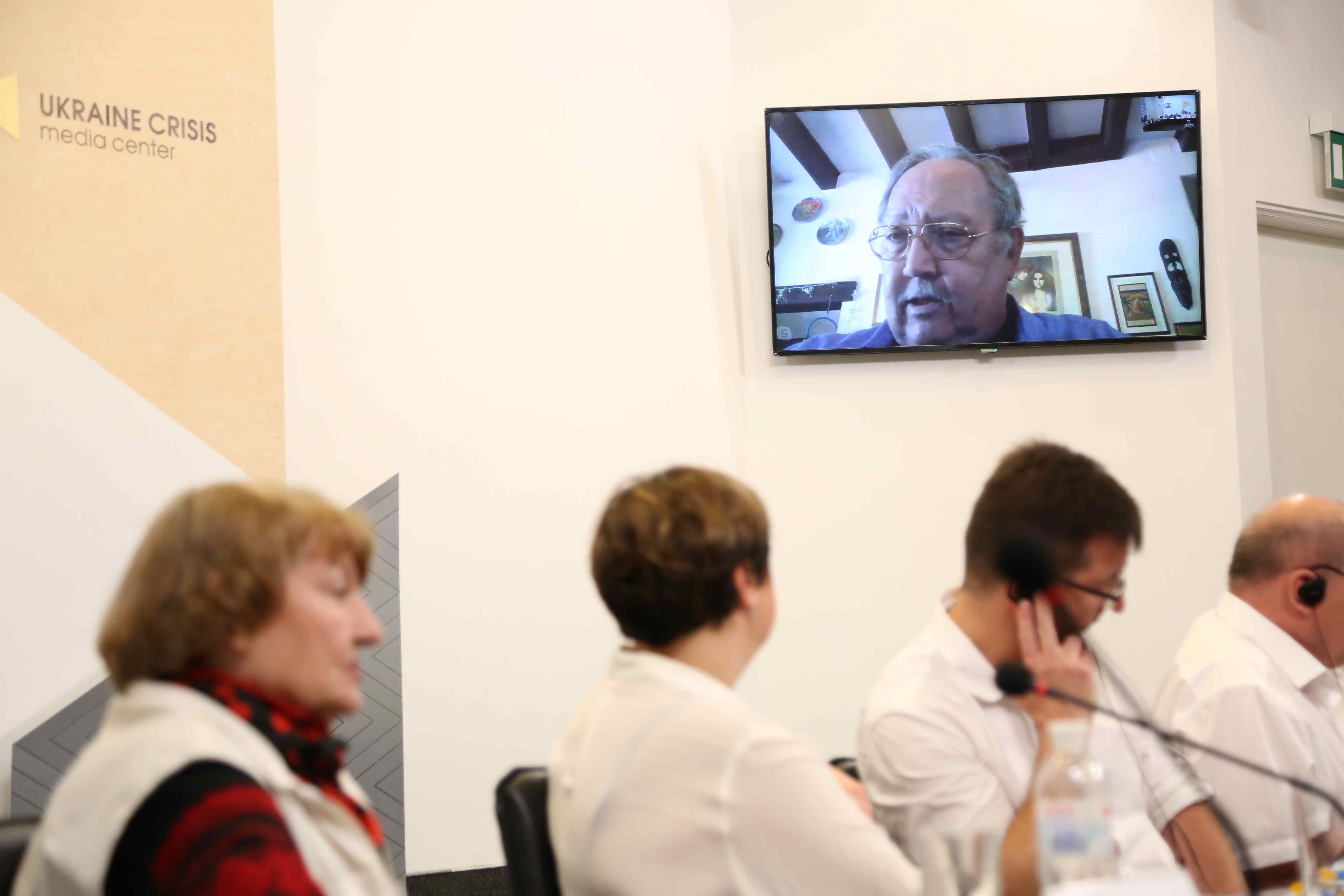
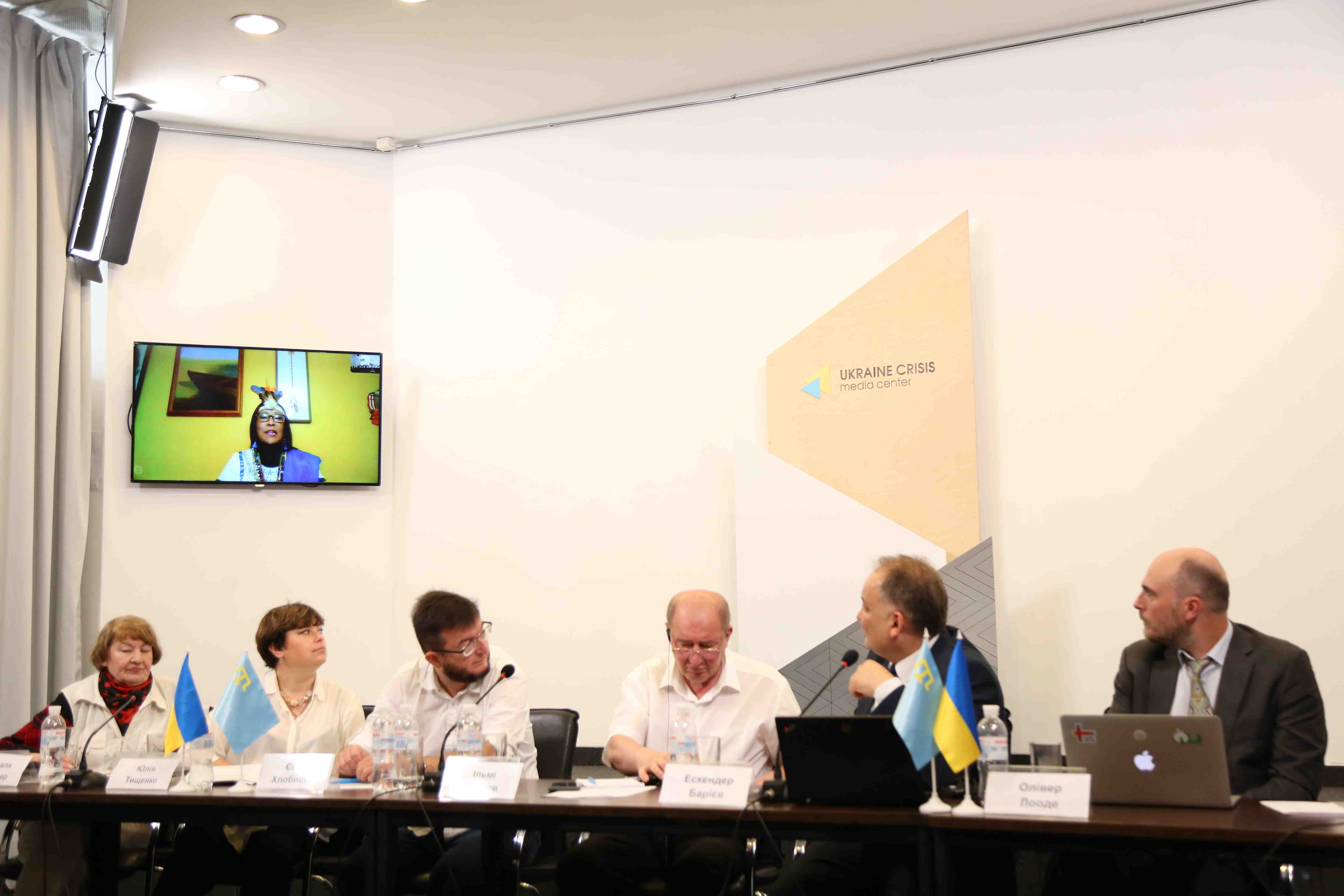

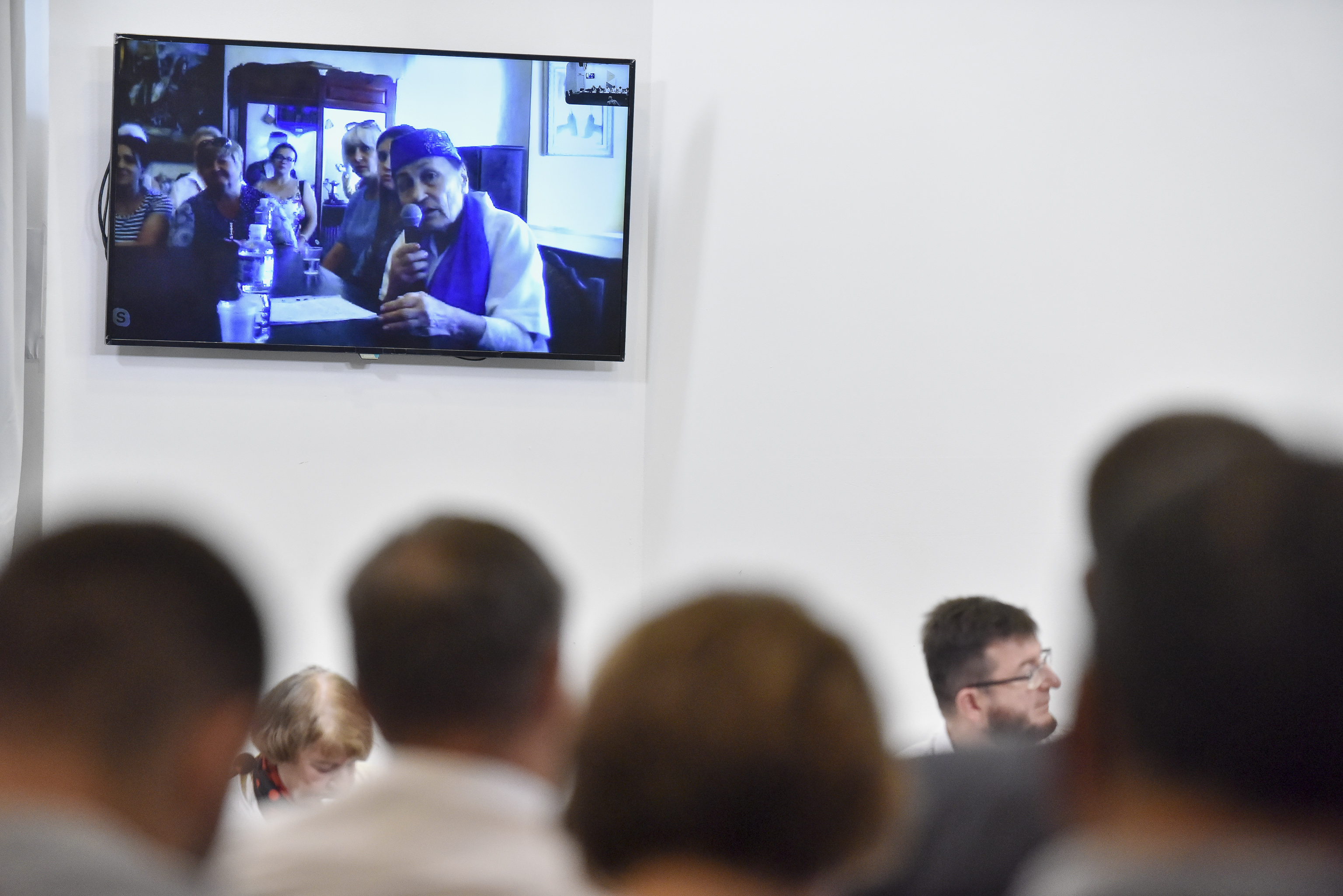 Photo: UCMC, CTRC
Press Service of the Crimean Tatar Resource Center