

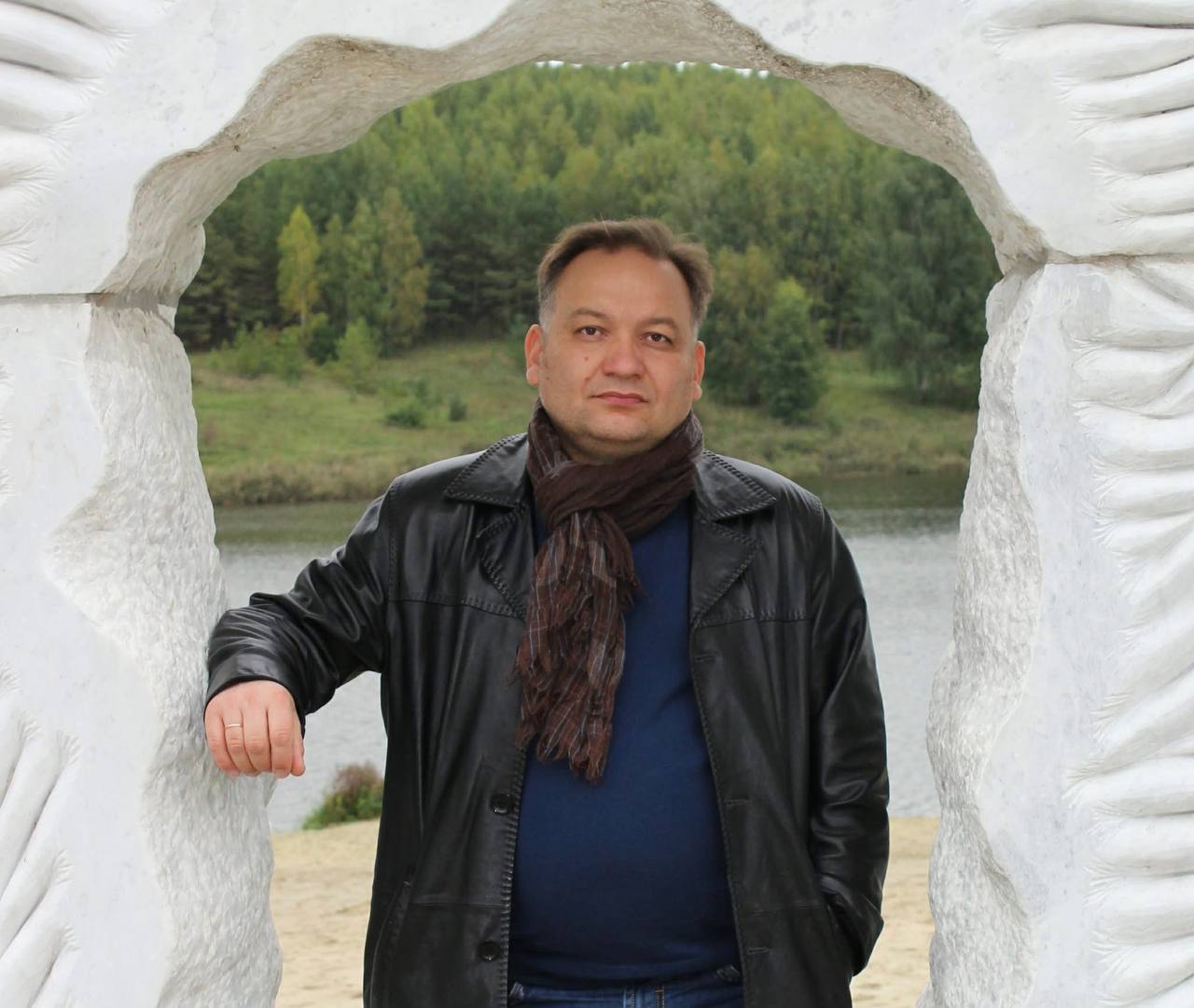
The Head of the Crimean Tatar Resource Center and member of Mejlis of the Crimean Tatar People, Eskender Bariiev, shared his thoughts on the role of US President Donald Trump in global processes, the Russian-Ukrainian war, and the prospects for the deoccupation of Crimea.
Is Donald Trump a populist?
Eskender Bariiev noted that today, in the information age, especially in the third decade of the third millennium and in democratic societies, populists are increasingly coming to power — promising, not always experienced and professional politicians who do not care about responsibility for their statements.
Is he a “Russian spy”?
The head of the CTRC noted that these allegations have not been legally confirmed, but his ties to Russia have repeatedly been the subject of investigations and discussions. After returning to the White House in 2025, Trump took a number of steps that provoked mixed reactions.
Is he a businessman in politics?
•Pragmatism instead of ideology — he actively promoted peace initiatives in the Middle East and Ukraine, viewing them as a way to reduce US spending.
•He used aggressive tariffs as a tool to pressure trading partners (China, EU).
•He sought to reduce the size of government and regulation, continuing attempts to eliminate redundant agencies (e.g., the Department of Education).
•In negotiations, he used the tactic of “giving his opponent a little less than he wants, but enough for him to agree.”
Is Trump a skilled geopolitical player?
According to Bariiev, there are two sides to this statement: on the one hand, there are first impressions of his unpredictability, narcissism, and lack of strategic thinking, cuts or termination of funding for international organizations and programs, and devaluation of democratic values; on the other hand,
• he has taken on the role of key mediator in resolving the long-standing Armenian-Azerbaijani conflict, and the signing of the agreement in Washington has effectively sidelined Russia in the South Caucasus;
• it has revived and strengthened the “Central Asia + US” (C5+1) format to strengthen the US position and weaken Russia’s position in the region;
• In Europe, he initiated an awareness of the need for subjectivity and complete strategic autonomy.
• He pursued a systematic policy of strengthening the US in the Western Hemisphere, particularly in the Caribbean, with the consistent ousting of Russia.
“As for the settlement of the Russian-Ukrainian conflict, which has turned into a complex knot of contradictions between several centers of power, each of which has invested its own strategic content in its outcome, Trump either really underestimated the real situation or continues to systematically flirt with the dictator, while at the same time displacing his influence in the world and destroying him from within — by weakening Russia’s economy,” Bariev emphasized separately.
According to him, despite the expectations of part of society for the provision of the most modern and lethal weapons to Ukraine, as well as decisive military action by the US in other areas, the American administration views the war not as an isolated event, but as part of a global rivalry for influence and the formation of the rules of the international order.
The US continues to put pressure on both sides, seeking an immediate ceasefire and a transition to the implementation of the “road map.”
At the same time, the head of the board of the
CTRC noted:
• The US continued deliveries under commitments approved by the Biden administration;
• Military aid was temporarily suspended in March and July;
• There were reports about lifting restrictions on the use of Western missiles on Russian territory;
• The main financial burden of paying for new aid was shifted to European allies;
• 2025 was the year with the lowest level of new military aid to Ukraine since the start of the full-scale invasion;
• Blocking sanctions were imposed on Russia’s largest oil companies, Rosneft and Lukoil, as well as their subsidiaries;
• The Sanctioning Russia Act of 2025 was supported, giving the president the right to impose tariffs of up to 500% and blocking measures against countries that continue to purchase Russian energy resources.
“There is a possibility that the war will end in 2026, but it remains unclear. It depends not only on one political leader, although the battle for Trump continues, but on a combination of factors: military and economic fatigue, internal political changes, and most importantly, the emergence of a formula that will allow all parties to the conflict to consider the outcome acceptable and not humiliating,” – Bariiev added.
What role can Trump play in the Crimea issue?
Here, he emphasized that it also depends on the Ukrainian authorities — on the extent to which representatives of the indigenous people will be represented in the negotiation processes. At the same time, this requires at least granting the Mejlis of the Crimean Tatar people the legal status of a representative body of the indigenous people.
Thus, 2026 will mark 455 years since the Crimean khans burned Moscow during the Crimean campaign of Khan Devlet I Giray, one of the most destructive events of that era.
“Could something like this happen again in 2026? – given how unpredictable things are, it’s possible… For now, we’re watching to see how the Western Hemisphere is being cleared of Russian influence,” summed up the head of the board of the Crimean Tatar Resource Center.