

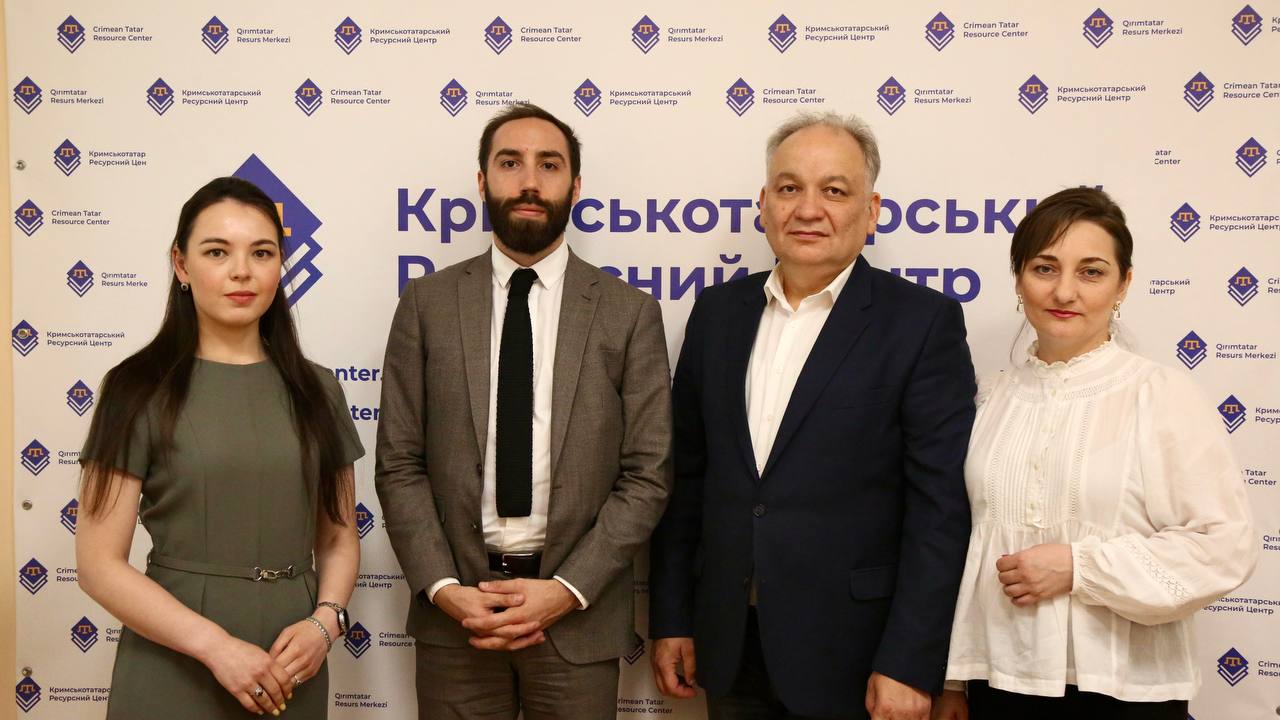
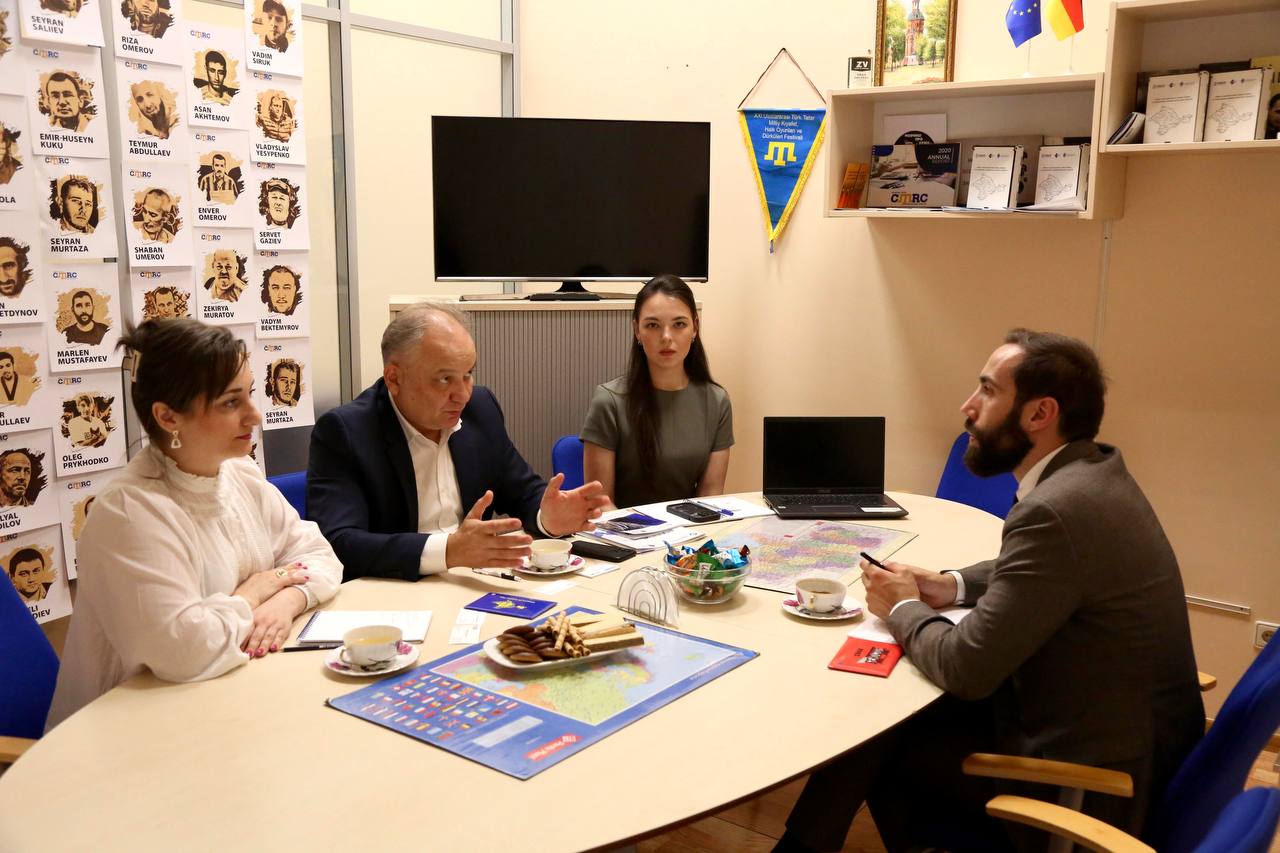
On Friday, June 20, representatives of the Crimean Tatar Resource Center met with the French Embassy in Ukraine. During the meeting, the parties discussed the situation with human rights violations in the temporarily occupied Crimea and in the south of Ukraine, the reintegration of the peninsula, legislative provision of the rights of indigenous peoples of Ukraine.
The CTRC was represented by the Chairman of the Board, member of Mejlis of the Crimean Tatar people Eskender Bariiev, manager Zarema Bariieva, lawyer Liudmyla Korotkykh and communications manager Valentyna Manzhula.
Eskender Bariiev thanked France and the French people for their diplomatic, economic and military support of Ukraine and their principled position on the territorial integrity of Ukraine.
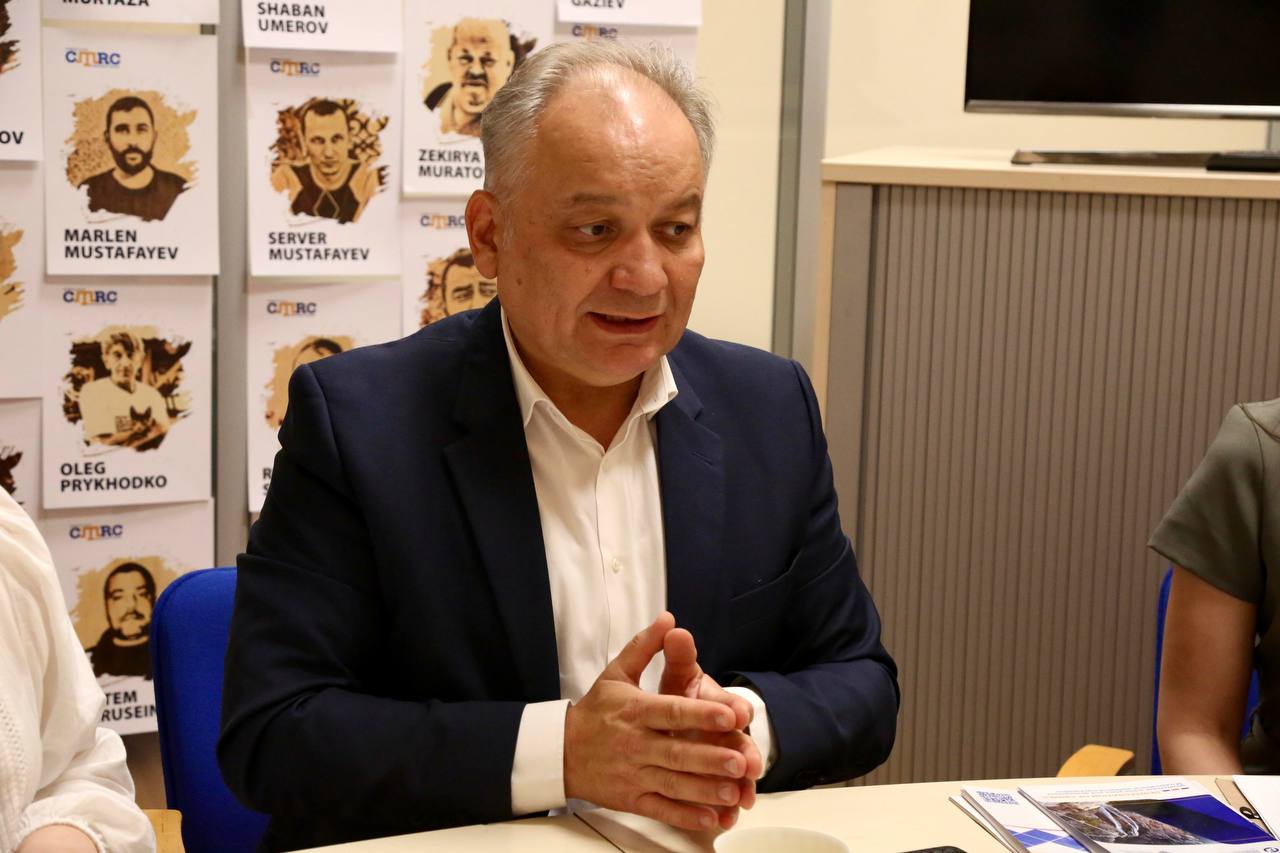
During the conversation, representatives of the CTRC spoke about the situation with human rights violations in the occupied Crimea and the newly occupied territories of Zaporizhzhia and Kherson regions. Special attention was paid to the systemic repressions against Crimean Tatars and Ukrainians. In particular, France was informed about political prisoners, disappeared and killed during the occupation. The clickable charts “Victims of the Occupation of Crimea”, developed by the organization, were presented, which are updated on a regular basis and are available on the website in 4 languages and reflect the current number of political prisoners, missing and killed people during the occupation of Crimea.
Eskender Bariiev explained the CTRC’s approach to determining the categories of Crimean political prisoners. The expert also noted that people are detained mainly in cases related to Hizb ut-Tahrir, the Noman Chelebidzhikhan battalion, “high treason”, ‘espionage’ and “discrediting the Russian Armed Forces”.
“We must use all the UN mechanisms that exist today to protect the rights of Crimean political prisoners who are illegally held today on the territory of the Russian Federation, and also to return them back to Ukraine,” – said Zarema Bariieva.
CTRC experts also emphasized the problem of abductions of civilians in the newly occupied territories. According to Eskender Bariiev, thanks to systematic monitoring and timely work, the CTRC managed to find out the fate of more than 80 abductees in Kherson and Zaporizhzhia regions, some of whom were released or found in Russian torture chambers and detention facilities.
The topic of documenting Russian crimes in Ukraine was also raised. The CTRC noted that the organization’s experts have created a digital Register of Human Rights Violations and War Crimes, which covers both the period of occupation of Crimea since 2014 and the events related to the full-scale war. This register is an important tool for government agencies to systematize data and use it effectively in investigations.
During the meeting, Eskender Bariiev familiarized the French Embassy with the methodology for assessing the feasibility of imposing personal sanctions on persons who cooperate with the occupation administrations of the Russian Federation in the temporarily occupied territories. On its basis, the CTRC has compiled a list of 166 people responsible for human rights violations in the occupied Crimea. The Chairman of the Board of the CTRC emphasized that this methodology is an important tool for sanctions policy, both for Ukrainian state authorities and international partners.
In her turn, Liudmyla Korotkykh noted that France, as an EU member, can initiate personal sanctions against human rights violators. To do this, the CTRC will submit a sanctions list of 50 people responsible for human rights violations in the occupied Crimea.
The participants of the meeting paid special attention to the topic of reintegration of Crimea. The CTRC representatives spoke about the realization of the Strategic Forum “The Future of Crimea” – a platform for developing solutions to restore Ukraine’s control over the peninsula, restore the rights of the indigenous people and protect human rights.
The analytical materials prepared on the basis of the forums were handed over: “The Future of Crimea: Legal Provision and Recommendations to Strategies”, “Reintegration of Crimea: Government Plans and Development of International Assistance Mechanisms”, “International Crimean Platform: Achievements, Challenges and Perspectives of Institutionalization”, Policies of the International Crimean PlatformExpert Network, as well as leaflets detailing the organization’s vision of the future of Crimea after its deoccupation.
They also discussed the issue of environmental safety. Representatives of the Crimean Tatar Resource Center informed about the results of monitoring the negative impact of the Russian occupation on the ecosystem of Crimea and about the legal qualification of ecocide developed by the organization’s experts.
The CTRC representatives informed the representative of the French Embassy about another aspect of the organization’s work, namely the recognition by the countries of the world of the Deportation of 1944 as genocide of the Crimean Tatar people and the occupation of Crimea in 2014 as its continuation, and proposed a number of measures for recognition by France. In particular, the CTRC handed over information leaflets highlighting the necessity of officially recognizing the deportation of the Crimean Tatar people in 1944 as an act of genocide.
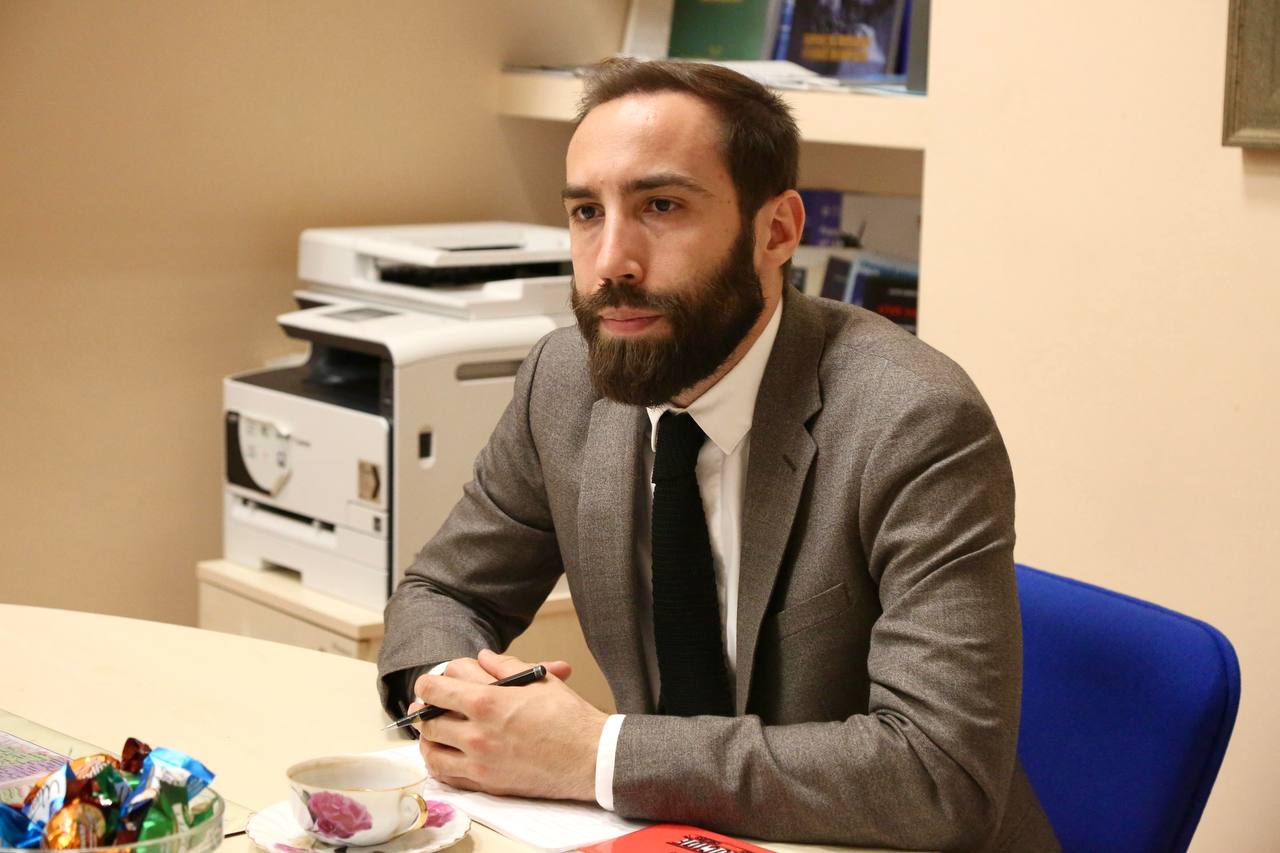
The meeting also raised the issue of realization of the rights of the indigenous peoples of Ukraine: Crimean Tatars, Karaites and Krymchaks. The CTRC representatives emphasized the importance of improving the mechanisms for implementing the Law of Ukraine “On Indigenous Peoples of Ukraine” in order to ensure real protection of the rights of these peoples in the field of state policy, education, culture and local self-government.
“We very much hope that what we have told you today, thanks to our joint efforts, will be realized to really benefit the end of the Russia-Ukrainian war, for the sake of peace, for the sake of our security,” – summed up Eskender Bariiev.
In his turn, the representative of the French Embassy expressed interest in the activities of the Crimean Tatar Resource Center and noted that he had received a lot of useful information to be processed at
and would be glad to have further meetings, in particular for a more detailed discussion of the methodologies and recommendations developed by the CTRC.