

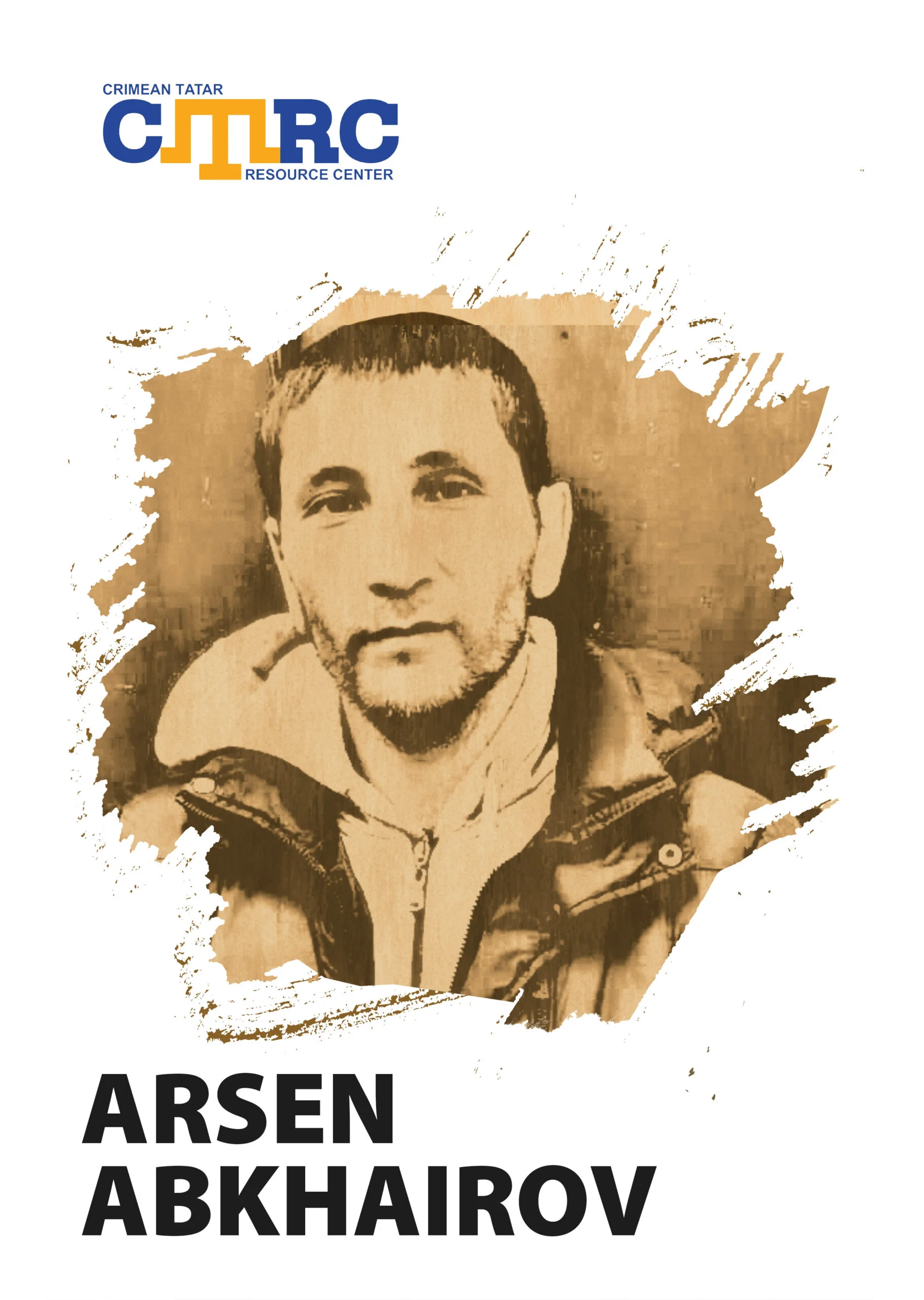
The occupation Krasnogvardeisky district ‘court’ of Crimea has recognized the refusal of the Federal Penitentiary Service of the Russian Federation to send political prisoner Arsen Abkhairov closer to his home as illegal. He is now in penal colony No. 8, which is located in the Republic of Buryatia.
The results of this meeting were reported to ‘Crimean Solidarity’ by lawyer Nazim Sheikhmambetov.
The human rights activist noted that the distance of 7 thousand kilometres deprives the political prisoner of the possibility of contact with loved ones.
‘The funds that the family manages to earn are not enough to save for such a long trip. One trip will cost the family about 300-350 thousand rubles. This is absolutely unaffordable funds for them. You also need to spend a week on the road, taking into account the flight,’ the lawyer noted.
During the court hearing, the ‘court’ demanded data on the filling of the colonies located in Crimea and in the neighbouring regions. The defence side provided all the necessary information to confirm the availability of vacant places in correctional institutions on the peninsula and in the regions that are closer to it.
We shall remind you that on 14 February 2019, Russian law enforcers conducted a scheduled search in the houses of Crimean Tatars in the village of Oktyabrskoe in Krasnogvardeisky district. Three men – Eskender Abdulganiev, Rustem Emiruseinov and Arsen Abkhairov – were detained and taken to the FSB department. A criminal case was opened against them under the article on the organization and participation in the activities of the organization ‘Hizb ut-Tahrir’, which is banned on the territory of the Russian Federation.
On 3 November, the Southern District Military ‘court’ of Rostov-on-Don announced the verdict to the defendants of the Krasnogvardeisky ‘Hizb ut-Tahrir case’. Rustem Emiruseinov was sentenced to 17 years in colony, Arsen Abkhairov – to 13 years in colony, Eskender Abdulganiev – to 12 years in prison. Political prisoners must necessarily serve the first two years in prison.