

On Monday, 24 June, a panel discussion on “Russian armed aggression against Ukraine and inclusion of indigenous peoples in the peacebuilding process” was held in Kyiv as part of the III International Forum of the Crimea Platform Expert Network.
The moderator was:
Liudmyla Korotkikh, manager of the Crimean Tatar Resource Centre
Both Ukrainian and foreign experts joined the event:
Refat Chubarov, Chairman of Mejlis of the Crimean Tatar People
Binalakshmi Nepram, Senior Advisor and Founder of the Global Indigenous Peoples, Gender Justice and Peace Alliance and the Indigenous Peacemakers, Mediators and Negotiators Network (online)
Eskender Bariiev, Chairman of the Board of the Crimean Tatar Resource Centre, member of the Mejlis of the Crimean Tatar people, coordinator of the working group “Restoration of the rights of indigenous peoples of Ukraine – as a tool for de-occupation of Crimea”
Suleiman Mamutov, member of the UN Permanent Forum on Indigenous Issues
Oliver Loode, member of the UN Permanent Forum on Indigenous Issues 2014-2016, Chairman of the NGO “Uralik” (online)
Elena Arabadzhi, Chairperson of the National Cultural Karaite Society “Jamaat” (online).
“Crimea is quite unique in many contexts. One of the things that makes it special is that it has developed 3 indigenous peoples that have their own distinctive culture and have their own value to Ukraine as a state. Therefore, today we will talk about problems and challenges that indigenous peoples of Ukraine face today, how important is the support of the international network of indigenous peoples, as well as what lessons we should learn from this situation that we have received so far and how to involve indigenous peoples in the peacebuilding process, why it is important in the context of achieving sustainable peace and why it is in this context that the realisation of the right to self-determination of indigenous peoples is important”, – Liudmyla Korotkikh began.
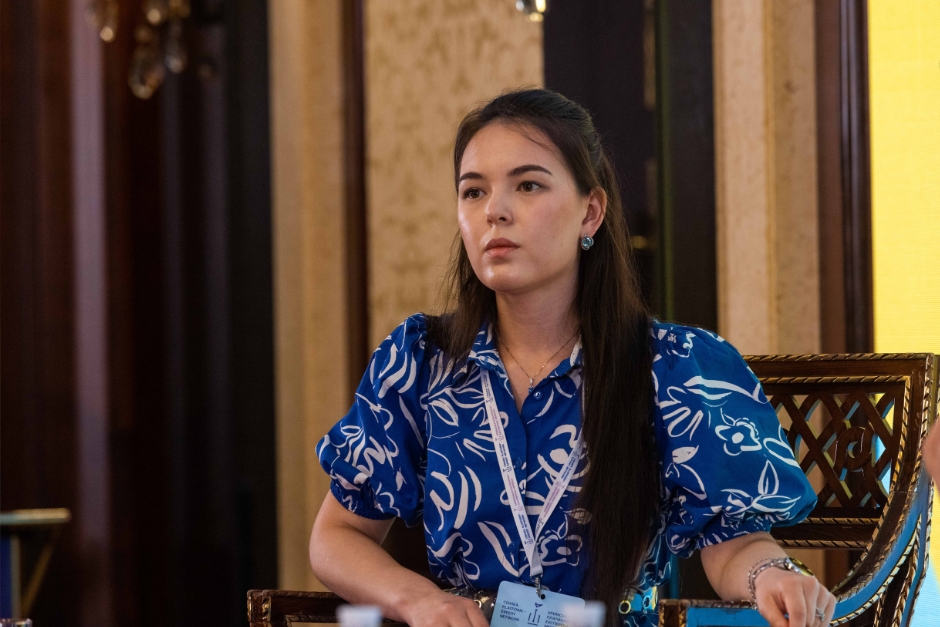
So, first, Eskender Bariiev gave a brief overview of the situation in the occupied Crimea and noted the importance of collecting quality based evidence, which will be important to demonstrate on international platforms on the discriminatory processes that are taking place on the territory of Crimea against indigenous peoples, ethnic Ukrainians and pro-Ukrainian citizens.
“The figures speak for themselves. According to the CTRC, 331 people are now being prosecuted in the occupied Crimea in criminal cases, we are not taking into account administrative cases now, there are thousands of them. So, 217 of them are cases against representatives of the Crimean Tatar people. Now there are 204 political prisoners in places of detention, 133 of them are representatives of the Crimean Tatar people. When we talk about the violation of collective rights, back in 2016 the occupants banned the Mejlis of the Crimean Tatar people a representative body and accused Mejlis of extremism,” – the expert shared.
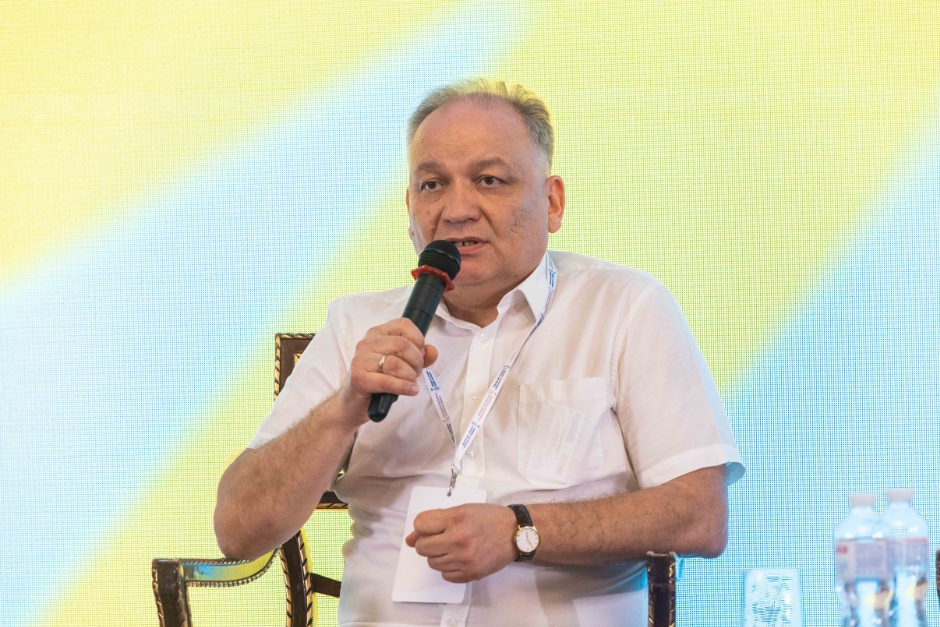
The occupiers discriminate against indigenous peoples on the occupied peninsula on religious and linguistic grounds, as well as destroy cultural heritage, violate the rights of political prisoners to a fair trial, freedom of speech etc.
“Indeed, when the occupation began, the Russians first of all started to close Crimean Tatar media outlets because they were more independent and held on for quite a long time. We have also documented when political prisoners were forbidden to speak Crimean Tatar during trials. Or when political prisoners in other cases are purposefully given pork when they warn that they are Muslims,” – Bariiev said.
The human rights defender added that the situation with the rights of indigenous people has only worsened since Russia launched a full-scale invasion of Ukraine.
Korotkikh added that the Crimean Tatar people have always been and are the core of resistance to Russia’s occupation of Crimea.
“It was this policy of racial discrimination and persecution that resulted from the fact that the people in their majority did not accept the occupation. In addition, I would like to draw attention to one of the biggest challenges that appeared before the indigenous peoples – the mobilisation and illegal conscription into the army of the Russian Federation. This is actually a continuation of the policy of destruction of the people,” – the expert explained.
Refat Chubarov noted that the Crimean Tatar people returned from deportation, were a minority in their land and were very vulnerable during the Russian occupation. Therefore, now the events in Crimea can only be described with two words – russification and destruction.
“Russification and destruction are two words that can be used to outline the processes that are now taking place in Crimea. In every sphere, whatever they touch, the Russians destroy everything. In the sphere of education, Ukrainian schools were immediately closed, Crimean Tatar schools are also being closed cunningly. The occupiers are carrying out an artificial demographic replacement of the population – they are displacing and destroying the indigenous population. But the worst thing is the mental changes in the minds of the younger generation,” – he said.
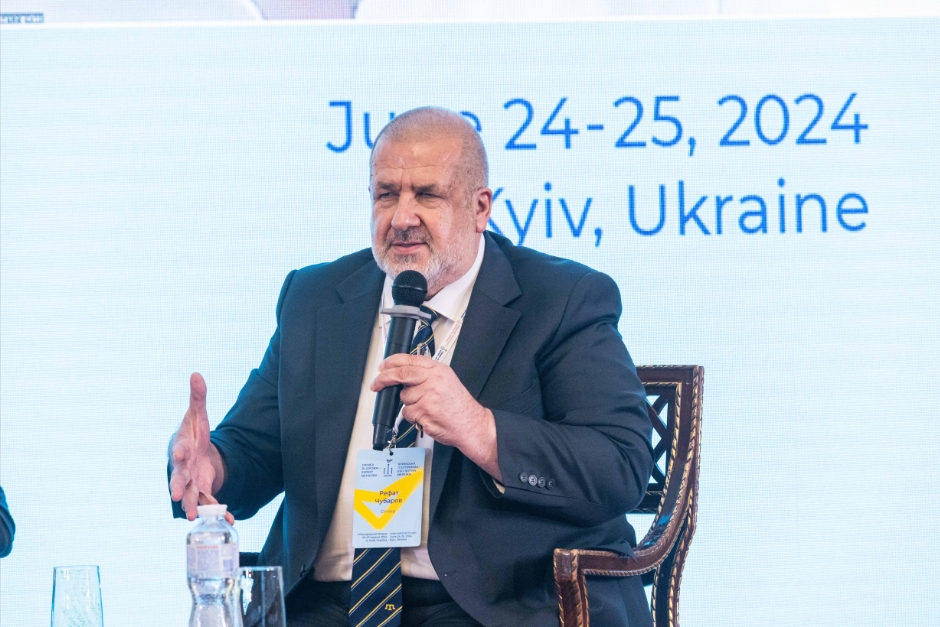
Chubarov noted that it is already now necessary to prepare for the reintegration of Crimea.
“We should prepare an antidote for what is happening in Crimea now. How we will restore it and further develop it… Here a very big responsibility lies on the Ukrainian State. We must give people who are waiting for liberation in Crimea the opportunity to return to that legal, spiritual, mental space so that we do not push them away in the first months, years of reintegration”, – he explained.
Elena Arabadzhi, chairman of the National Cultural Karaite Society “Jamaat”, spoke about the problems of another indigenous people of Crimea – the Karaites. This is a people that has a thousand-year history, its own language, culture and traditions.
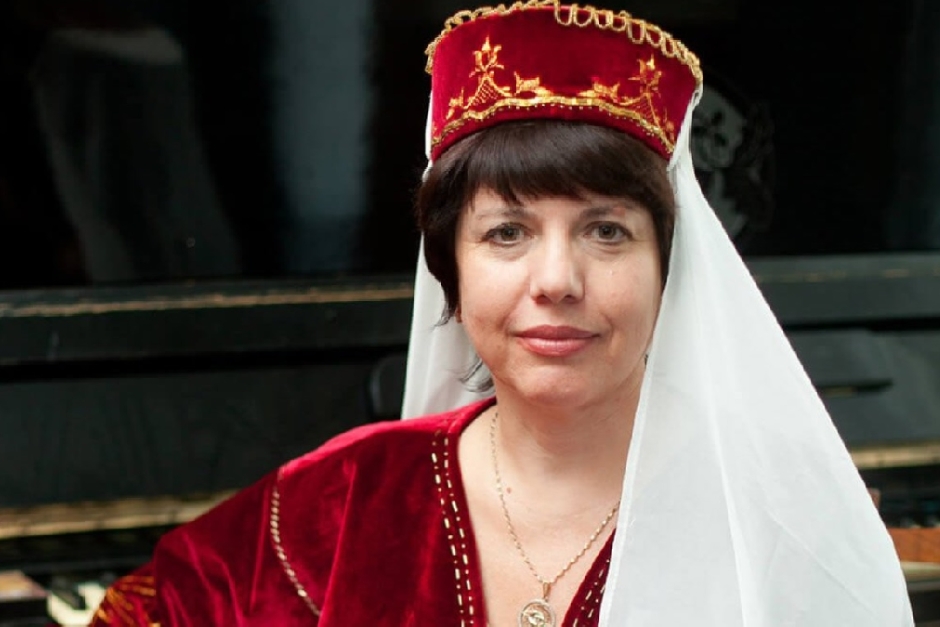
“The 21st century has been a tragic one for the Karaite people. In 2014, Crimea was occupied. This is our historical homeland, our sanctuaries – religious, historical – are located there. We also lost the mental connection with the Karaite people in the occupied Crimea. The full-scale invasion has already driven us out of our homes in mainland Ukraine. Now we are scattered all over the world,” – shared Arabadzhi.
Olena noted the importance of developing the languages of the indigenous peoples of Ukraine, because all of them, unfortunately, are now on the verge of extinction.
The indigenous peoples of Russia are also suffering from this war. Oliver Loode stressed that the rf is an aggressive colonial powerful structure that implements a policy of colonisation against the indigenous peoples of russia.
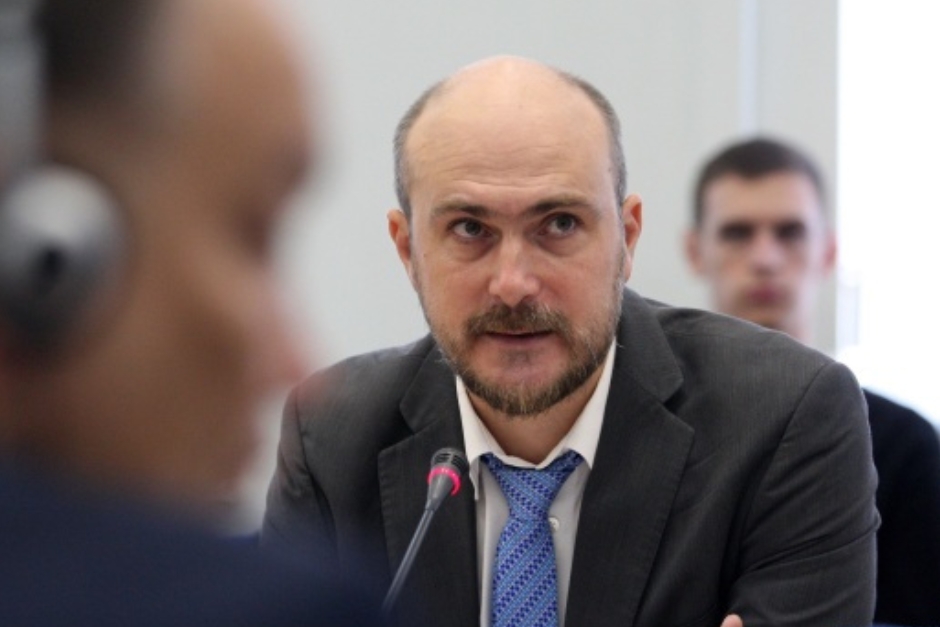
“Since the beginning of rf’s full-scale invasion of Ukraine, I would say that the situation of independent national movements of rf indigenous peoples has changed. This applies to those indigenous peoples who are called small in number, but even to large indigenous peoples: Buryats, Bashkirs, Tatars and others.. In fact, this situation mirrors that of the indigenous peoples of Ukraine in the occupied territories. After all, the Russian war machine attracts representatives of these peoples the most. Therefore, we see that this war is colonial not only with regard to Ukraine, but also with regard to the colonised peoples of Russia,” – he added.
Binalakshmi Nepram during her speech explained what the term “indigenous peoples” means.
“What are indigenous peoples, who are they? Many people say it is a political term. But for us, it means caring for the people who are left behind, who are being deprived of their history, their cultural heritage. So we are trying to revive that,” – she explained.
The woman recalled the First Global Summit on Indigenous Peacebuilding, which took place on 11-12 April 2024 in Washington DC. The US Institute of Peace brought together 80 indigenous leaders from around the world at the event to discuss the challenges faced every day in different parts of the world.
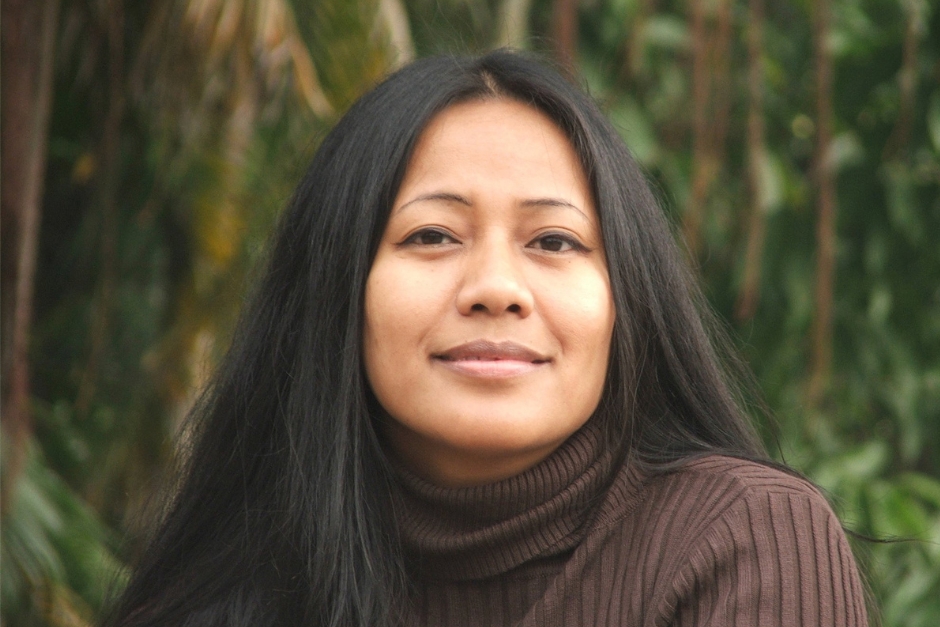
“We are all interconnected, we need global solidarity. … It is very important to include indigenous peoples in negotiation processes for the sake of ending wars, colonial aggressions, overthrowing authoritarian regimes, to ensure the rule of law, democracy and the protection of our peoples, their culture, language, way of life,” – she explained.
Suleiman Mamutov, a member of the UN Permanent Forum on Indigenous Issues, spoke about tools we have to protect indigenous peoples. He also answered questions on how to prevent such conflict from recurring in the future, how to achieve sustainable peace, and why it is important to ensure indigenous peoples’ rights to self-determination in this context.
“If we are talking about the rights of the indigenous peoples of Ukraine, there are obstacles that are obvious to us – the occupation of the Crimean peninsula by Russia. Crimean Tatars cannot now effectively realise their right to preserve and develop their representative institutions. The same applies to the Karaites,” – he said.
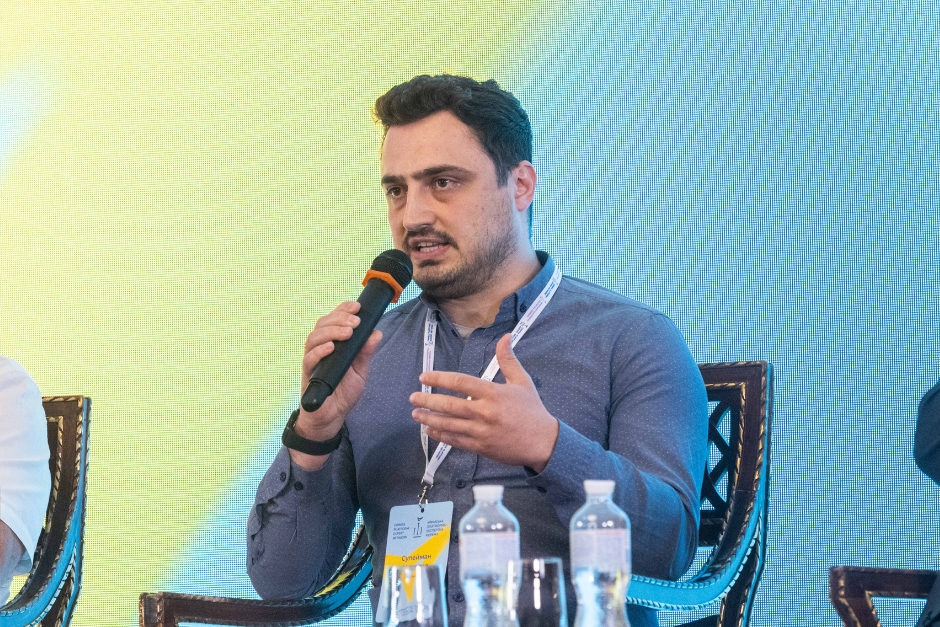
As Suleiman Mamutov noted, the second type of obstacle is that unfortunately, there is still no clear understanding of the nature of indigenous peoples’ rights in Ukraine. In his opinion, the rights of indigenous peoples are perceived as a factor of danger, and not vice versa.
“And this is despite the fact that the Crimean Tatars were one of the main elements of the dismantling of the USSR and one of the main protectors of the annexation of Crimea by Russia in the 90s, because of this lack of understanding we do not have the implementation of even those provisions that Ukraine has adopted. For example, Ukraine has not yet granted legal status to Mejlis of the Crimean Tatar people,” -he explained.
Oliver Loode added that the consolidation of the representative status of Mejlis of the Crimean Tatar people in the Ukrainian legal frame is a powerful tool in the context of both the realisation of the rights of indigenous peoples and the liberation of Crimea in general.
“If Ukraine really takes the collective rights of indigenous peoples seriously, it must support the Mejlis of the Crimean Tatar people in every possible way. And that means legalising the Mejlis of the Crimean Tatar people. This decision has been postponed so far without any good reason,” – the expert said.
Oliver Loode emphasised that any peace talks that start in the future should also include the Mejlis as a representative institution of the Crimean Tatar people.
“I want to emphasise that it is precisely as an institution, not just some representatives, that the Mejlis should be included in both official and non-official negotiations to end the war. The representative body should play an important and significant role when the fate of the future of Crimea and the end of this war will be decided,” – he said.
Concluding the panel, Eskender Bariiev emphasised that it is very important that the representative body of the Crimean Tatars be as involved in the Ukrainian peacebuilding processes as the competent bodies of Ukraine. The expert also added that it is very important to think about the future of Crimea already now.
“Based on experience, the Military Civil Administration will not be able to work for a long time. Because our partners will ask, and where is democracy. That’s just it, national-territorial autonomy is an instrument of public and electoral democracy, which will be able to guarantee the protection of Ukraine’s integrity. After deoccupation of Crimea, there will be a significant part of the population that will be pro-Russian and we need to fight this,” – he explained.
Eskender Bariiev noted that it is the Expert Network of the Crimea Platform that should influence the formation of state policy and international policy regarding Crimea, developing high-quality analytical content and recommendations not only for the Ukrainian state, but also for our partners.
“We need to continue working on the adoption of the Regulations of the Crimea Platform Expert Network in order to demonstrate for us that the Expert Network first of all begins with its own expertise,” -he emphasised.