

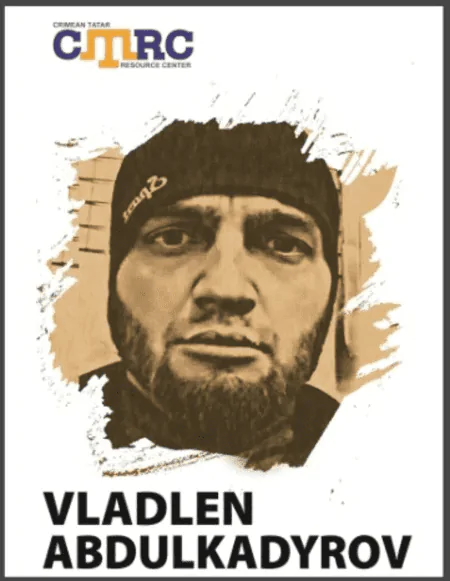
Vladlen Abdulkadyrov was forced to refuse injections from the prison paramedic due to side effects of the drug. His wife Hulzar reported this to the Crimean Tatar Resource Center.
“Vladlen said that the stage was difficult for him. Back in Novocherkassk he was bothered by back pain. Upon arrival at the Yelets prison, he reported severe back pain. In the medical unit they took a photo of his back using a fluorography machine. They said that a surgeon’s opinion was needed, after the surgeon looked at the picture, they said that a consultation with a neurologist was needed. At the moment, there has not yet been a consultation with a neurologist. The prison paramedic prescribed injections and vitamins”,- she said.
The wife noted that the injections prescribed by the prison paramedic did not give much effect and caused side effects. At first, the political prisoner seemed to feel better, but later he called and said that he was experiencing side effects from the drug
“Severe headaches and tachycardia appeared and he refused the last injections. He reported his condition to the medical unit, but they didn’t tell him anything specific. Vladlen cannot walk or stand for a long time, and cannot remain in one position for a long time. I suspect it could be a herniated disc”,- she added.
We remind you that on March 27, 2019, Russian security forces in the occupied Crimea carried out mass searches in 26 Crimean Tatars’ dwellings. Literature was seized from some activists, which, according to Crimean Solidarity, the security forces planted themselves. In addition to books and brochures, people were confiscated phones, tablets, laptops, passports. The servicemen behaved rudely. It is reported that they used physical force against detainees and entered the houses in shoes. Lawyers who arrived at the site of the searches were not allowed to contact the detainees. According to the results of the searches, 20 people were suspected of involvement in the Hizb ut-Tahrir organization, which is banned in the Russian Federation. On March 28, three more Crimean Tatar activists were detained, in whose dwellings searches were carried out in their absence. On March 27-28, the occupation court arrested all 23 detainees after searches. They chose a preventive measure in the form of detention. Subsequently, all the individuals involved in this so-called case were repeatedly extended the terms of their arrest.