

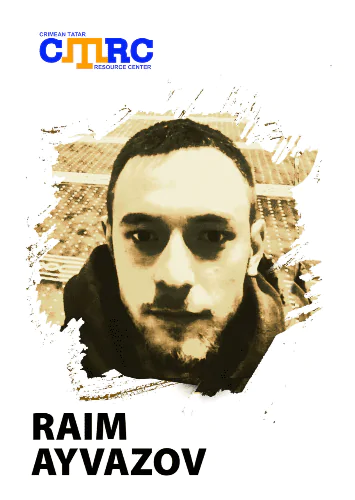
Crimean Tatar Raim Ayvazov was transferred in transit to the pre-trial detention center in the city of Ulyanovsk. He informed his lawyer Maria Eismont about this.
The political prisoner said that he was transferred to Volgograd together with Riza Izetov and Farhod Bazarov. Then they were taken to Saratov, where they were kept for a day, and the next day they were taken to Ulyanovsk : Raim Ayvazov was left in a pre-trial detention center for an unknown time, and Riza Izetov was taken further.
“I watched TV for the first time on June 6, 2023, there is a lot of information, you need a sieve to separate where the truth is and where it is not. If you can briefly describe the events, I will be glad to hear from you so as not to degrade”,- Raim Ayvazov wrote to his defender.
According to him, he is in the cell of pre-trial detention center 1 of Ulyanovsk, which can accommodate 15 people. He describes the conditions of detention as satisfactory.
“The mood is good, apart from where we are going to serve our sentence for an uncommitted offence, all is well.”,- the political prisoner concluded.
We remind you that on March 27, 2019, Russian security forces in the occupied Crimea conducted mass searches in 26 houses of Crimean Tatars. Literature was confiscated from some activists, which, according to Crimean Solidarity, the security forces themselves planted. In addition to books and brochures, phones, tablets, laptops, and passports were confiscated from people. The security forces behaved rudely. They reportedly used physical force against the detainees. They entered the house in shoes. Lawyers who arrived at the site of the searches were not allowed to see their clients. According to the results, 20 people were detained, who are suspected of involvement in the Hizb ut-Tahrir organization banned in the Russian Federation. On March 28, three more Crimean Tatar activists were detained, and searches were carried out in their homes in their absence. On March 27-28, the occupation court arrested all 23 Crimean Tatar activists detained after searches. They chose a measure of restraint in the form of detention. Subsequently, all the defendants in the so-called case were repeatedly extended the terms of arrest.