

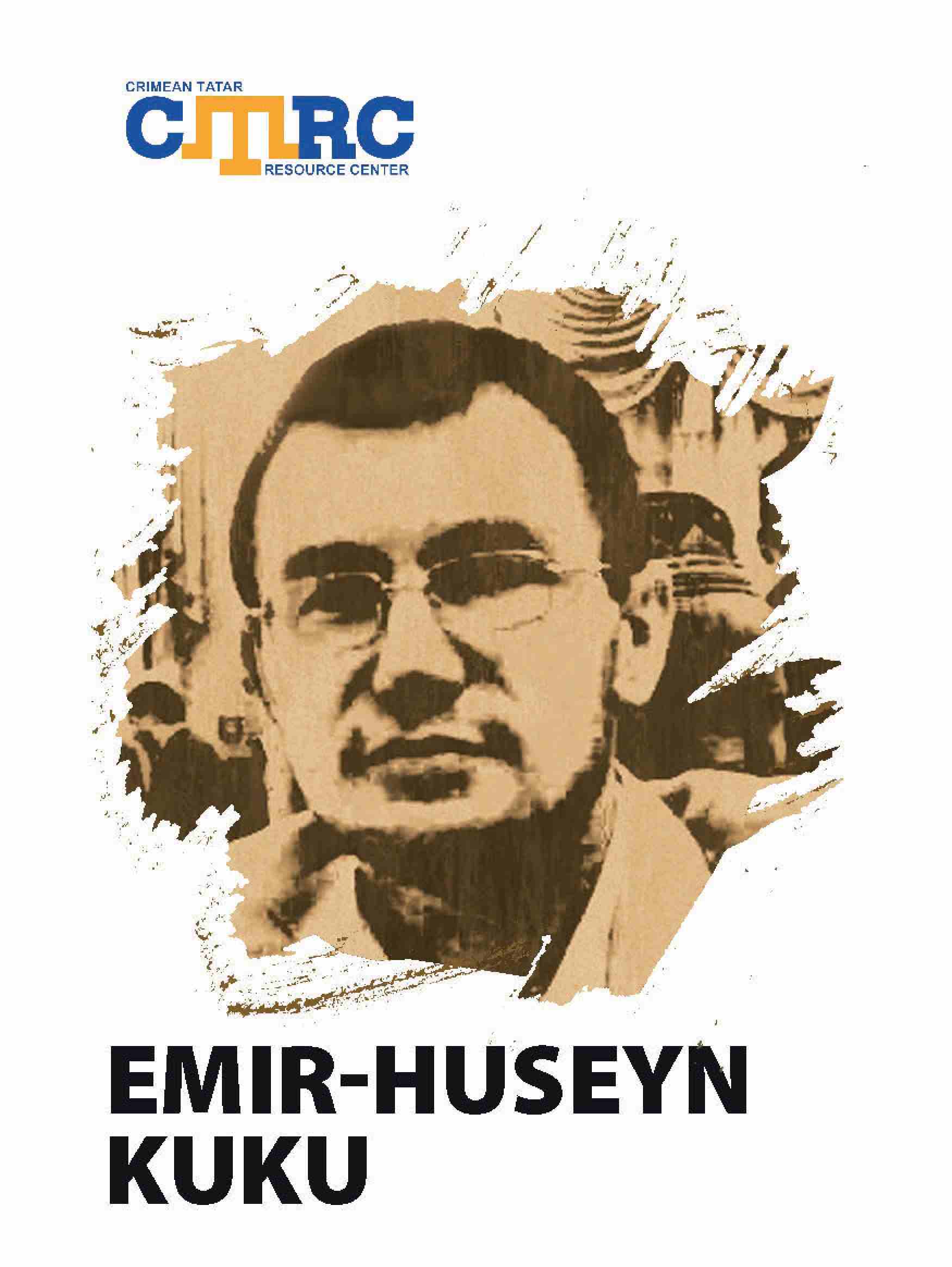
Emir-Huseyn Kuku’s attorney, Sergei Loktev, claims that FSB officers fabricated some evidence of his defendant’s participation in “Hizb ut-Tahrir” organization. This became known on 29 August during the court hearing, where Kuku’s laptop was examined, reported Krym.Realii.
In North-Caucasian district military court, during Kuku’s laptop examination, an unknown folder was found that did not exist on the day of the search in April 2014.
“The search in Kuku’s household took place from 8 to 11 a.m. After 11 a.m., the laptop was expropriated with witnesses. The police started to examine the laptop around noon in the building of the FSB operational department in Sevastopol. At that time, the folder has not yet existed. Later, the laptop was transported to the FSB investigation department in Simferopol. There, during 17 and 18 May 2016, the laptop was examined again and by mysterious reasons, the folder with the name “printscreen” appeared on a desktop. This folder contained eight more folders”, said Loktev.
The folder’s data showed that it was created on 20 April 2014 between 1 and 2 p.m. after the laptop was expropriated. The court denied defendant team’s motion to cross-witness FSB operative officer, Aleksandr Kompaniitsev, who carried out searches in Kuku’s household, or witnesses, who did not show up in the court. Besides, the court refused even to conduct a technical inspection of the laptop.
Emir-Huseyn Kuku, Vladimir Siruk, Muslim Aliev, Enver Bekirov, Arsen Dzhepparov, and Refat Alimov are accused of participation in “Hizb ut-Tahrir” organization that is banned in Russia. They are charged with the article 205.5 Criminal Code of RF (“organization and participation in terrorist activity”). Later, they were also charged with article 278 of the Criminal Code of RF (“Violent seizure and retention of power”).