


On Friday, February 16, the Environmental Initiative of the Renaissance Foundation (EPAIU) held a discussion with the participation of experts and experts on environmental issues about the opportunities that international platforms such as the UN Conference of the parties (COP) provide activists with.
The speakers were:
Borys Babin, NGO Crimean Tatar Resource Center, professor, expert with international experience, participated in the preparation of documents for submission to the UN on occupied Crimea, specialist on ecocide issues.
Ievgen Khlobystov, NGO Crimean Tatar Resource Center, professor of the Faculty of Natural Sciences at NaUKMA, expert field: ensuring sustainable development, economics of environmental protection, environmental rights of indigenous peoples and climate change.
Olha Polunina, NGO Center for Environmental Initiatives Ekodiya, executive director, expert field: losses from the war in agriculture, Ukraine’s negotiating position on climate change.
Lennard de Klerk, Initiative on GHG Accounting of War, head of the international monitoring group on the impact of war on the climate, coordinator of the research Climate damage caused by Russia’s war in Ukraine.
Andrii Kitura, project manager of Dixie Group – Office of Green Economic Transition of the Ministry of Economy of Ukraine. Expert on sustainable development and climate change.
The moderator was Oksana Dashchakivska, manager of the International Renaissance Foundation.
We remind you that from November 30 to December 12, the 28th United Nations Climate Change Conference (COP28) was held in Dubai.
As part of this event, the Crimean Tatar Resource Center together with partners held 2 side events (RES & Climate Impact: Ecocide, Green Reconstruction, Indigenous Perspectives on War-Stricken Ukraine; Influence on Climate Change: Crimea, Indigenous Peoples and International Crimes), and also organized an exhibition about the environmental consequences of Russian aggression in Crimea.
During the discussion, experts discussed why it is important to talk about issues such as:
- the impact of the Russian war on climate;
- why Ukraine is useful for the whole world, and why Russia poses a threat to the whole world when it destroys the environment of Ukraine;
- why it is important to talk about the factor of indigenous peoples using the example of the Crimean temporarily occupied peninsula;
- how the issue of ecocide in Ukraine relates to climate change globally;
- what are financial climate instruments etc.
In addition, questions were raised regarding the Ukrainian pavilion: how to use it more effectively to demonstrate what we can and want to do for the future – a vision of 10 years or more ahead.
During his speech, Ievgen Khlobystov noted that given the fact that Russia has turned Crimea into a continuous military base, the economy of Crimea is working to support the war,
“The population in Crimea has increased due to uncontrolled migration from Russia, we see that the water resources that Crimea has today will potentially be in short supply. In the near future we will feel this shortage even more strongly. Therefore, today we must create our own vision, our own vision of not only the deoccupation, but also the reintegration of Crimea, taking into account such environmental threats”,- he added.
Khlobystov explained that the CTRC is trying to convey on international platforms that this issue is special for the indigenous peoples of Ukraine, because they are more vulnerable.
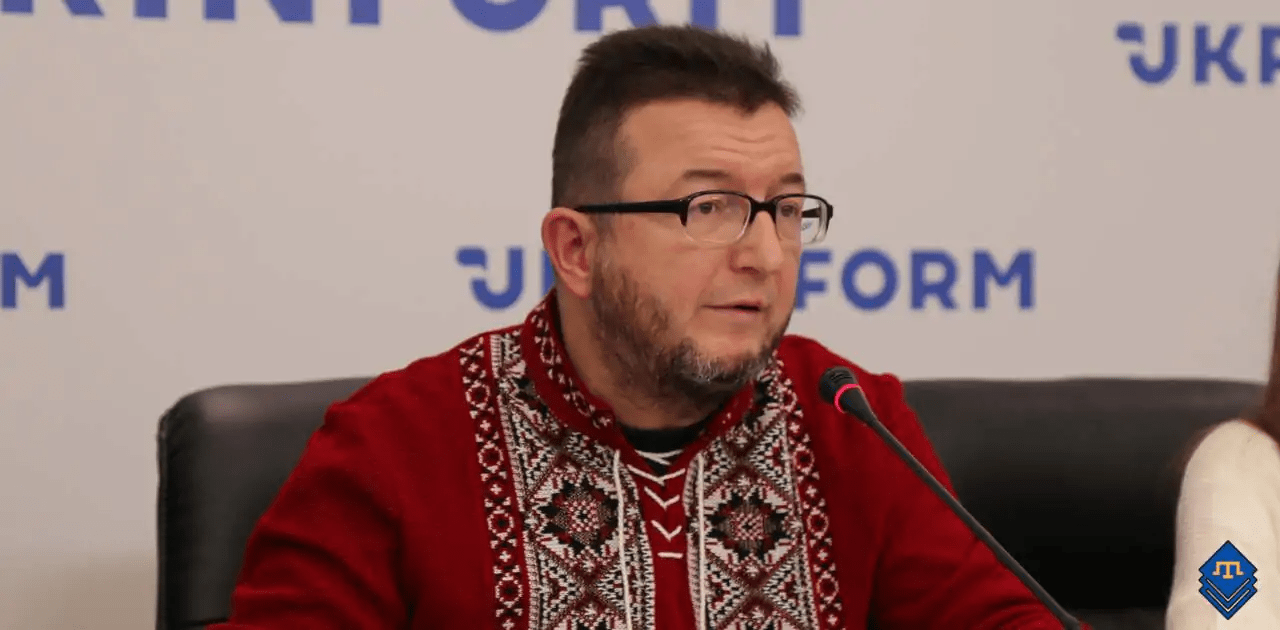
Borys Babin drew attention to the fact that in the future Ukraine should perceive the UN Climate Change Conference more seriously, not only by specialists from the relevant ministry, but also by the entire state machine as a whole.
“Let’s be honest, the UN Climate Change Conference is not only a climate conference, it is a broad platform where a lot of issues are discussed. It is no coincidence that this conference took place in the UAE, although it seems that no matter which country is even more on the side of climate change, as the main supplier of oil. The Russian dictator arrived at this conference, and Kadyrov’s family was brought. And this is not just like that. … And who from what level of Ukraine was at this event? This question is still rhetorical”,- he noted.
You can watch the livestream of the discussion here.
The discussion took place within the framework of the Initiative Environmental Policy and AdvocacyInitiative for Ukraine, implemented by the International Renaissance Foundation with the support of Sweden.