

The participants of the event were: Deputy Permanent Representative of the President of Ukraine in Crimea Denis Chistikov, Chairman of the Board of the Crimean Tatar Resource Center, member of Mejlis of the Crimean Tatar people Eskender Bariiev, Acting Head of the Department of Management and Administration of Donetsk Regional Institute of Postgraduate Pedagogical Education Alexander Batiukov.
About 300 educators joined the discussion, including deputy principals for educational work, teachers, lecturers, pedagogical staff and high school students.
The discussion covered key topics: the international legal assessment of the occupation of Crimea, the resistance of the Crimean Tatar people, and contemporary challenges associated with the temporary occupation.
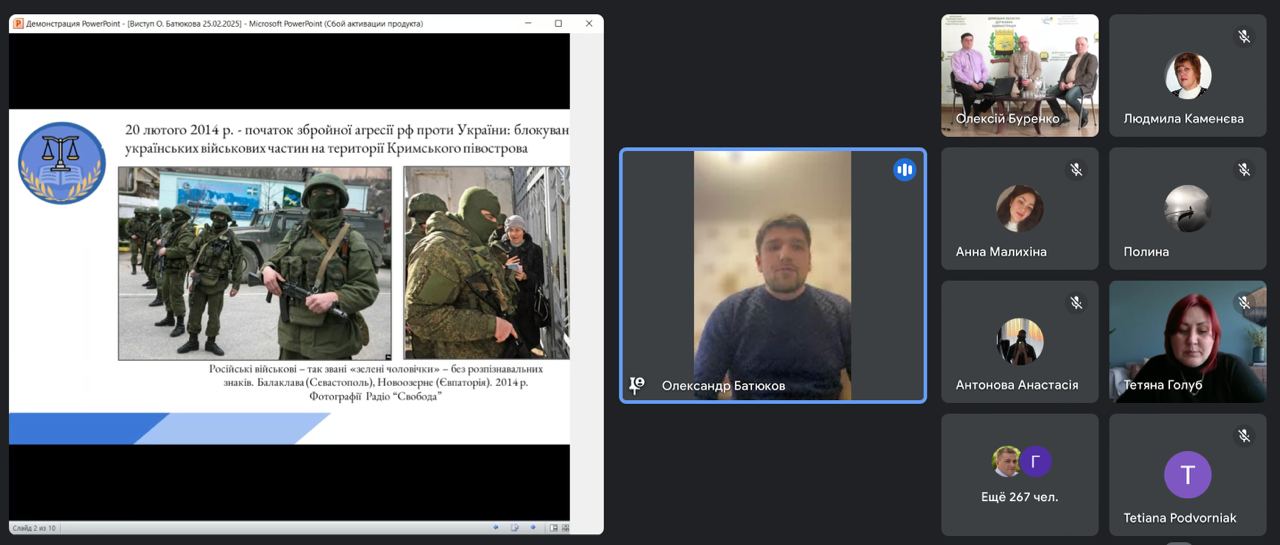
Alexander Batyukov presented an analysis of the events of 2014, the illegality of the Russian Federation’s actions and international support for Ukraine’s territorial integrity.
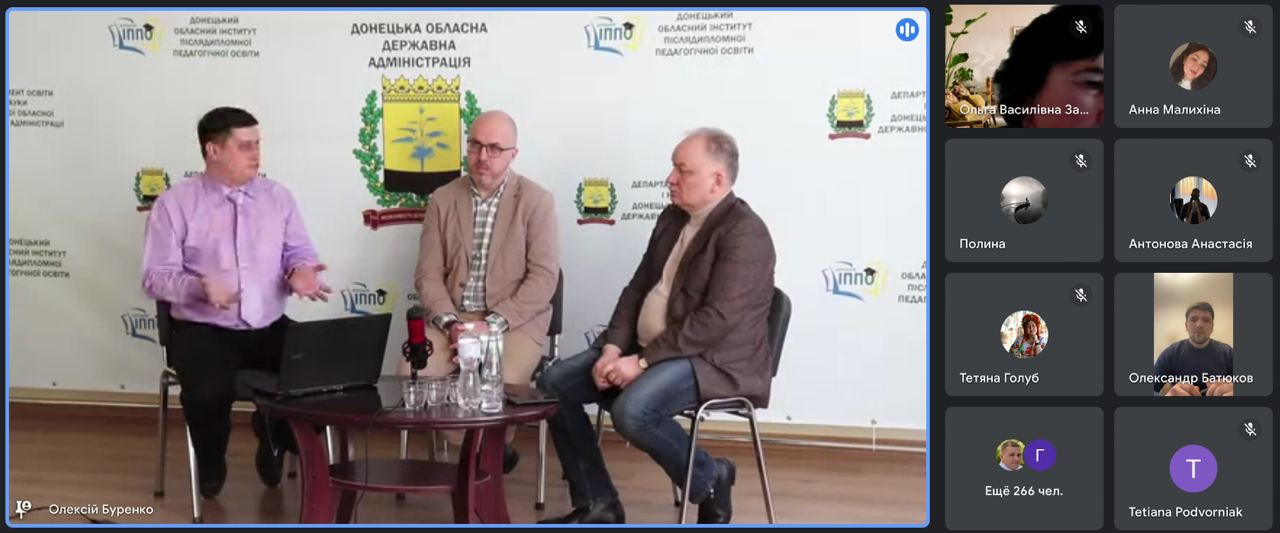
Eskender Bariiev, in turn, spoke about the events of 2014, as a direct participant of all these processes, noting that one of the first organizations that supported the territorial integrity and sovereignty of Ukraine was the representative body of the indigenous Crimean Tatar people – Mejlis of the Crimean Tatar people.
In addition, the Chairman of the Board of the CTRC during his speech told about:
The chart “Victims of the occupation of Crimea” developed by the CTRC – visual statistics on the number of political prisoners and those prosecuted in criminal cases, killed and missing during the occupation period of the peninsula.
Test materials and posters prepared by the CTRC for the Day of Resistance to the Occupation of Crimea as part of the #LIBERATECRIMEA information campaign.
He noted that the issue of Crimea should be supported in various ways, in particular through information campaigns.
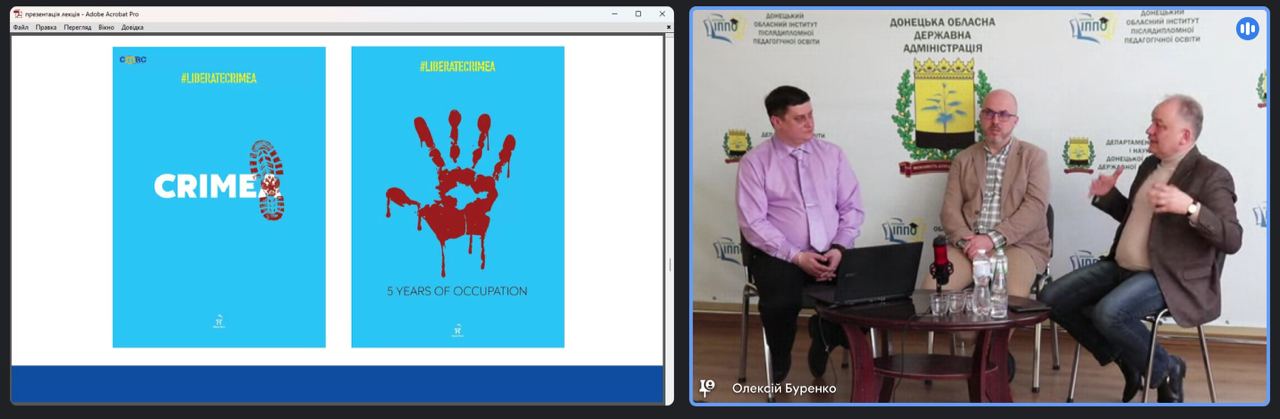
Eskender Bariiev also outlined a vision of Crimea’s future, emphasizing that the peninsula is not just the sea, but a unique part of Ukrainian culture and history.
“Our experts have developed a model of the future of Crimea, which consists of the following points: Positive Ukrainianization of Crimea; Guaranteed protection of human rights in Crimea; Realization of collective rights of indigenous peoples of Ukraine; Autonomous Republic of Crimea is a national-territorial autonomy of the Crimean Tatar people; Crimea is an economically developed and a touristic attractive region of Ukraine,” – he explained.
The expert emphasized that every day of the occupation works against Ukraine, and without the liberation of Crimea it is impossible to return other temporarily occupied territories. The war began in Crimea and must end there.