

On Friday, October 1, representatives of the Crimean Tatar Resource Center met with US staff in Ukraine Patrick Knapp and Tetiana Stechak. The diplomats were told about human rights violations in the occupied Crimea and about the deportation of the Crimean Tatar people in 1944, which continues to this day.
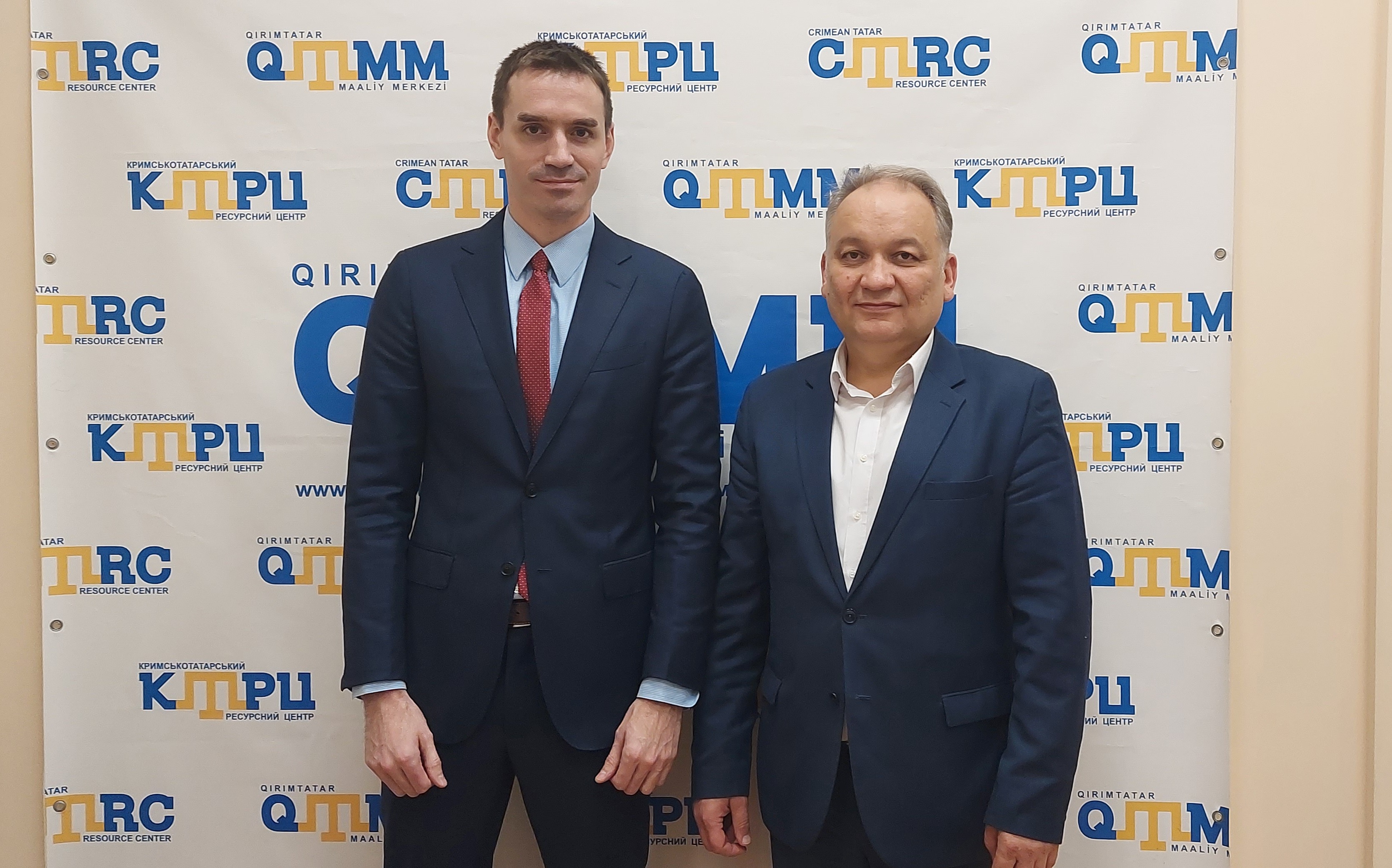
The meeting was attended by Tetyana Stechak, an employee of the Political Department of the US Embassy in Ukraine, Patrick Knapp, Human Rights Counselor at the US Embassy in Ukraine, Head of the Board of the Crimean Tatar Resource Center, Head of the Department of Legal Affairs and Foreign Affairs of the Mejlis of the Crimean Tatar People Eskender Bariiev, managers of the CTRC Zarema Bariieva and Liudmyla Korotkykh.
Representatives of the Crimean Tatar Resource Center told US diplomats about the situation with human rights violations in the occupied Crimea, and also handed over a list of persons involved in these violations.
Tetyana Stechak and Patrick Knapp were also informed about all political prisoners who went missing and died during the occupation of the peninsula and handed over the relevant booklets. There were presented with clickable charts Victims of the occupation of Crimea, developed by the CTRC, which are permanently available via the organization's website in 4 languages and reflect the current number of political prisoners, missing and dead people during the occupation of Crimea.
The Head of the Board of the CTRC spoke about the deportation of the Crimean Tatar people in 1944, when 238,500 people were evicted, and the death toll in the first years of the deportation was 110,200 people. Bariiev called on the embassy to assist in the recognition of the deportation of the Crimean Tatar people by the US Senate as an act of genocide.
“It would be a very important step if the United States recognized the deportation of the Crimean Tatars as genocide. Thus, they would have made it clear that sooner or later it is necessary to answer for those crimes that are committed against entire nations”,- Bariiev explained.
The Crimean Tatar Resource Center handed over a package of documents recognizing the deportation of the Crimean Tatar people as an act of genocide, which includes:
– appeal of the Mejlis of the Crimean Tatar people to all parliaments of the UN member states;
– appeal of the Crimean Tatar Resource Center to the President of the US Senate;
– copies of the resolution of the Verkhovna Rada of Ukraine On the recognition of the genocide of the Crimean Tatar people;
– Resolution of the Verkhovna Rada of Ukraine On the appeal of the Verkhovna Rada of Ukraine to the UN, the European Parliament, PACE, OSCE PA, NATO PA, OSECO PA, governments and parliaments of the countries of the world on respecting the victims of the genocide of the Crimean Tatar people and condemnation of violations by the Russian Federation as an aggressor state of the rights and freedoms of the Crimean Tatar people;
– Statement of the Saeima of the Republic of Latvia In memory of the 75th anniversary of the deportation of the Crimean Tatar people and support for the policy of non-recognition of the illegal annexation of Crimea;
– Statement of the Seimas of the Republic of Lithuania On the recognition of the destruction of the Crimean Tatar people by the Soviet Union as an act of genocide;
– legal qualification of the deportation of the Crimean Tatar people as an international crime against the indigenous people.
The representatives of the CTRC stressed that the deportation of the Crimean Tatar people is a long-term process. After the occupation of Crimea in 2014, thousands of Crimean Tatars left the peninsula due to their political position. Moreover, a new law on forced evacuation has appeared in the Russian Federation, which can contribute to the deportation of an inconvenient population, especially the Crimean Tatar people.