

On Monday, May 31, experts of the Crimean Tatar Resource Center in an online format presented a study on the topic: Features of climate change, ecological situation and the state of ecological and climate monitoring on the territory of the occupied Crimea as of 2014-2020. According to the speakers, the dynamics on the peninsula remains negative.
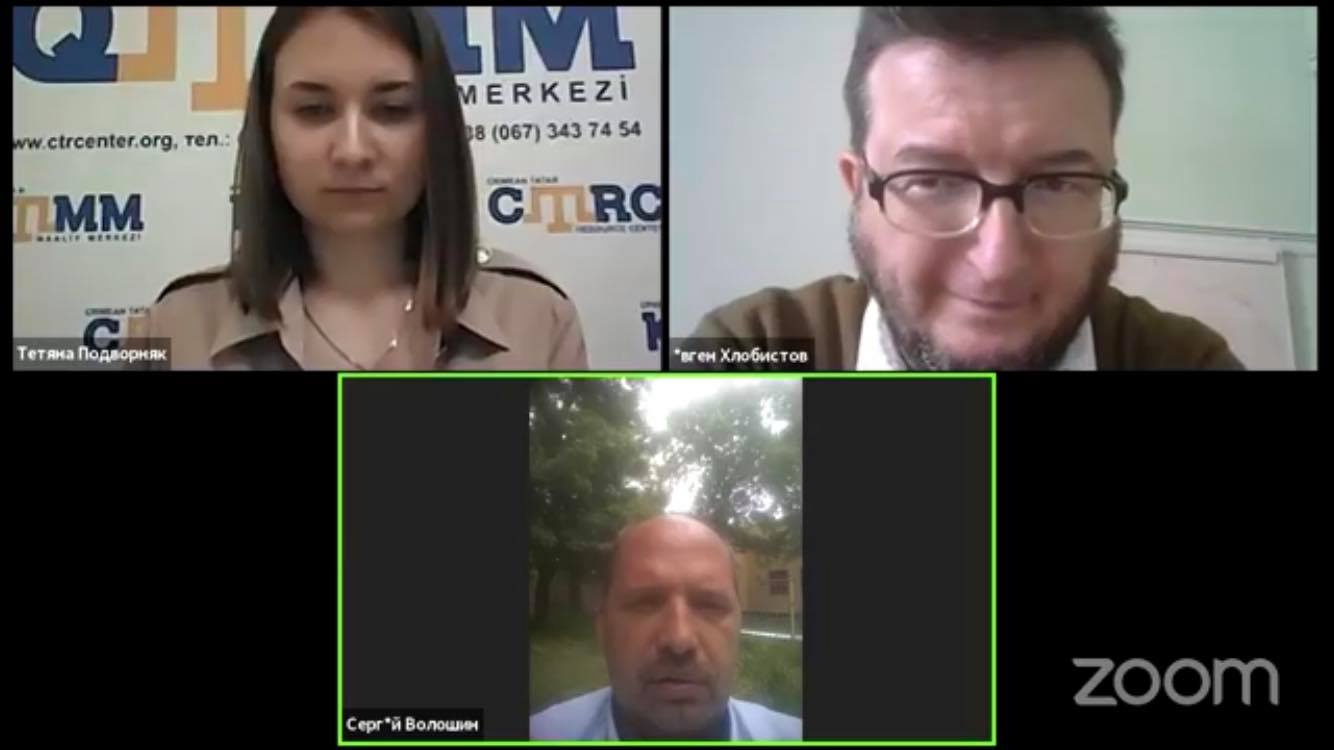
The speakers were:
Yevhen Khlobystov – Professor of the Department of Ecology of the Kyiv-Mohyla Academy, Academician of the Academy of Economic Sciences of Ukraine;
Serhii Voloshyn – PhD in economics,
Moderator – Communications manager of the Crimean Tatar Resource Center (moderator).
In this study, experts uncovered a number of questions:
• Analysis of the ecological and climatic monitoring network carried out by the occupation authorities of Crimea.
• Peculiarities of climatic conditions and their changes on the territory of the Crimean peninsula.
• Active impacts with the aim of artificially increasing the amount of atmospheric precipitation to increase the inflow of water into water bodies in the occupied Crimea.
• Ecological situation in Crimea as of 2014-2020.
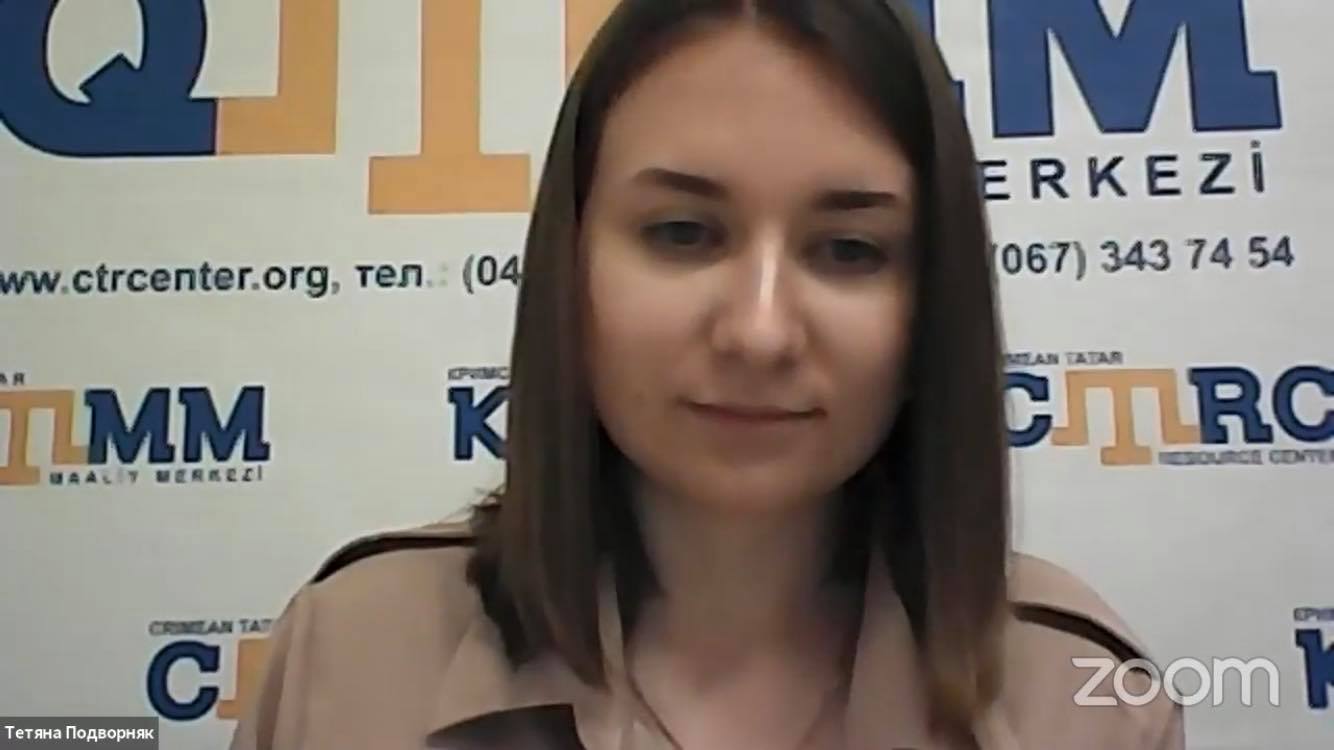
Tetiana Podvorniak recalled that since 2014, thousands of representatives of the indigenous peoples of Crimea, including the Crimean Tatar people, have been living in conditions of interstate conflict, danger and limited access to justice, which is a threat to the sustainable development of the entire region.
“Under the conditions of occupation, when the Russian Federation does not recognize the rights of the Crimean Tatars as an indigenous people in accordance with the UN Declaration on the Rights of Indigenous Peoples, the Crimean Tatars do not have the opportunity to contribute to the fight against climate change and related threats to sustainable development”,- she emphasized.
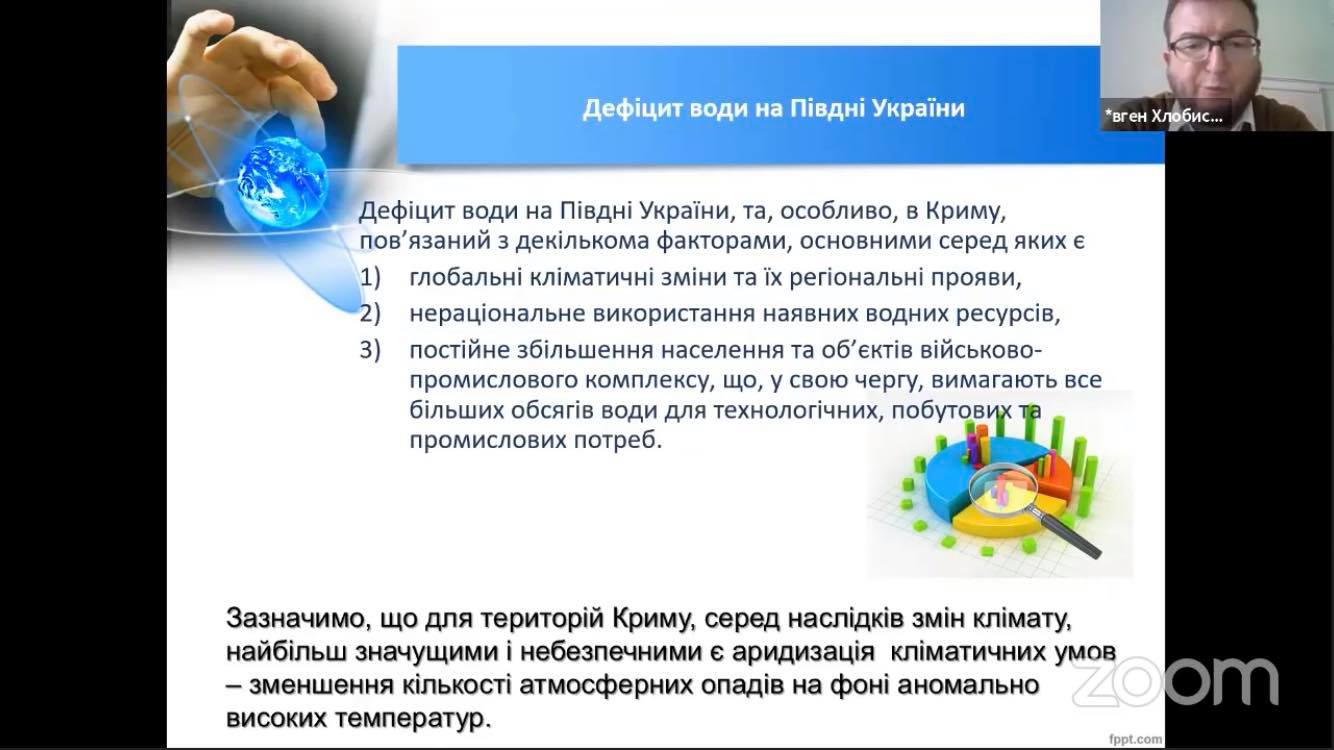
Yevhen Khlobystov spoke about the ecological situation in Crimea as of 2020, and also informed about the state of the peninsula's water resources. According to him, solving the problem of water scarcity is a very difficult problem. Khlobystov emphasized:
– Increasing the amount of precipitation by reaping the clouds is not always effective and valuable;
– Construction of artificial seawater desalination plants and their use for domestic purposes is an expensive and long-term project;
– Drilling wells does not solve the problem of water supply, since the salt composition of these waters is not constant, and the pumping out of water horizons will provoke dangerous hydrogeological processes;
– Losses caused to the nature reserves of Crimea and the ecosystems of the peninsula in general are subject to careful study and economic assessment for further determination of compensation payments in international courts.
Serhii Voloshyn emphasized the importance of this study, which makes it possible to understand what is actually happening in Crimea and to objectively assess the reality despite the statements of the occupation authorities regarding the ecological situation of the peninsula.
“Summing up all that has been said, let us determine that the climatic conditions of Crimea and their dynamics during the occupation period, the state of the environment and natural resources, in particular water resources, indicate an intensive deterioration in living and economic conditions in Crimea, and the systemic nature of environmental and economic problems remains negative. What will this lead to? We do not know. But with such studies, we first of all try to inform the international community and the public about what is happening in Crimea”,- Tetiana Podvorniak summed up.
This project is carried out within the framework of the Initiative for the Development of Environmental Policy and Advocacy in Ukraine, implemented by the International Renaissance Foundation with financial support from Sweden.