
On Tuesday, May 11, the Crimean Tatar Resource Center presented the Situation analysis in the occupied Crimea as of 2020. In this document, the experts of the CTRC revealed the main trends, dynamics and the number of offenses on the peninsula during the entire period of the occupation of Crimea.
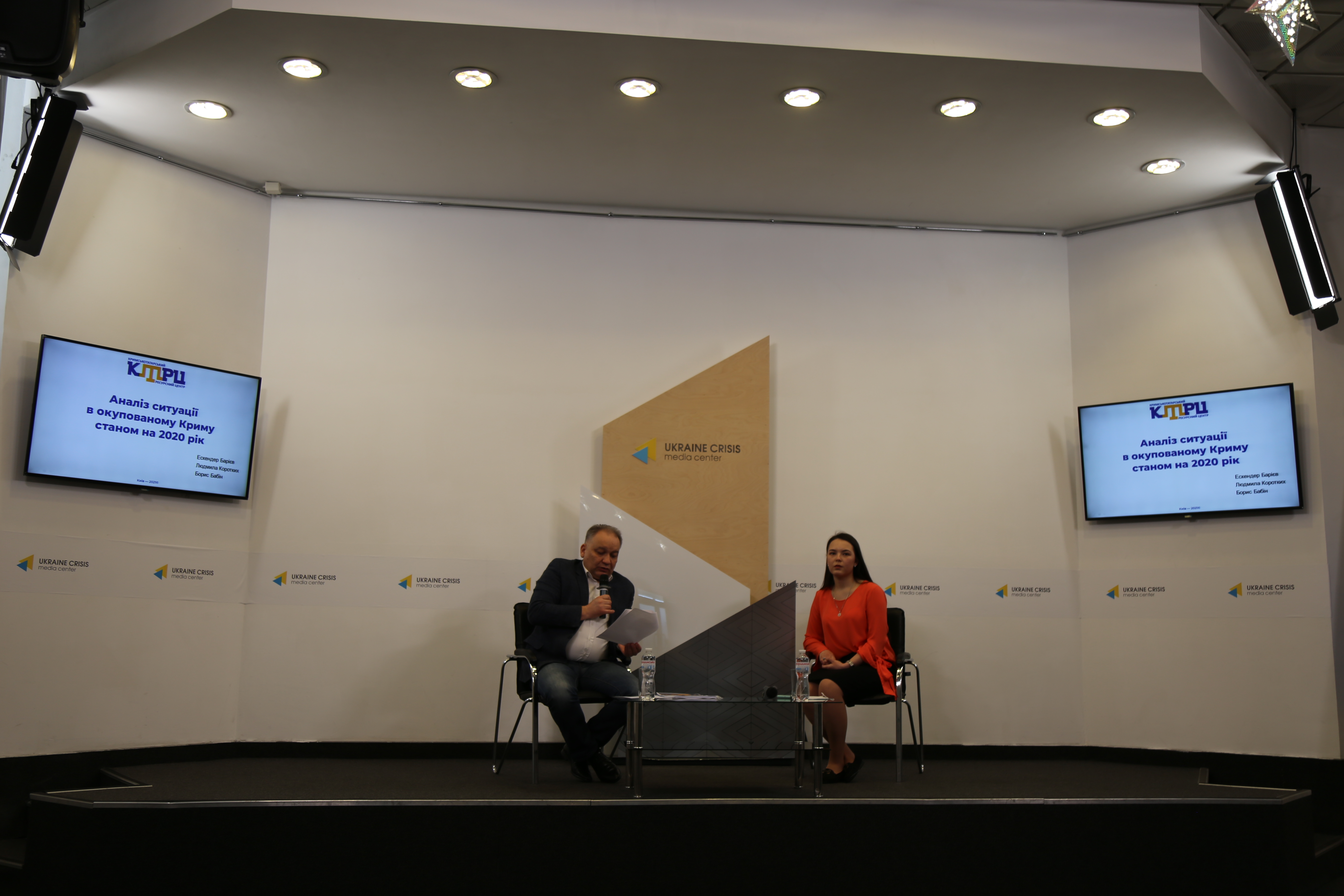
The speakers were:
– Eskender Bariiev – Head of the Crimean Tatar Resource Center, Head of the Department of Legal Affairs and Foreign Affairs of the Mejlis of the Crimean Tatar People;
– Liudmyla Korotkykh – manager of the Crimean Tatar Resource Center;
– Borys Babin – expert of the Crimean Tatar Resource Center, Doctor of Law.
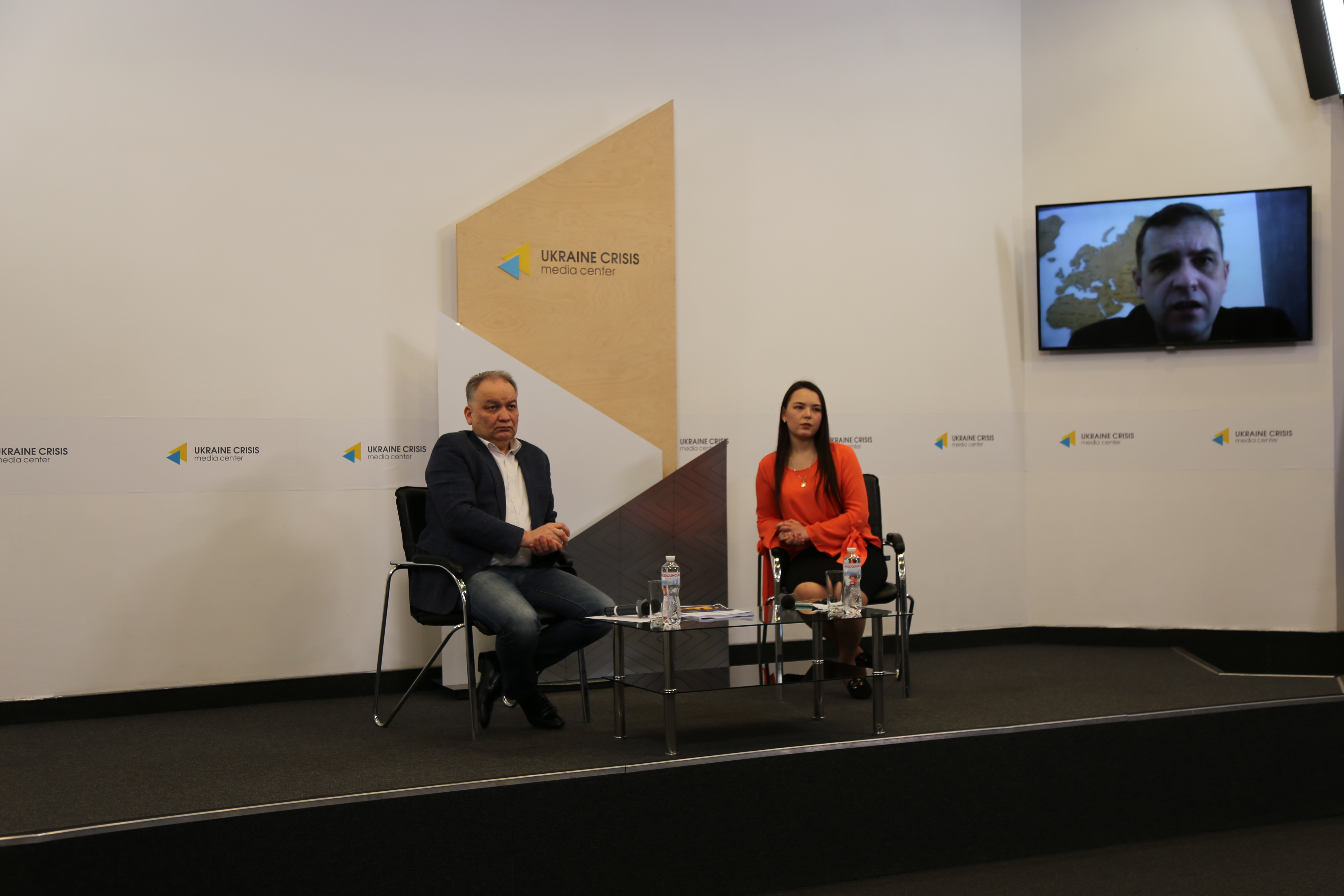
The document analyzes the following categories in detail:
– individual rights (the right to life, kidnapping, searches, detentions, interrogations, interviews, conversations, arrests, politically motivated persecution, sentences, the right to a fair trial, the principle of publicity of court sessions, re-qualification of the so-called cases to more severe parts or articles and the imposition of a more strict punishment, torture or degrading treatment or punishment, refusal to grant visits, transferring political prisoners, political prisoners and persecuted in Crimea for the entire period of occupation, property rights);
– collective rights (the right to freedom of speech, the right to peaceful assembly and association, the right of an indigenous people to govern a representative institution, the right to adhere to, practice, develop and transmit the spiritual and religious traditions, customs and rituals, the right to observe and revive cultural traditions and customs, the right to education in the native language and the preservation of one’s history, the right to territories, lands and resources);
– analysis of the situation;
According to the Crimean Tatar Resource Center, in 2017-2020, 4950 major human rights violations were recorded in the occupied Crimea. Of these, violations of the right to a fair trial – 40%, arrests and interrogations – 15% each, arrests – 13%, violation of the right to the healthcare access – 7%, searches and illegal transferring – 5% each.
– recommendations;
– Crimean Tatar Resource Center info;
Appendix A Methodology for assessing the feasibility of introducing personal sanctions against persons in the temporarily occupied territories who collaborate with the occupation administrations of the Russian Federation
Appendix B Draft Law of Ukraine On the Indigenous Peoples of Ukraine
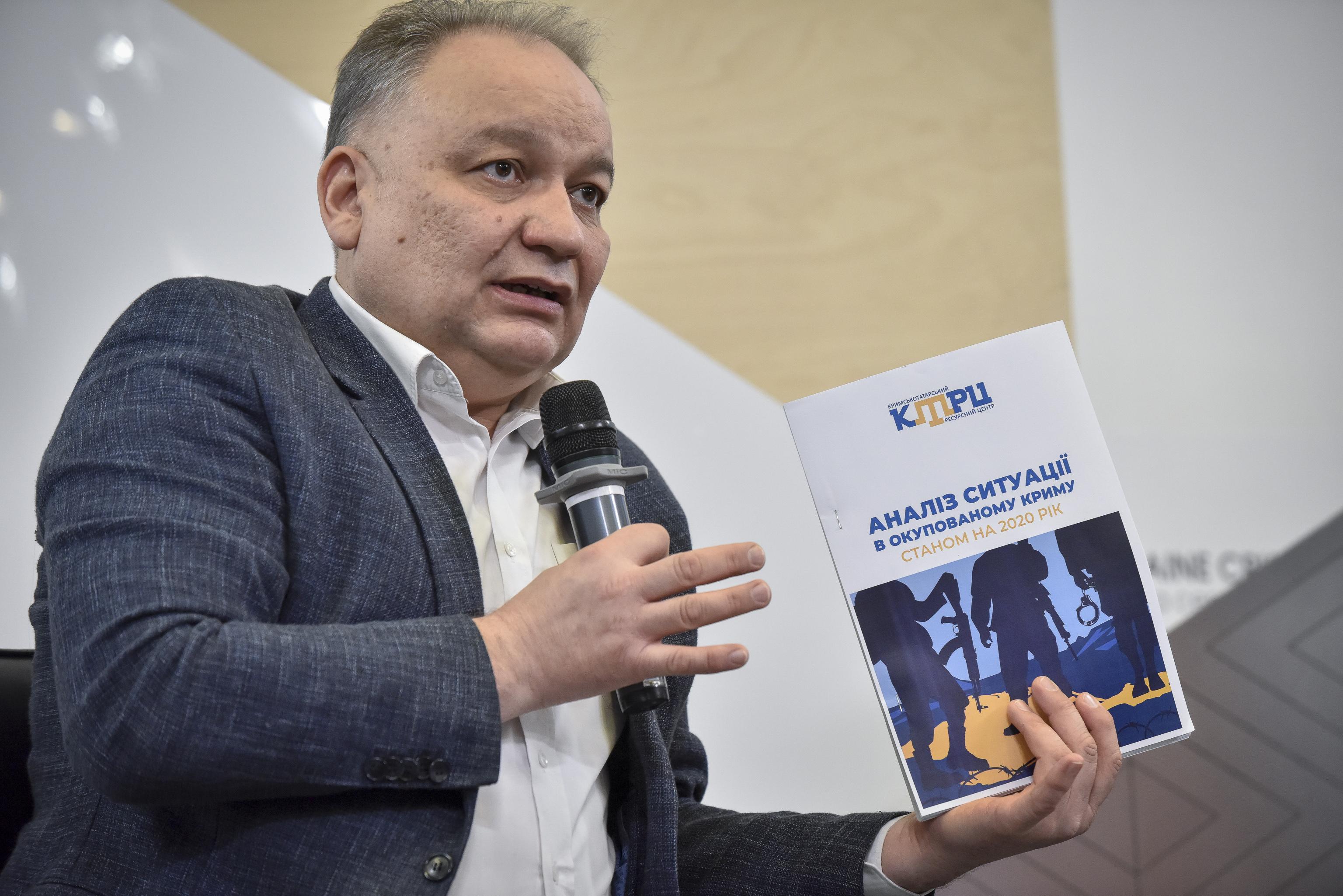
In addition, the CTRC experts analyzed the situation with human rights violations in Crimea in dynamics for 2017-2020.
“After analyzing the dynamics of changes in the number of major human rights violations in Crimea for each type, we can conclude that the total number of searches in 2017-2020 increased 4.7 times compared to 2017, detentions – 2.8 times, interrogations – 2.3 times, arrests – 15.2 times, violation of the right to healthcare access – 9.7 times, violation of the right to a fair trial – 4.1 times, illegal transferrings – 11.6 times”, – Bariiev explained.
Based on this study, the authors developed recommendations aimed at preventing and minimizing the negative consequences of the actions of the occupation authorities in Crimea.
“In total, in 2017-2020, 4,950 violations of basic human rights were recorded in Crimea, but it is important to emphasize that this document is not only a collection and analysis of factual data. One of the objectives of the study was to analyze what measures were taken to protect human rights, what results this gave and on the basis of this to offer recommendations”,- said Liudmyla Korotkykh.
Experts offer their recommendations at the Ukrainian and international levels.
Particular attention was paid to the requirements for the Russian Federation, among which the following are worth highlighting:
1. To stop the temporary illegal occupation of Crimea.
2. To carry out the interim decision of the UN ICJ, that is, to cancel the decision of the Supreme Court of Russia to ban the Mejlis of the Crimean Tatar people. To implement the resolutions of the UN General Assembly and the European Parliament adopted in 2014-2020 in connection with the occupation of Crimea.
3. To stop violating the Universal Declaration of Human Rights, the UN Declaration on the Rights of Indigenous Peoples and other international documents and release all political prisoners in Crimea.
Go to the electronic version of the study.
Photo: CTRC, UCMC.