

March 15-16, Head of the Crimean Tatar Resource Center, head of the Department of Legal Affairs and Foreign Affairs of the Mejlis of the Crimean Tatar People Eskender Bariiev took part in the regional consultations organized by UNESCO on the preparation of the Global Action Plan for the International Decade of Indigenous Languages. During his speech, the expert emphasized that the demand for the language, especially among small indigenous peoples, cannot be ensured without state support.
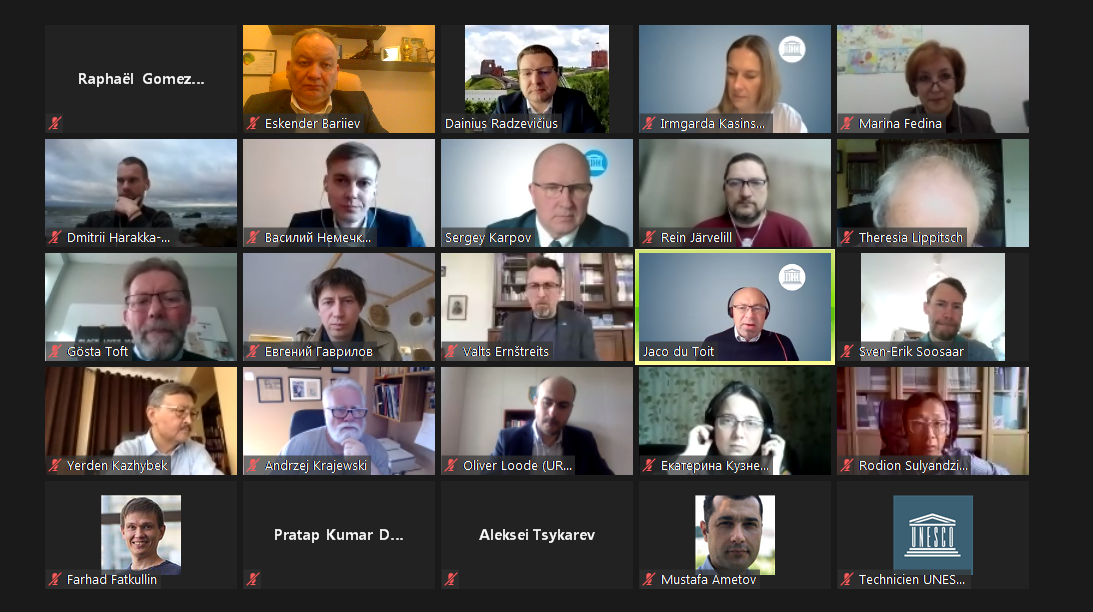
This meeting was organized by the UNESCO Office in Almaty with the support of the headquarters. The event was attended by representatives of national governments, indigenous peoples, indigenous peoples’ organizations, academics, experts and researchers in the field of indigenous languages, linguistic diversity and multilingualism. The meeting aimed at preparing a Global Plan of Action for an International Decade of Indigenous Languages.
The main objectives of the consultation meeting are:
Gather a wide range of stakeholders, including representatives of national governments, indigenous peoples, indigenous peoples’ organizations, scholars and experts in the field of indigenous languages and others for a constructive dialogue on indigenous languages and related issues in the states of Eastern Europe and Central Asia;
Define regional priorities according to the template proposed by UNESCO, including strategic objectives, results, outputs and enablers, drivers of change and areas for change (thematic review), aligned with key building blocks such as the strategic approach and guiding framework, the future Global an action plan for language transfer, documentation, protection, policy development, education, research and promotion, as well as in the private sector;
Identify future regional activities that will contribute to the implementation of the Global Plan of Action, such as regional flagship and pilot projects;
Provide an opportunity to forge new partnerships and networks between various stakeholders to create a regional network of partners, national committees and focal points for organizing IDIL2022-2032 in the region;
Raise awareness of the importance of indigenous languages, linguistic diversity and multilingualism for sustainable development and develop recommendations to stakeholders in fulfilling international, regional and national commitments related to language development;
The chairman of the Crimean Tatar Resource Center, Eskender Bariiev, during his speech, citing the experience of the indigenous Crimean Tatar people as an example, stressed that the language of the indigenous people cannot develop without legal support.
“The language will live if it is in demand. The demand for the language, especially among small indigenous peoples, cannot be ensured without state support. This means state support for ethnic media (radio, newspapers, television, preparation of content in native languages, including electronic), support for teaching in the native language and, accordingly, the educational process with the training of teachers and decent wages”,- he explained.
The consultation meeting ended by:
The adoption by all stakeholders of the recommendations for the Global Plan of Action for the Integration of Linguistic Diversity and Multilingualism at the Regional, National and Local Levels for Indigenous Languages.
The adoption of the template for the development of plans proposed by UNESCO in the context of IDIL2022-2032.
Development of a list of potential activities at the regional level for the development of flagship and pilot projects.
A list of key partners at national and regional level to build the network.