

On May 7, a public discussion took place on the implementation of decentralization and the formation of a new administrative-territorial structure of the Autonomous Republic of Crimea. According to the Head of the Board of the Crimean Tatar Resource Center, a member of the Mejlis of the Crimean Tatar people Eskender Bariiev, the issue of territorial-administrative reform should be addressed within a package of measures to de-occupy the Crimea. He believes that it is very important for Crimea to take into account historical, environmental and cultural features when planning the development of municipalities. He stated this in an interview for the Crimea.Realities media agency.
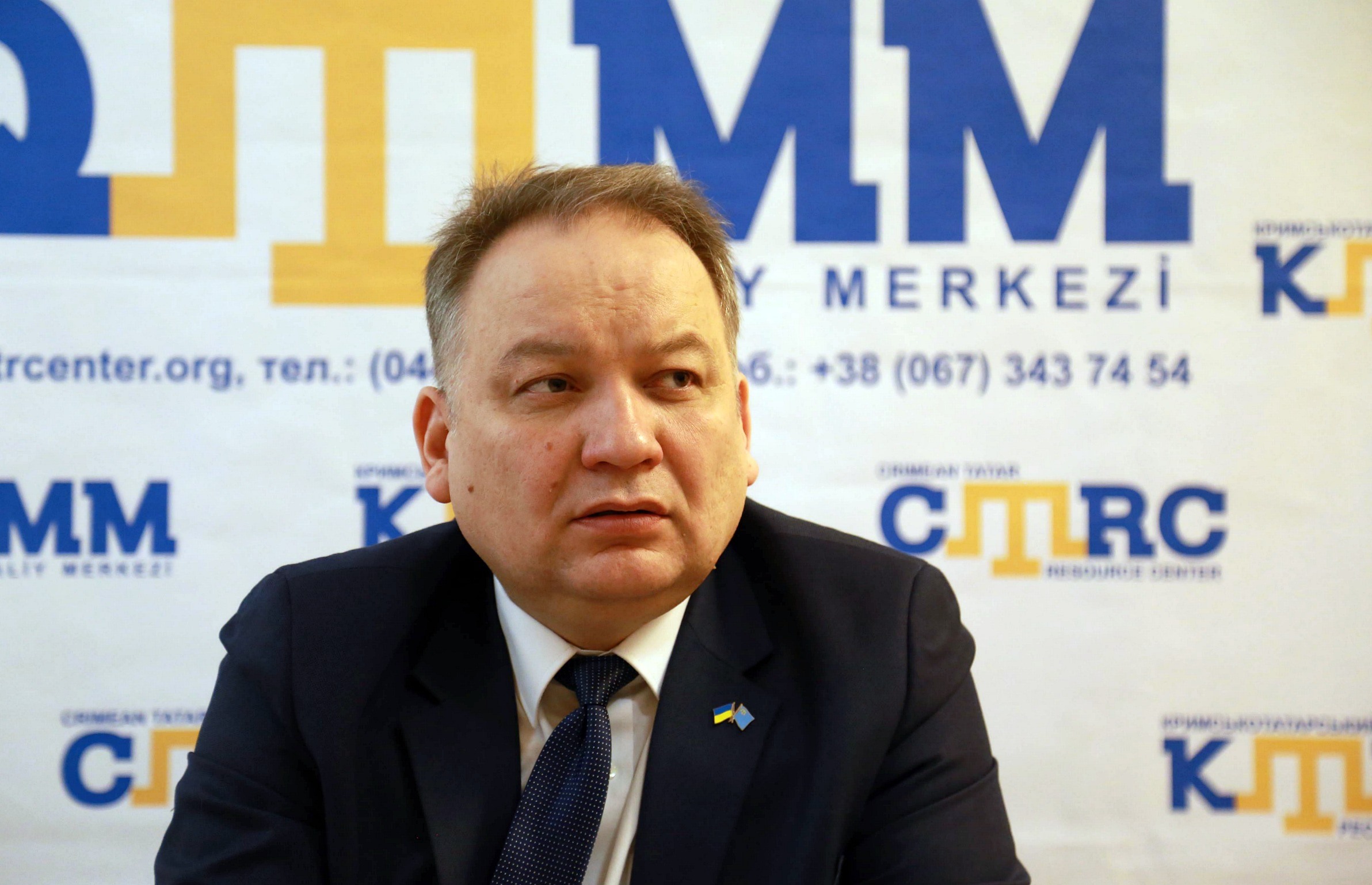
“We should already consider the issue of occupied Crimea in the context of decentralization reform in Ukraine. We already need to build a model today, and this issue should become a part of the strategy of de-occupation of the Crimea, in terms of its reintegration processes in Ukraine. Decentralization reform in Ukraine is a set of amendments to the existing legislation of Ukraine, the purpose of which is to transfer significant powers and budgets to local authorities. In their presentation, the experts approached only from the socio-economic issues. But, especially for Crimea, it is very important to consider historical, environmental and cultural features when planning the development of municipalities”,- he said.
Eskender Bariev, who was also included in the working group, said that the administrative-territorial reform in Crimea has specifics different from the experience of reform in other regions of Ukraine.
“The process of combining territorial communities must first of all be carried out by decisions of the territorial communities themselves, and we must take this factor into account. We must remember that Crimea is different from other regions of Ukraine, since indigenous peoples live on its territory, there are representative bodies of self-organization of the Crimean Tatar people, including at the local level. Therefore, it is simply impossible to simply transfer the methodology of reforming from other regions”,- the expert emphasized.
At the same time, he noted that the reform of the administrative-territorial structure of the Autonomous Republic of Crimea should become an integral part of the Strategy for the de-occupation and reintegration of Crimea and Sevastopol.
“Returning to the presentation: experts use data from 2001, that is, twenty years ago. I want to remind you that in 2010 the Strategy for Economic and Social Development of the Autonomous Republic of Crimea for 2011-2020 was developed and adopted. And the data could well be used from that strategy. Even then, we noticed that the humanitarian component was not adequately reflected in it, therefore the public council, which I headed, together with UN CIDP, developed an analytical document “Millennium Development Goals. Autonomous Republic of Crimea”. As far as I know, even the occupants themselves are using the materials of the Strategy for Economic and Social Development of the ARC for 2011-2020. After the de-occupation of Crimea, we will get another region in terms of infrastructure, population size and composition, economic sphere, ecosystem condition. This is a great layer of work and we should have a clear vision of the future of Crimea”,- said Eskender Bariiev.